Ryanair denies standing seats – but the rumour won’t die.
By Tarek Salame • Published: 25 May 2025 • 18:17 • 2 minutes read
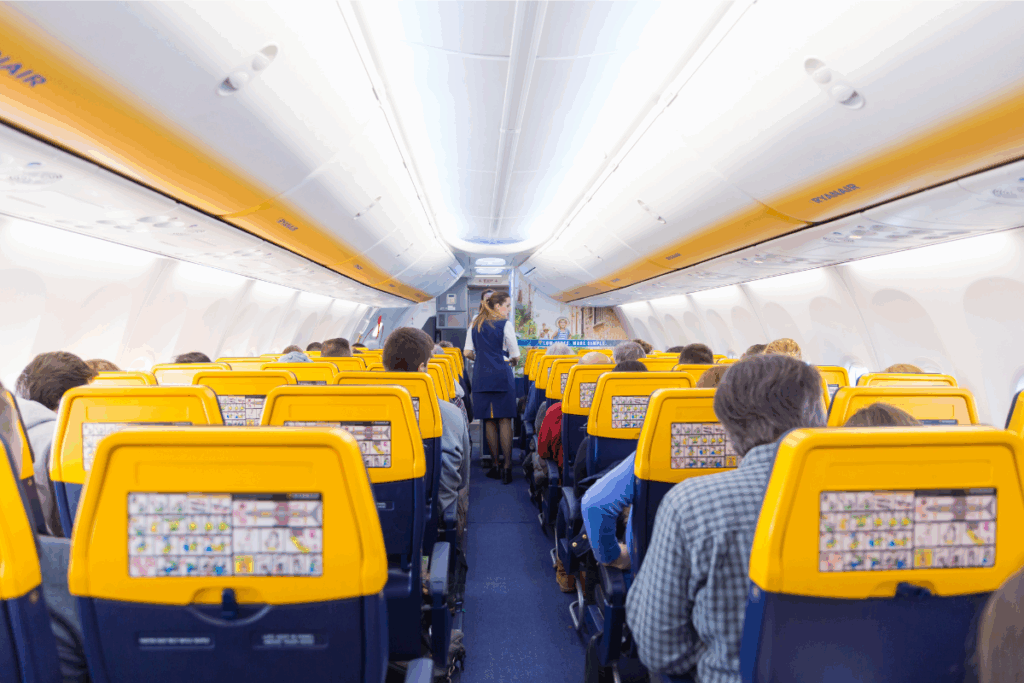
The real seats — for now, at least. Credit: Canva
To clarify, Ryanair will not be installing bicycle-style standing seats on its planes. And yes, people are still talking about it again. Despite an official denial and confirmation from Aviointeriors, the manufacturer behind the viral “Skyrider” seat design, this rumour continues to fly, much like the airline that inspired it. So what is going on? And why does a long-debunked rumour keep returning to our feeds? What does it say about Ryanair, its branding, and our complicated relationship with this low-cost airline?
The rumour that refuses to land
The idea took off over a decade ago, when Ryanair’s CEO, Michael O’Leary, publicly announced installing standing seats to pack more passengers and cut costs. He also floated other headline-grabbing concepts like a pay-to-pee toilet or charging overweight passengers extra.
Most of these were jokes, some were social experiments. And all were a classic Michael O’Leary, outrageous enough to grab attention and outrage X. And so when images of vertical “saddle seats” began recirculating this month, many assumed Ryanair was finally pushing the button. After all these claims had the right mix of ingredients to go viral:
An evil low-cost airline, a visibly uncomfortable situation, and a tiny price tag to tempt desperate travellers. Only one problem, none of it was true. Again.
Why does the internet keep falling for it?
The rumour being spread around again feels like an absolute certainty, especially in a world where airlines shrink legroom per year and charge extra for carry-ons, turning water into a luxury item. So the idea of vertical seats does not sound like Sci-Fi; it sounds like a 2026 reality.
Airlines nowadays are making our comfort more expensive and adding more costly add-ons that keep piling up. Plus, Ryanair’s reputation does not help because its brand is friction. It has built its empire on pushing limits, publicly mocking regulators, and shamelessly leaning into cost-cutting. So when a rumour resurfaces, even if they officially deny it, most people do not think, “Ah, that is false.” They think, “Only a matter of time.”
Is it technically possible?
Well, sort of. The Skyrider concept has passed basic safety tests, including emergency evac protocols. It uses a semi-standing seat with a harness belt and could, in theory, be used for ultra-short-haul flights.
But comfort is another matter, passengers warn that even 40-minute flights just in a “leaning position” can increase fatigue, discomfort, and circulation issues. With air travel already under fire for dehumanising the flying experience, this might be the perfect PR disaster waiting to happen unless, of course, that is the point.
No standing seats, yet
The takeaway from this standing seat rumour has become much more than a rumour. People fear that air travel is becoming more about profit than convenience. More commodified, less comfortable, and increasingly transactional. So when headlines like “seats don’t recline” or “pay for toilet paper” go viral. We expect the worst and laugh through the pain, especially if the ticket only costs €9.
And what about Ryanair in all this? They know that every viral moment and outrage keeps them at the top of our minds where we will most likely book a budget-conscious, controversy-weary, weary and more willing to swap a bit of dignity for a deal.
So for now, you can still fly with Ryanair without standing, and do not be surprised when the rumour comes around again, because whether or not the standing seats ever fly, the viral value of a bad idea still holds altitude.
Follow Euro Weekly News on Google News
Get breaking news from Spain, travel updates, and expat stories directly on your Google News feed.
Follow on Google NewsSign up for personalised news
Subscribe to our Euro Weekly News alerts to get the latest stories into your inbox!
By signing up, you will create a Euro Weekly News account if you don't already have one. Review our Privacy Policy for more information about our privacy practices.



Tarek Salame
Tarek is a writer and digital marketer based in Barcelona, with a passion for turning complex ideas into clear, compelling narratives. With a background in marketing communications, tech, and content strategy, he has worked across industries ranging from cloud computing and fintech to fire safety and science. At Euro Weekly News, he contributes thoughtful, accessible stories that connect readers with topics shaping the modern world.
Comments