Groundbreaking stegosaurus skull found in Spain
By Natascha Rivera • Updated: 06 Jun 2025 • 14:26 • 1 minute read
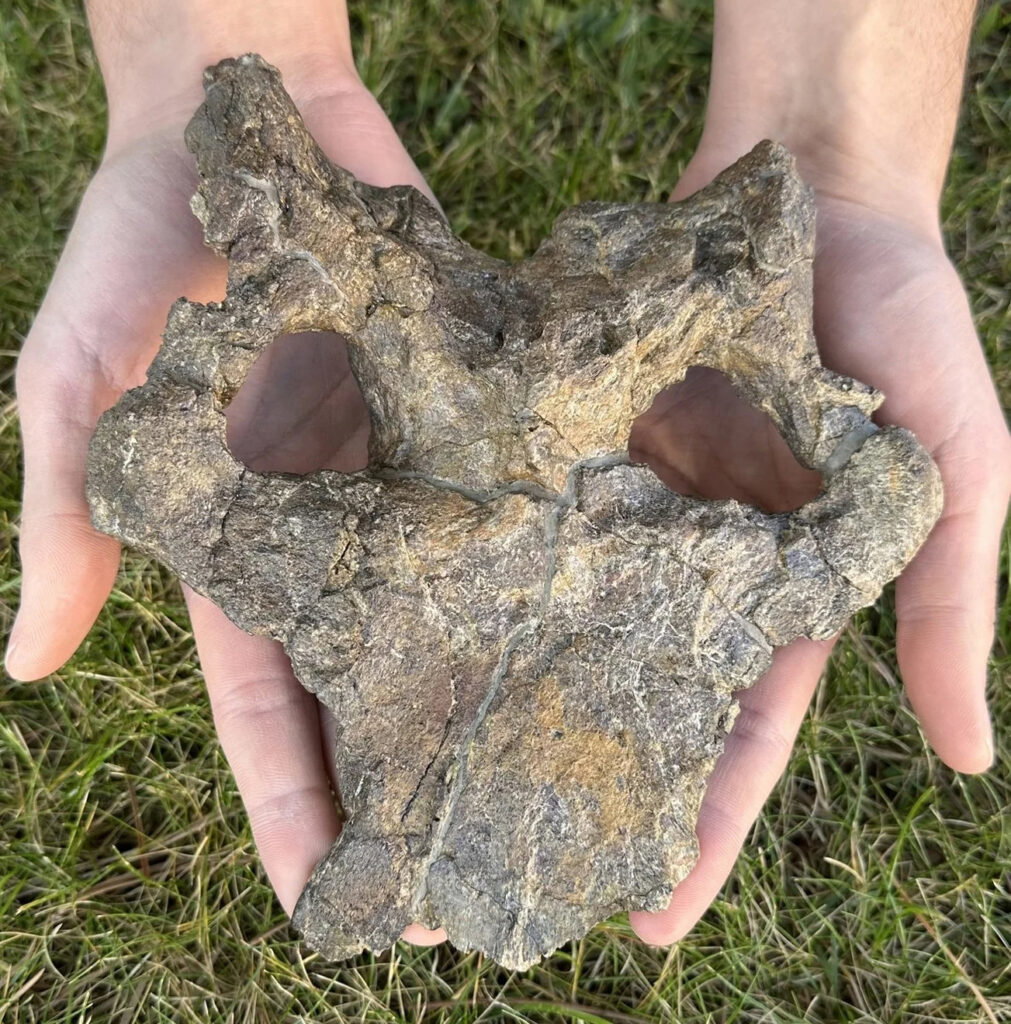
Scientists have discovered a fossil that changes everything we know about the stegosaurus. Photo Credit: Fundación Conjunto Paleontológico de Teruel-Dinópolis
Paleontologists have unearthed an unbelievable find in a Spanish crop field – the nearly complete skull of a stegosaurus.
The incredible 150 million year-old fossil was discovered by scientists from the Teruel-Dinópolis Joint Paleontology Foundation and was published in the journal Vertebrae Zoology. It was found in Riodeva, a small town in Teruel, Spain, in what is essentially a crop field. Not only is it the most complete stegosaurus skull ever found in Europe – it’s now redefining everything we know about the plant-eating, armor-plated titans.
Stegosauruses (Dacentrurus armatus), who lived around the late Jurassic and early Cretaceous periods, were herbivorous dinosaurs that walked on all fours and were characterized primarily by two rows of large armored plates running from the back of their necks to the end of their tails. Everything we know about them comes from diligent and careful research…as well as pure dumb luck, because their fossils are not usually well-preserved.
Sergio Sánchez Fenollosa, a researcher of the paleontology foundation and the co-author of the study, explained that the skull reveals exciting new possibilities about the stegosaurus that were previously unknown. For instance, it’s led to the definition of an entirely new evolutionary group, Neostegosauria. The group includes medium and large sized stegosauruses that lived in what is now Africa and Europe (middle and late Jurassic), North America (late Jurassic), and parts of Asia (late Jurassic and early Cretaceous).
The Spanish fossil site holds several other fossils important to this study, including other cranium specimens and remains from juvenile stegosauruses, a particularly rare find for this species of dinosaur.
The province of Teruel is continuing to prove itself a gold mine in revealing impressive paleontological finds, and scientists are hard at work to see if they can find any more well-preserved fossils of these incredible ancient beasts.
Follow Euro Weekly News on Google News
Get breaking news from Spain, travel updates, and expat stories directly on your Google News feed.
Follow on Google NewsSign up for personalised news
Subscribe to our Euro Weekly News alerts to get the latest stories into your inbox!
By signing up, you will create a Euro Weekly News account if you don't already have one. Review our Privacy Policy for more information about our privacy practices.





Natascha Rivera
Natascha is a Dominican writer based in Spain with a background in audiovisual and marketing communication. A lifelong reader and passionate storyteller, she brings a creative edge to her work at Euro Weekly News. Her multicultural perspective informs her coverage of lifestyle and community stories, offering fresh angles and relatable storytelling that connects with a diverse audience.
Comments