How many beers before you’re over the limit in Spain? DGT Gives Official Response
By Marc Menendez-Roche • Published: 26 Jun 2025 • 12:10 • 3 minutes read
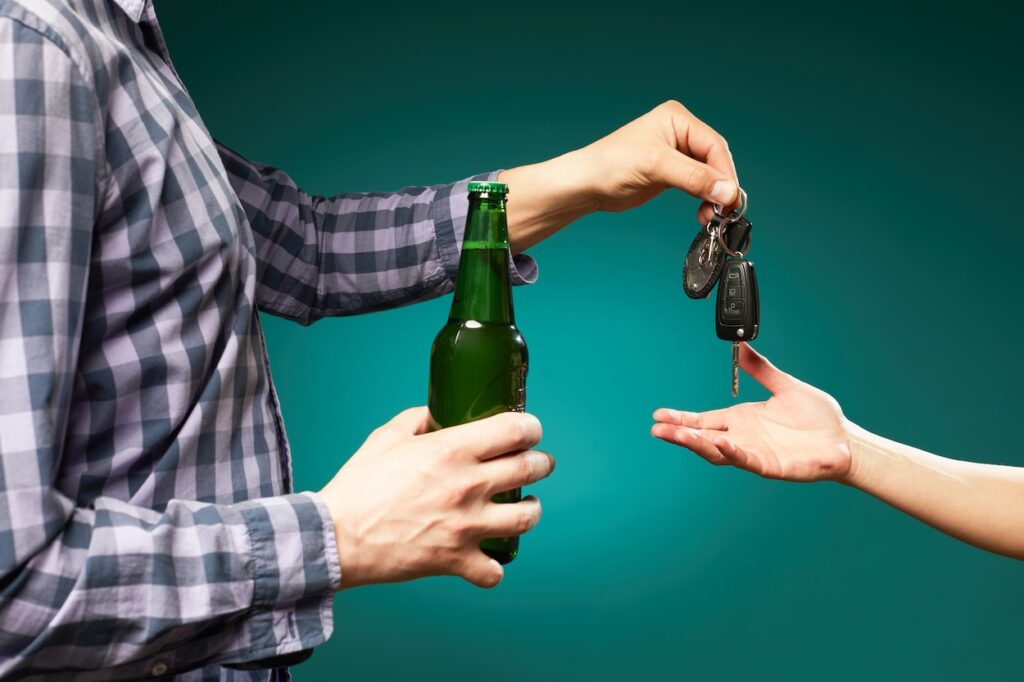
How many beers is too many? Spain’s DGT finally gives a straight answer Credit: Nazar Skladanyi, Shutterstock
Spain’s traffic authority, the DGT (Dirección General de Tráfico), has confirmed what many of us have wondered since the new rules were introduced— how many beers can you drink before you’re legally too drunk to drive?
The short answer? Less than you think. The long answer? Well, it depends on your size, gender, metabolism, and even what kind of beer you’ve had. But one thing’s crystal clear: if you’re thinking of driving, you’re better off keeping the pint glass out of reach altogether.
What’s the official legal alcohol limit in Spain?
The general drink-driving limit in Spain is 0.5 grams of alcohol per litre of blood, or 0.25 mg/L in exhaled breath. But if you’re a professional driver or have held your licence for less than two years, the limit drops to 0.3 g/L in blood (that’s just 0.15 mg/L in breath). In short, newbies and pros get far less wiggle room.
This rule isn’t just bureaucratic belt-tightening. It’s there to reduce accidents and keep the roads safe — especially for those who may not yet have the experience or for those who spend long periods behind the wheel.
How many beers before you blow over the limit?
According to estimates shared by the DGT and Guardia Civil, just one or two beers could land you in hot water — or at least in the back of a patrol car. Here’s where things get fizzy.
A standard 330 ml beer at 5% alcohol can raise your blood alcohol level by about 0.15 to 0.20 g/L, depending on your body weight, metabolic rate, and other personal quirks.
Let’s break it down:
For men:
Over 70 kg
- One pint: ~0.3 mg/L breath alcohol
- Two pints: ~0.6 mg/L (well over the limit)
- Three pints: ~0.8 mg/L (you’re now looking at a criminal offence)
Over 80 kg
- One pint: ~0.2 mg/L
- Two pints: ~0.5 mg/L
- Three pints: ~0.7 mg/L
Even for larger men, two beers can tip you into dangerous territory.
For women:
Due to differences in body composition and alcohol processing, the effect of alcohol tends to be stronger:
Over 50 kg
- One pint: ~0.5 mg/L
- Two pints: ~1.0 mg/L
- Three pints: ~1.5 mg/L
Over 60 kg
- One pint: ~0.5 mg/L
- Two pints: ~0.8 mg/L
- Three pints: ~1.2 mg/L
Yes, that means even one beer could put many women over the limit.
Does muscle mass affect how alcohol hits you?
Many people assume it’s just your weight that matters when it comes to how alcohol affects you. But in reality, body composition — how much of your weight is muscle vs. fat — plays a big role.
Here’s why:
Alcohol spreads through the water in the cells. Muscle tissue holds a lot of water, while fat holds very little. So if two people weigh the same, but one has more muscle and less fat, the alcohol in their system will be more diluted, and their blood alcohol concentration (BAC) could be lower after drinking the same amount.
That’s why an 80 kg man with 10% body fat will typically show a lower BAC than an 80 kg man with 30% body fat — even if they drink the exact same number of beers.
To put it simply:
More muscle usually = more water = usually lower BAC.
More fat = less water = higher BAC.
The key word here is “usually.” Individual bodies vary, and there are many factors that affect how you process alcohol.
So, the safest choice? Don’t drive at all if you’ve been drinking — no matter how fit you are.
So, what’s the “safe” amount?
That’s the twist — there is no universally safe number of beers before driving. One person’s “quick pint” is another person’s “court appearance.” The safest, smartest, and cheapest option under Spain’s new alcohol limits? Don’t drink at all if you’re getting behind the wheel.
As the DGT bluntly puts it: ‘Lo mejor es evitar el alcohol al volante.’ The best thing is to avoid alcohol at the wheel altogether.
And if you do test positive for drink-driving in Spain?
Better start counting more than your beers — because the fines are steep:
0.26 to 0.50 mg/L in breath:
- €500 fine + 4 points off your licence
0.51 to 0.60 mg/L:
- €1,000 fine + 6 points
Over 0.60 mg/L:
It’s not just a fine. You’re facing criminal charges, including:
- Up to six months in prison
- Fines for up to 12 months
- Community service
- Driving ban for one to four years
Final thoughts on drink-driving in Spain: Pub talk or real talk? Debate these…
- Should Spain just ban booze behind the wheel altogether? Why mess about with limits when zero’s crystal clear?
- Should Spain crack down harder so that the rules are followed? What’s the point of having strict rules that are rarely enforced?
- If you feel sober after two beers, should that count for anything?Or is it all about what the machine says, end of story?
- Do foreigners abroad take drink-driving laws seriously — or is it holiday rules all round?
- Should every car come with a built-in breathalyser to stop people from driving over the limit in Spain?
- Clever idea — or Big Brother gone mad?
More news about living in Spain.
Follow Euro Weekly News on Google News
Get breaking news from Spain, travel updates, and expat stories directly on your Google News feed.
Follow on Google NewsSign up for personalised news
Subscribe to our Euro Weekly News alerts to get the latest stories into your inbox!
By signing up, you will create a Euro Weekly News account if you don't already have one. Review our Privacy Policy for more information about our privacy practices.




Marc Menendez-Roche
Marc is a writer, educator, and language enthusiast with a background in business and legal communication. With over a decade of experience in writing and teaching, he brings a clear, engaging voice to complex topics—guided by a keen interest in educational neuroscience and how people learn. At Euro Weekly News, Marc contributes lifestyle features and community-focused stories that highlight everyday life across Spain. His ability to connect language, learning, and lived experience helps bring depth and relatability to the topics he covers.
Comments
DJH
27 June 2025 • 13:39Data, percentages of drunk drivers causing this mass carnage. Is it 50% or 0.000001% of all fatal car accidents? The quoted is the result, but what are the driving statistics that cause this? Again just if’s and’s but’s and pan’s.
Comments are closed.