Jack the Ripper identified by mtDNA
By Molly Grace • Published: 11 Jul 2025 • 13:04 • 3 minutes read
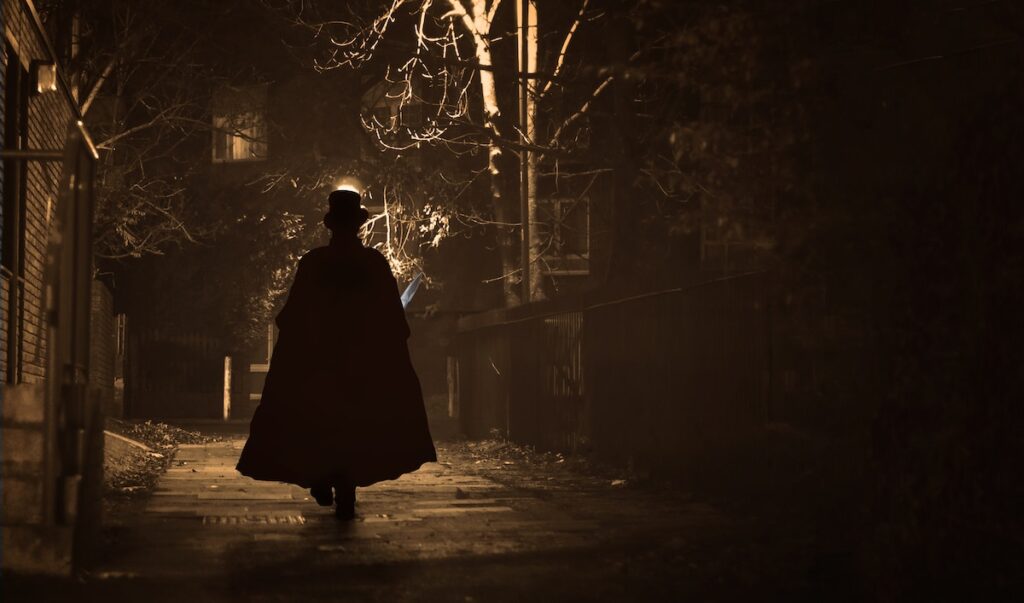
Photo credits: London X London
More than 135 years after the grisly Whitechapel murders shook Victorian London, a British researcher claims to have finally unmasked the killer known as Jack the Ripper. According to historian and author Russell Edwards, new forensic analysis has produced a “100% match” linking the infamous serial killer to Aaron Kosminski, a Polish immigrant and longtime police suspect.
The evidence centres on a blood and semen-stained shawl said to have been discovered near the body of Catherine Eddowes, one of the Ripper’s five victims, murdered in September 1888. The shawl was allegedly retained by a police officer and passed down through his family before being acquired by Edwards in 2007. He commissioned DNA expert Dr. Jari Louhelainen to analyse the material using mitochondrial DNA (mtDNA) profiling. According to Edwards, the results show a match between the mitochondrial DNA found on the shawl and living descendants of both Eddowes and Kosminski. “This is it. We have unmasked Jack the Ripper,” Edwards declared in interviews, describing it as “a 100% identification.”
The breakthrough has reinvigorated public and academic interest in the century-old mystery. Kosminski, a barber who emigrated from Poland, had long been on the list of prime suspects. He was known to suffer from paranoid schizophrenia, and in 1891 he was institutionalised in an asylum, where he remained until his death in 1919.
Edwards has now submitted a legal application for an inquest to officially name Kosminski as the Ripper. He is supported by at least one descendant of a victim, who has expressed hope that such a ruling would provide long-overdue justice. However, the scientific community remains deeply divided. Numerous geneticists and crime historians have raised red flags about the quality of the evidence.
Questions Around the Evidence
Critics note that mitochondrial DNA is not uniquely identifying, it can suggest a familial connection but cannot definitively name a single individual. Moreover, the chain of custody for the shawl is unverified; no official police record confirms that it was recovered from the crime scene.
“Without documented provenance, there’s no way to be certain the shawl even belonged to Eddowes, let alone that it wasn’t contaminated over the years,” said Dr. Turi King, the geneticist best known for identifying the remains of King Richard III. Furthermore, the study has never been published in a peer-reviewed journal, and key data has not been independently replicated. Some scientists claim there are errors in the way the results were interpreted, suggesting the findings are being overstated. In 2014, when Edwards first announced his findings in his book Naming Jack the Ripper, similar criticisms were levelled. The recent reemergence of the claim in 2025 has renewed debate but not resolved it.
A Prime Suspect, Still Unconfirmed
Aaron Kosminski has remained a prominent suspect in Ripperology for decades. In the early 20th century, police officials including Sir Robert Anderson and Chief Inspector Donald Swanson privately identified him as the killer in memoirs and marginal notes. Yet no formal charges were ever brought, largely due to a lack of physical evidence and the unwillingness of witnesses to testify against a fellow Jew in the highly antisemitic climate of the time. The possibility that modern science might vindicate those early suspicions is tantalising. But the reliance on contested evidence and inconclusive DNA raises more questions than answers. For now, Kosminski remains the leading suspect, but the Ripper’s identity continues to elude formal confirmation. Historians caution against prematurely closing the case, noting that the legend of Jack the Ripper is as much a cultural phenomenon as a historical mystery. “Unless more reliable, independently verified evidence emerges,” said Ripper expert Dr. Hallie Rubenhold, “the true identity of the killer will remain a matter of debate, not fact.”
Follow Euro Weekly News on Google News
Get breaking news from Spain, travel updates, and expat stories directly on your Google News feed.
Follow on Google NewsSign up for personalised news
Subscribe to our Euro Weekly News alerts to get the latest stories into your inbox!
By signing up, you will create a Euro Weekly News account if you don't already have one. Review our Privacy Policy for more information about our privacy practices.




Molly Grace
Molly is a British journalist and author who has lived in Spain for over 25 years. With a background in animal welfare, equestrian science, and veterinary nursing, she brings curiosity, humour, and a sharp investigative eye to her work. At Euro Weekly News, Molly explores the intersections of nature, culture, and community - drawing on her deep local knowledge and passion for stories that reflect life in Spain from the ground up.
Comments