Spain’s National Day: The Story Behind Día de la Hispanidad
By Molly Grace • Updated: 12 Oct 2025 • 15:39 • 3 minutes read
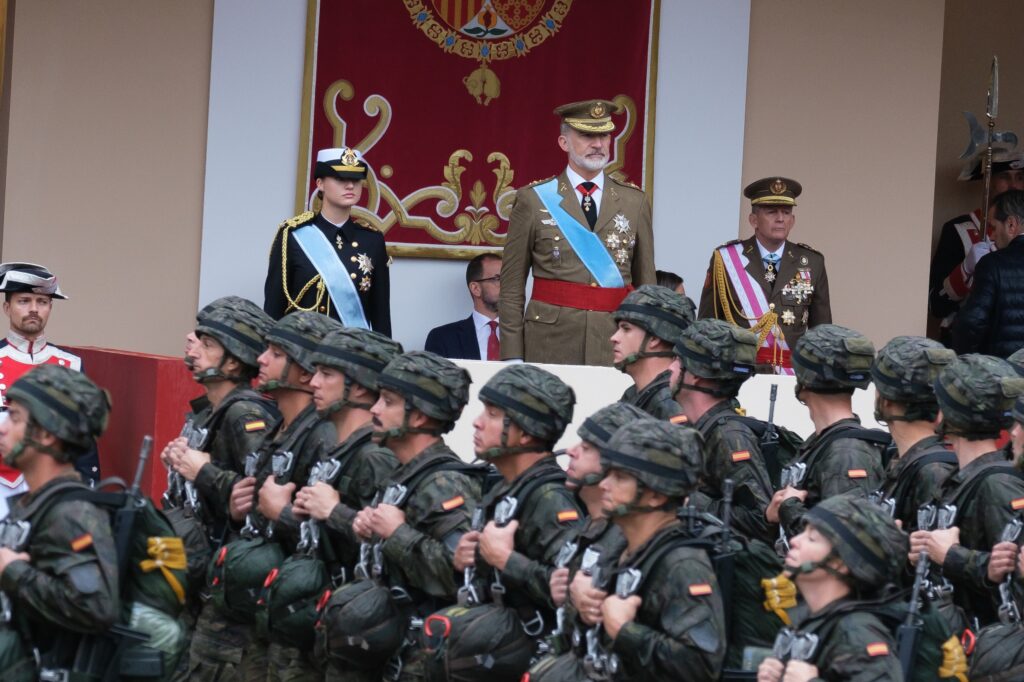
Despite its official status, Día de la Hispanidad continues to spark debate. Photo credit: Oscar Gonzalez Fuentes/Shutterstock
Every year on 12 October, Spain celebrates Día de la Hispanidad, or the National Day of Spain. The holiday commemorates the 1492 voyage of Cristóbal Colón (Christopher Columbus), which led to the first encounter between Europe and the Americas, an event that would transform global history.
For residents, expats and visitors, the day offers both a spectacle of national pride and a moment of reflection on Spain’s complex historical legacy.
The Historical Roots of Día de la Hispanidad
On 12 October 1492, Columbus landed on an island in the Bahamas under the sponsorship of Spain’s Catholic Monarchs, Queen Isabella I of Castile and King Ferdinand II of Aragon. His voyage opened the door to the Spanish Empire, which went on to dominate vast territories across the Americas, Asia and Europe for centuries.
The origins of the celebration trace back to the early 20th century, when Spanish writer and politician Faustino Rodríguez-San Pedro proposed a holiday to honour Spain’s cultural and linguistic ties with the Spanish-speaking world. Initially known as Día de la Raza (“Day of the Race”), it aimed to celebrate the shared identity of Spain and Latin America following centuries of cultural exchange.
In 1913, Rodríguez-San Pedro’s proposal gained support, and by the 1920s, the day was being marked both in Spain and across Latin America.
Formal Recognition and Redefinition
The holiday was officially declared a national celebration in 1958, under the dictatorship of Francisco Franco, who used it to promote the idea of Spanish unity and empire. After Spain’s transition to democracy, the day was redefined through Law 18/1987, which officially named it the Fiesta Nacional de España.
The law stated that 12 October symbolises “the historical and cultural projection of Spain throughout the world.” This redefinition sought to shift the focus away from imperial conquest and towards cultural heritage and global connection.
Modern-Day Celebrations Across Spain
Madrid’s Military Parade
In the capital, Madrid, Día de la Hispanidad is marked by a grand military parade through Paseo de la Castellana, attended by the King and Queen of Spain, senior government officials, and foreign dignitaries. The event features units from all branches of the armed forces including the Policia Nacional and Guardia Civil and a spectacular aerial display by the Spanish Air Force.
The parade is not just a military demonstration but also a ceremonial reaffirmation of Spain’s national unity, drawing crowds from across the country and tourists from abroad.
Cultural and Religious Festivities
Beyond Madrid, many regions host their own events. In Zaragoza, the date coincides with the Fiesta del Pilar, one of Spain’s largest and most vibrant festivals, honouring Nuestra señora del Pilar (Our Lady of the Pillar), the country’s patron saint. The celebration blends religious devotion, folklore, parades, and traditional music, attracting thousands of visitors every year.
Elsewhere, towns and cities hold concerts, exhibitions, and cultural performances highlighting Spain’s artistic and linguistic influence around the world.
A Complex Legacy
Celebration and Controversy
While many Spaniards view Día de la Hispanidad as a source of pride, it also prompts controversy and debate. For some, it symbolises Spain’s emergence as a global power and its role in shaping the modern world. For others, it represents the beginning of European colonisation, Indigenous oppression, and slavery in the Americas.
Critics argue that the holiday should more openly acknowledge the suffering caused by colonial expansion, while supporters emphasise the shared Hispanic identity, language, and cultural exchange that continue to unite millions across continents.
Changing Perspectives in Latin America
Several Latin American nations have since renamed their commemorations. In Mexico, the day is known as the Día de la Nación Pluricultural (Day of the Pluricultural Nation), and in Argentina, it is the Día del Respeto a la Diversidad Cultural (Day of Respect for Cultural Diversity). These modern interpretations seek to honour Indigenous heritage and resilience rather than European conquest.
A Day of Reflection for Modern Spain
For those living in or visiting Spain, 12 October is both a public holiday and a cultural experience. It’s a day that reveals how the nation continues to balance pride in its history with an evolving awareness of its global impact.
Whether watching the parade in Madrid or joining the festivities in Zaragoza, the Día de la Hispanidad remains a reminder of Spain’s far-reaching legacy, a story of exploration, empire, and enduring cultural connection that still shapes the Spanish identity today.
UPDATE: Spanish National Day: Military parade & air force flypast in show of military prowess
Follow Euro Weekly News on Google News
Get breaking news from Spain, travel updates, and expat stories directly on your Google News feed.
Follow on Google NewsSign up for personalised news
Subscribe to our Euro Weekly News alerts to get the latest stories into your inbox!
By signing up, you will create a Euro Weekly News account if you don't already have one. Review our Privacy Policy for more information about our privacy practices.


Molly Grace
Molly is a British journalist and author who has lived in Spain for over 25 years. With a background in animal welfare, equestrian science, and veterinary nursing, she brings curiosity, humour, and a sharp investigative eye to her work. At Euro Weekly News, Molly explores the intersections of nature, culture, and community - drawing on her deep local knowledge and passion for stories that reflect life in Spain from the ground up.
Comments
Hugh A. Bialecki
12 October 2025 • 10:51Much as gracias por su reflecciones ❗️We are traveling in Andalusia for the first time enjoying Sevilla, Cordoba, Granada, Malaga and Madrid. Beautiful blending of contemporary life and the cultural and religious history.
Comments are closed.