Labour considers billions to boost EU ties
By Molly Grace • Published: 14 Nov 2025 • 0:22 • 2 minutes read
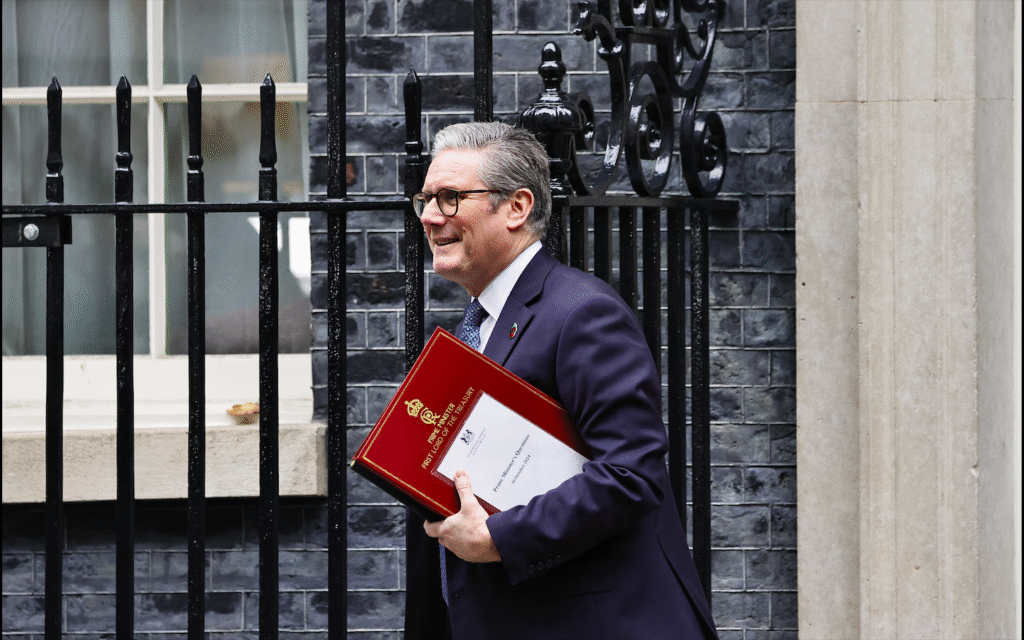
Prime Minister Keir Starmer, has signalled a willingness to make financial contributions to the European Union. Photo credit: Sean Aidan Calderbank/Shutterstock
Reports from November 13 indicate that the UK government, under Prime Minister Keir Starmer, has signalled a willingness to make financial contributions to the European Union as part of efforts to secure closer trade and co‑operation agreements.
According to The Times, No 10 officials have suggested that payments could run into billions of pounds if doing so enables Britain to participate fully in EU market frameworks. The discussions form part of what the government describes as a “reset” of UK‑EU relations, aiming to improve trade access and regulatory alignment in key sectors.
Political reactions
Criticism and debate over financial commitments
The reports note that the proposals have triggered reactions from political commentators and opposition figures. Some have raised concerns that offering large payments to the EU could be politically sensitive, given public scepticism over EU financial obligations.
The Times highlights that Brussels reportedly sees these payments as a condition for allowing the UK closer participation in trade and regulatory arrangements. Critics have warned that such contributions, if publicly confirmed, could become a contentious issue ahead of future elections.
Trade frameworks and benefits
Access to EU industrial and co‑operation schemes
Participation in EU frameworks could allow UK businesses to access industrial, energy, and carbon‑trading schemes. A No 10 spokesman told the Daily Mail: “On cohesion funds, we have always said that if a proportionate contribution to a specific EU system would result in tangible benefits to the UK then that is the sensible, fair and pragmatic decision we will take.”
These contributions would not constitute formal EU membership fees but could take the form of targeted financial arrangements tied to specific trade agreements. The aim would be to secure access to markets and ensure closer alignment with EU regulations in sectors such as renewable energy, manufacturing, and technology.
Negotiation context
Early-stage discussions and strategy
Both reports emphasise that discussions are still in the early stages. No formal agreements have been reached, and the scale of any potential payments has not been confirmed. Officials at No 10 are reportedly assessing the economic and political implications before making any public commitment.
Sources also notes that these conversations form part of a broader UK strategy to rebuild relationships with Brussels following the years of negotiation and tension after Brexit. The so-called “reset” could influence trade policy and regulatory cooperation for several years.
Summary
- No 10 has indicated that the UK may make financial contributions to the EU as part of a trade “reset.”
- Reports suggest the payments could run into billions of pounds.
- Access may include participation in energy, carbon, and industrial co‑operation frameworks.
- Critics have expressed concern about the potential political impact of large financial commitments.
- No formal agreement has yet been reached; discussions remain ongoing.
Potential effects on UK‑EU relations
If implemented, these contributions could improve UK access to EU markets and regulatory schemes. Supporters argue this approach could help businesses participate more fully in European industrial networks and maintain closer co‑operation.
Critics emphasise that large financial contributions could be controversial domestically. Observers expect No 10 to provide further clarification as discussions continue. For now, the reset plan remains under negotiation, with both sides exploring financial and regulatory arrangements, while the UK government weighs economic benefits against potential political backlash.
Follow Euro Weekly News on Google News
Get breaking news from Spain, travel updates, and expat stories directly on your Google News feed.
Follow on Google NewsSign up for personalised news
Subscribe to our Euro Weekly News alerts to get the latest stories into your inbox!
By signing up, you will create a Euro Weekly News account if you don't already have one. Review our Privacy Policy for more information about our privacy practices.



Molly Grace
Molly is a British journalist and author who has lived in Spain for over 25 years. With a background in animal welfare, equestrian science, and veterinary nursing, she brings curiosity, humour, and a sharp investigative eye to her work. At Euro Weekly News, Molly explores the intersections of nature, culture, and community - drawing on her deep local knowledge and passion for stories that reflect life in Spain from the ground up.
Comments