Spain’s foreign community growing 20x faster than Spanish nationals this year
By Harry Dennis • Updated: 17 Nov 2025 • 15:28 • 3 minutes read
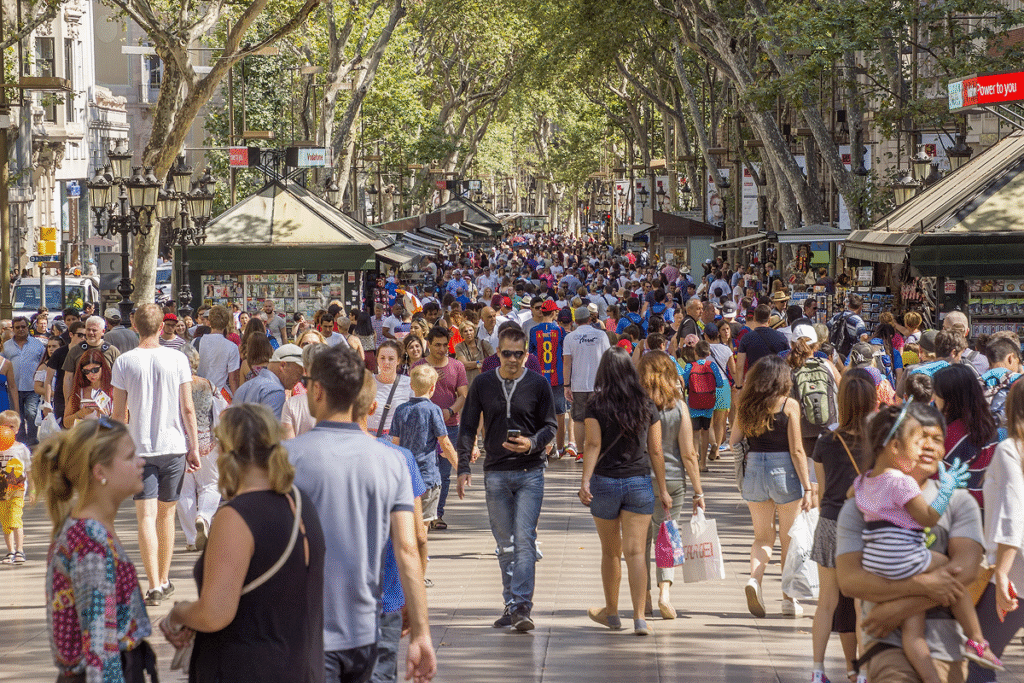
A growing mix of cultures is reshaping life in Spain’s busiest towns and cities. Credit: Veniamin Kraskov, Shutterstock.
Spain has hit a new population record in 2025 – and foreign residents are doing most of the heavy lifting. Fresh figures from Spain’s National Statistics Institute show the foreign population growing around 20 times faster than Spanish nationals, with almost one in five people now born abroad. For expat hubs from the Costa del Sol to the Costa Blanca, this surge is reshaping local jobs, housing and everyday life.
Foreign growth behind Spain’s population record
Spain now has 49.44 million residents, the highest figure ever recorded. In the last year alone, the population has grown by almost 475,000 people – but most of that increase comes from abroad, not from new births.
Since the start of 2025, the number of foreign nationals has risen by just over 4 per cent, while the population with Spanish nationality has edged up by only 0.2 per cent – a growth rate roughly 20 times slower. In total, more than 7.1 million residents now hold a foreign passport and around 9.8 million people living in Spain were born outside the country.
The largest groups of new arrivals continue to come from Colombia, Morocco and Venezuela, alongside Italians, Peruvians and returning Spanish citizens. Growth is especially strong in the Valencian Community, Aragon and Castilla-La Mancha, while regions like the Balearic Islands now have over one in five residents of foreign nationality. On the Costa del Sol, foreigners already make up more than 22 per cent of Malaga province’s population, and in Torrevieja on the Costa Blanca nearly half of residents are non-Spanish nationals.
Why this demographic shift matters
For many readers along Spain’s coasts, this shift is already visible on the street: more languages in the playground, more international small businesses, and more competition for long-term rentals. In provinces like Malaga, the foreign-origin population has grown by almost 13 per cent in just three years, even as the Spanish-born population has barely moved.
Economists point out that this trend is helping Spain tackle a structural problem. The country has one of Europe’s lowest birth rates and an ageing workforce, with millions of people due to retire in the coming decades. Foreign residents now account for roughly 15 per cent of the workforce and contribute about 10 per cent of Social Security income, with strong presence in hospitality, construction, agriculture, logistics and care work – sectors that keep coastal and rural economies alive.
At the same time, rapid growth does bring pressure. Popular regions like the Balearic Islands, Madrid and parts of the Valencian Community face tight housing markets and rising rents. Local health centres, schools and council services must adapt to a more diverse and often more mobile population, even as official data show that foreigners still make up a minority of users of public benefits and healthcare.
What residents and newcomers should know
For international readers already living in Spain – or thinking about it – the latest figures underline a simple reality:
-
Spain is likely to remain a country of immigration, not just a place to retire.
-
Regions with strong job creation and established expat communities – from the Costa del Sol and Costa Blanca to Madrid, Barcelona and the Balearic Islands – are expected to keep attracting both EU and non-EU residents.
-
Foreign residents who register on the padrón, learn Spanish and regularise their status are becoming central to local economies and neighbourhood life, not just temporary visitors.
If you are planning a move, it is worth checking official guidance on residence rights, local registration, healthcare and tax before you arrive, as requirements differ for EU and non-EU nationals and between regions.
What comes next for Spain’s population map?
Demographers expect Spain’s total population to keep rising in the short term, largely thanks to immigration and the children of immigrant families. In parts of inland Spain, newcomers are now the main reason village schools, health centres and small shops stay open at all.
The bigger questions are about integration and opportunity. How well will schools support more diverse classrooms? How quickly will newcomers move into stable, formal employment? And how will town halls in fast-growing areas manage housing, transport and healthcare as numbers climb?
For many readers, this story will feel familiar. Expat communities have long been part of everyday life in Spain’s towns and cities – and with the foreign population rising so fast, newcomers looking for a fresh start are becoming an even larger share of local streets, workplaces and school gates. In the end, this is about the neighbours you will have, the services your town can sustain, and the future shape of the country you now call home – or hope to.
Click here to read more Spanish news.
Follow Euro Weekly News on Google News
Get breaking news from Spain, travel updates, and expat stories directly on your Google News feed.
Follow on Google NewsSign up for personalised news
Subscribe to our Euro Weekly News alerts to get the latest stories into your inbox!
By signing up, you will create a Euro Weekly News account if you don't already have one. Review our Privacy Policy for more information about our privacy practices.




Harry Dennis
Born in the UK and raised on the Cádiz coast, Harry brings his background in design, music, and photography to his writing for Euro Weekly News, sharing stories that celebrate culture and lifestyle across Spain and beyond.
Comments