Nature’s wonder: Flamingos turn rice fields into a pink paradise
By Santiago Carneri • Published: 10 Feb 2026 • 16:45 • 2 minutes read
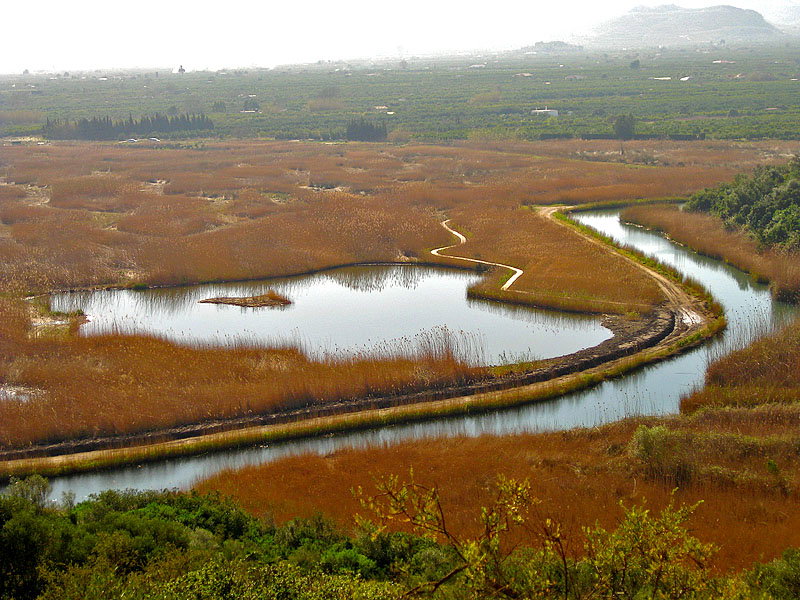
A natural spectacle in the Costa Blanca. Credit: Espencat / Creative Commons
The Marjal de Pego-Oliva Natural Park has witnessed a rare and stunning spectacle: a large flock of flamingos has stopped in its waters. These birds, which usually prefer saline wetlands such as the Calpe salt flats, have been drawn by the prolonged flooding of the rice fields, caused by an unusually wet, rainy, and windy winter. These conditions have made the park an ideal refuge during their migration, providing both food and rest for the birds.
This sighting is remarkable not only for its beauty but also for highlighting the biodiversity of this ecosystem. The Marjal is protected as a Special Protection Area for Birds (SPA), a European designation that ensures the conservation of migratory and nesting species. Up to nine species of waterbirds regularly breed in the park, with the imperial heron standing out for its regular presence and ecological importance.
A natural spectacle in the Costa Blanca
The flamingos’ presence adds to other notable sightings, such as swans that also take advantage of the flooded rice fields. Flamingos feed by filtering small invertebrates with their distinctive curved beaks, a behaviour that attracts birdwatchers and tourists alike. This phenomenon reinforces the Marjal’s status as a destination for sustainable tourism and ornithology in the Marina Alta, underlining the importance of protecting this “natural kidney” that purifies water and safeguards local wildlife against storms.
Marjal de Pego-Oliva, located between the towns of Pego and Oliva, covers 1,255 hectares and was declared a natural park on 27 December 1994. Its landscape combines rice fields, reed beds, and clear-water ponds, the result of a silting process that transformed an ancient bay into a lagoon and eventually into the current marsh. The network of historic irrigation channels maintains the park’s delicate water and ecological balance.
Rivers and vegetation that sustain life
Among the rivers crossing the park, the Bullent runs to the north and the Racons to the south, while the Serpis in the north provides most of the sediment shaping the terrain. Inland areas are characterised by tamarisks and reed beds, alongside aquatic vegetation, creating an ideal habitat for numerous plant and animal species that cannot survive elsewhere in the Valencian Community.
The high quality of the water supports unique aquatic life. Among the invertebrates are shrimp species such as Dugastella valentina and Athyaephyra desmaresti, while fish like the Samarugo and the Colmilleja enhance the park’s ecological value due to their rarity. The most characteristic reptiles are the common terrapin and the leprose terrapin, demonstrating the park’s diversity beyond birdlife.
Birds and iconic wildlife
The Marjal is particularly valuable for its birdlife, recognised by the Ramsar Convention. Nesting species include the little grebe, black-necked grebe, bittern, imperial heron, marbled teal, and watercock, the latter having been nearly extinct in the Valencian Community until recently. The white-winged black tern is another notable species, emphasising the uniqueness of this wetland.
Follow Euro Weekly News on Google News
Get breaking news from Spain, travel updates, and expat stories directly on your Google News feed.
Follow on Google NewsSign up for personalised news
Subscribe to our Euro Weekly News alerts to get the latest stories into your inbox!
By signing up, you will create a Euro Weekly News account if you don't already have one. Review our Privacy Policy for more information about our privacy practices.


Santiago Carneri
Santiago is a freelance journalist, writer, photographer, and documentary producer with over a decade of experience reporting from Paraguay and Brazil. His work has appeared in The New York Times, The Guardian, Vice News, BBC, Associated Press, France Press, Der Spiegel, Deutsche Welle, El País, and more. Now based in Dénia—his self-described secret paradise—Santi contributes to Euro Weekly News, bringing a global perspective to both local and international stories. Outside of journalism, he enjoys boxing and cultivating his home garden.
Comments