Shocking pink on Cotobro beach: Rare flamingo stops traffic in Almuñecar
By Adam Woodward • Published: 07 Aug 2026 • 19:00 • 2 minutes read
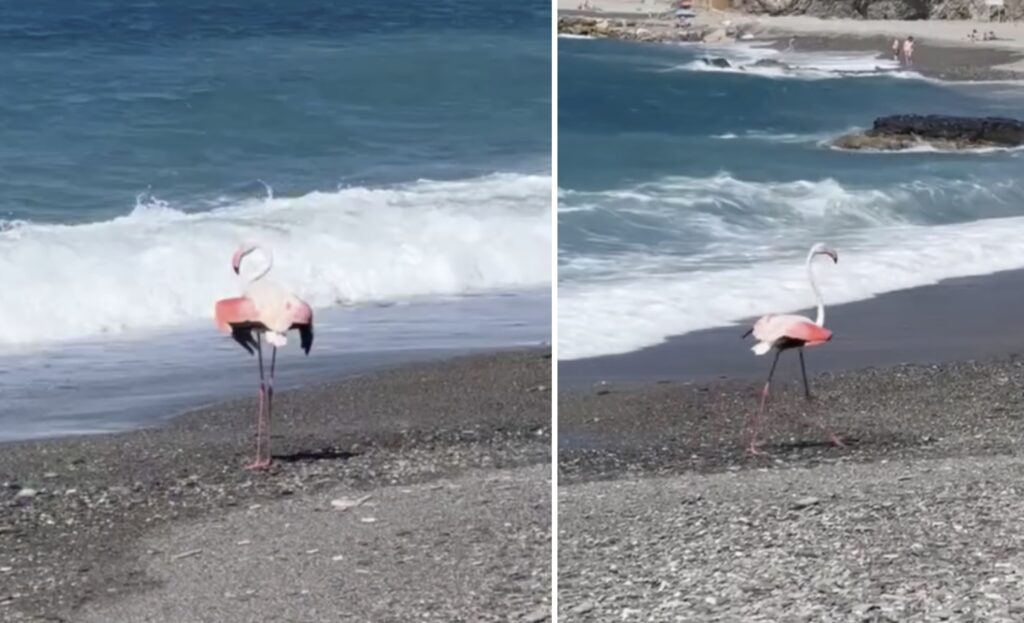
Flamingo pays a visit to Almuñecar. Credit: @alvaromrtn__ Inst
Beachgoers on a quiet Saturday morning in Almuñecar got more than they bargained for when a striking pink visitor dropped in for a paddle.
Around 11am one morning in July, with a stiff breeze keeping numbers down on Cotobro beach, a large bird with unmistakable rosy plumage flew in and touched down right on the shoreline. Everyone on the beach stopped what they were doing, phones out, as the greater flamingo (Phoenicopterus roseus) spent a few minutes near the waves before lifting off again and heading on its way.
Young local Alvaro Martin was among those who caught the moment on camera. “Everyone stopped to look and film it,” he said. The bird’s appearance caused quite a stir on a stretch of coast better known for its dark sand and pebble beaches than for wetland wildlife. Footage shared under the Instagram handle @alvaromrtn__ quickly circulated among those who missed the live show.
Not an everyday sight on the Costa Tropical
Greater flamingos are among Spain’s most eye-catching water birds, famous for their long legs, curved bills and that vivid pink colour that comes from the crustaceans and algae in their diet. They prefer shallow saline lagoons and coastal wetlands rather than open Mediterranean beaches. Records for Granada province show them mainly as passing birds, especially young ones moving after the breeding season, so a touchdown right on Cotobro beach is genuinely unusual.
Spain’s main strongholds lie further west or inland. Fuente de Piedra lagoon near Antequera in Malaga province holds the largest breeding colony on the Iberian Peninsula and one of the most important in the whole Mediterranean. Doñana National Park and other Andalusian wetlands also regularly host big numbers. Occasional strays do turn up along the Granada coast, but they rarely hang around for long.
Where to go if you want a proper flamingo fix
Anyone hoping for more than a fleeting glimpse has plenty of options within easy reach of Almuñecar. Fuente de Piedra, roughly an hour’s drive inland, will be the star attraction, with thousands of birds present in good years and excellent viewing hides and trails. Guided tours operate in season, and early mornings or evenings give the best light and activity. Doñana, a bit further afield towards Huelva and Seville, offers another classic wetland experience packed with flamingos and dozens of other species.
Closer to home, keep an eye on quieter stretches of the Costa Tropical and any temporary flooded areas after heavy rain. Birders often check eBird or local WhatsApp groups for the latest reports.
This Cotobro visitor was just passing through, but it gave a lucky few a memorable close-up of one of Europe’s most elegant birds right on their local beach. Next time the wind drops and the tide is right, it might be worth scanning the horizon a little more carefully.
Follow Euro Weekly News on Google News
Get breaking news from Spain, travel updates, and expat stories directly on your Google News feed.
Follow on Google NewsSign up for personalised news
Subscribe to our Euro Weekly News alerts to get the latest stories into your inbox!
By signing up, you will create a Euro Weekly News account if you don't already have one. Review our Privacy Policy for more information about our privacy practices.



Adam Woodward
Adam is a writer who has lived in Spain for over 25 years. With a background in English teaching and a passion for music, food, and the arts, he brings a rich personal perspective to his work at Euro Weekly News. As a father of three with deep roots in Spanish life, Adam writes engaging stories that explore culture, lifestyle, and the everyday experiences that shape communities across Spain.
Comments