Expats in Spain get unexpected relief as court scraps key residency rule
By Farah Mokrani • Updated: 25 Feb 2026 • 12:41 • 2 minutes read
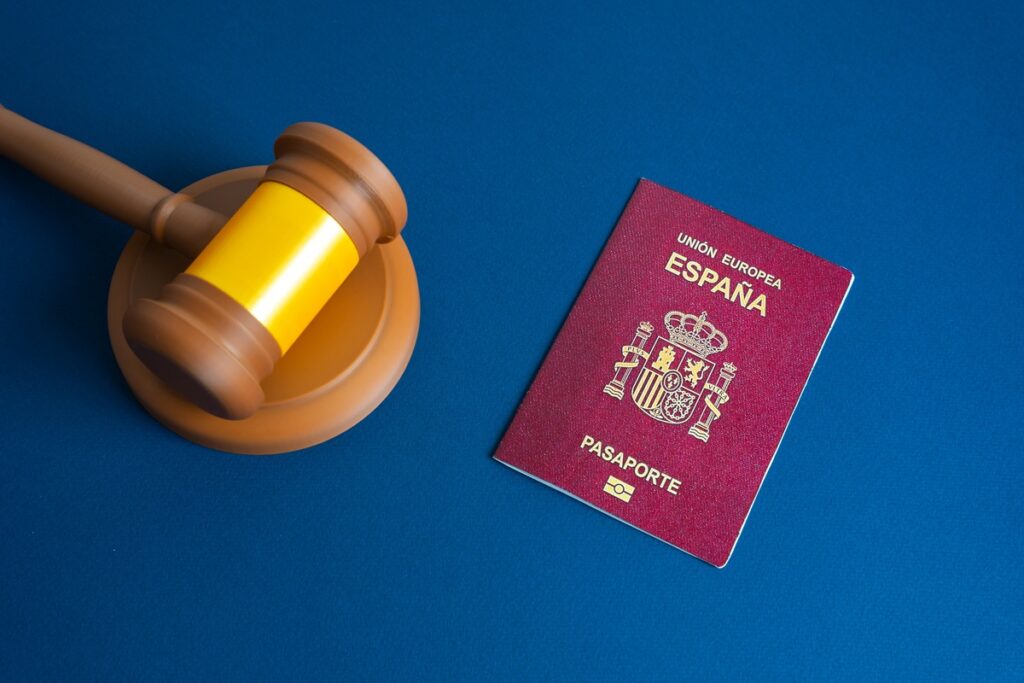
Spain’s residency rules change after Supreme Court decision affecting foreign residents Credit : Andrii Yalanskyi, Shutterstock
Foreign residents in Spain can now spend more than six months abroad without automatically losing their temporary residency, after the Supreme Court struck down a rule that had worried expats for years. The decision, published in the BOE, removes a restriction that previously allowed authorities to cancel residency permits simply because someone stayed outside Spain for too long.
For many people living between countries – remote workers, families with responsibilities abroad, or expats travelling frequently – the old rule felt like a constant risk hanging over everyday life. The ruling doesn’t mean residency is untouchable, but it does remove one of the most stressful triggers for losing it.
Why the six-month rule has been cancelled
The Supreme Court invalidated part of the immigration regulation that stated temporary residency could be withdrawn if the holder spent more than six months outside Spain within a year.
Judges argued that a restriction affecting freedom of movement cannot be introduced through a regulation alone. In their view, any limitation of that scale would need to be approved through parliamentary law.
In simple terms, immigration offices can no longer cancel a temporary residency permit purely because of time spent abroad – something that previously caused problems for many residents who travelled for work, family reasons or extended stays outside Spain.
What this really changes for expats
For expats, the biggest takeaway is peace of mind. Travelling abroad for longer periods is no longer, by itself, a direct threat to temporary residency.
However, immigration specialists are quick to point out that the ruling does not remove all obligations. Residency can still be lost if the original conditions are no longer met – for example, if employment ends, financial requirements disappear, or there are serious breaches of immigration rules.
There’s also an important detail many people overlook. Even though temporary residency is now safer from this specific rule, long-term residency and Spanish nationality still rely heavily on proof of continuous residence in Spain. Long absences may still complicate those applications.
So while the risk has eased, planning ahead remains essential.
How foreign residents should approach travel now
The ruling gives residents more flexibility, but it doesn’t mean documentation stops mattering. Immigration advisers recommend keeping records of trips abroad – flight bookings, passport stamps and proof of ties to Spain – especially when renewals or future applications are involved.
It’s also worth remembering that residency renewals still depend on meeting the same conditions that justified the permit in the first place. The court decision changes the absence rule, not the overall structure of Spain’s immigration system.
For expats who divide their time between Spain and another country, the change is significant. It allows more realistic mobility without the fear that a long visit abroad could suddenly undo years of residency.
A decision that reflects how expats actually live
The ruling comes at a time when cross-border lifestyles are becoming increasingly normal. Remote work, international families and flexible careers mean many residents no longer live strictly within one country year-round.
For years, the six-month absence rule felt out of step with that reality. The Supreme Court’s decision doesn’t completely rewrite residency rules, but it does acknowledge that modern mobility doesn’t fit neatly into rigid timelines.
For expats across Spain, the message is reassuring: you have more freedom to travel without automatically putting your residency at risk. At the same time, staying informed – and keeping an eye on renewal and long-term requirements – remains just as important as ever.
The change won’t dramatically alter everyday life overnight, but for many foreign residents, it removes one of the most worrying “what if” scenarios from living in Spain.
Follow Euro Weekly News on Google News
Get breaking news from Spain, travel updates, and expat stories directly on your Google News feed.
Follow on Google NewsSign up for personalised news
Subscribe to our Euro Weekly News alerts to get the latest stories into your inbox!
By signing up, you will create a Euro Weekly News account if you don't already have one. Review our Privacy Policy for more information about our privacy practices.





Farah Mokrani
Farah is a journalist and content writer with over a decade of experience in both digital and print media. Originally from Tunisia and now based in Spain, she has covered current affairs, investigative reports, and long-form features for a range of international publications. At Euro Weekly News, Farah brings a global perspective to her reporting, contributing news and analysis informed by her editorial background and passion for clear, accurate storytelling.
Comments
JRan
26 February 2026 • 16:18We just put in our paperwork for our 2nd non-lucrative (NLV) 2-year renewal. Mine was approved relatively fast, but for my wife they asked for evidence that she has not been out of the country for more than 183 days. We thought this was silly because her passport shows no exits from Spain/Schengen for over 2 years. We sent documents 1 week ago in showing extensive/frequent medical appointments. Does this ruling “erase” their inquiry about her, thus moving the package forward faster?
Nathalie Brooks
26 February 2026 • 18:39The problem I see with this is that if you are out of Spain for more than 6 months in a calendar year, you would not be tax resident anymore, theoretically. You cant dip in and out of that part of your residency! I only see this making peoples status more difficult.
Comments are closed.