Gibraltar Treaty text finally revealed: A new era for the Rock and the Campo
By Farah Mokrani • Updated: 26 Feb 2026 • 18:17 • 3 minutes read
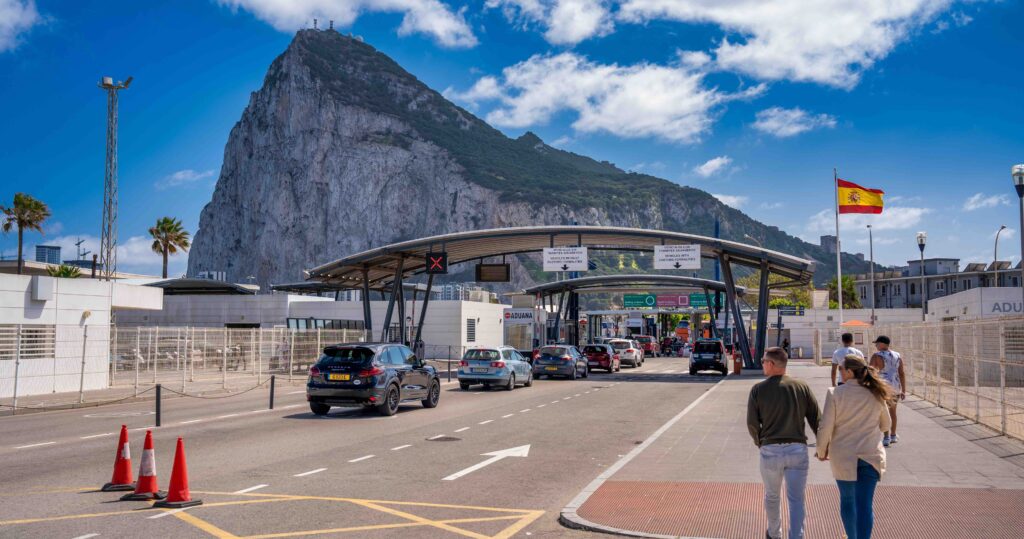
Gibraltar frontier crossing at La Línea beneath the Rock of Gibraltar Credit editorial: GagliardiPhotography / Shutterstock.com
After years of waiting and plenty of post-Brexit headaches, the full draft of the UK-EU agreement on Gibraltar has finally been made public – and it’s a big moment for everyone living and working on both sides of the border.
The document, released today (26 February 2026), sets out a clear plan for a much smoother, “Schengen-style” frontier and a proper economic partnership between Gibraltar and the neighbouring Campo de Gibraltar area in Spain. The aim is simple: get rid of those physical barriers that have been part of daily life for decades and give the region a solid shot at long-term growth and stability. As Chief Minister Fabian Picardo put it, “we are removing the physical barriers of a bygone era of friction.”
For the roughly 15,000 people who cross the border every day for work, this could mean real peace of mind, no more queues, no more uncertainty, just easier commutes and shared opportunities.
Sovereignty stays protected – the “double lock” is still there
One of the biggest worries for many has been sovereignty, but the treaty is very clear on this. Article 2 spells it out: the whole agreement is “without prejudice” to the UK’s and Spain’s positions on who owns Gibraltar. In plain English, this is purely about practical, economic and people stuff, nothing in the text can be twisted to claim or give away sovereignty over the Rock. It’s a technical fix, not a political handover. Deputy Chief Minister Dr Joseph Garcia was equally direct: “sovereignty was not and is not on the table.”
The two big pillars: people and goods
At its core, the deal focuses on making movement of people and trade as straightforward as possible.
- No more physical barriers at the frontier All the old checks and fences are set to disappear for people moving between Gibraltar and the Schengen area. Gibraltar isn’t actually joining Schengen, but it’ll follow similar rules to keep things flowing smoothly and protect the area’s integrity.
- A special customs union with the EU Goods will move freely across the land border. To make that work, there’s a new transaction tax kicking in (starting at 15 per cent) plus some changes to excise duties on things like booze and tobacco. These will gradually line up more with Spanish and EU levels, which might mean prices shift a bit for shoppers.
What it means in real life for locals and businesses
Credit: Official Draft Agreement in Respect of Gibraltar. Data analysed by Euro Weekly News.
What’s next – and the tight timeline
The treaty is lined up for provisional effect from 10 April 2026, that’s just over a month away. Before it fully kicks in, it’ll need the green light from Gibraltar’s Parliament and the European Parliament.
Some business leaders are a bit twitchy about the short notice for getting to grips with the new tax rules and changes, but the overwhelming feeling is relief. The alternative, a no-deal mess with hard biometric borders and long queues, would have been far worse.
Overall, this feels like the end of a long, uncertain chapter and the start of something more stable for Gibraltar, the Campo, and the thousands who live and work in this unique corner of Europe. Fingers crossed the final steps go smoothly, it’s been a long road, but it looks like smoother days are ahead.
Follow Euro Weekly News on Google News
Get breaking news from Spain, travel updates, and expat stories directly on your Google News feed.
Follow on Google NewsSign up for personalised news
Subscribe to our Euro Weekly News alerts to get the latest stories into your inbox!
By signing up, you will create a Euro Weekly News account if you don't already have one. Review our Privacy Policy for more information about our privacy practices.




Farah Mokrani
Farah is a journalist and content writer with over a decade of experience in both digital and print media. Originally from Tunisia and now based in Spain, she has covered current affairs, investigative reports, and long-form features for a range of international publications. At Euro Weekly News, Farah brings a global perspective to her reporting, contributing news and analysis informed by her editorial background and passion for clear, accurate storytelling.
Comments
Mel B
27 February 2026 • 17:31So as a 72 year old British grandfather, when ever I visit Gibraltar I’ll be a second class citizen there as I can only stop for a maximum of 90 days, in my opinion it’s a poor show and the thin edge of the wedge
Comments are closed.