New hope for Britons in Spain as MPs push to end the 90-day travel rule
By Farah Mokrani • Published: 12 Mar 2026 • 12:57 • 4 minutes read
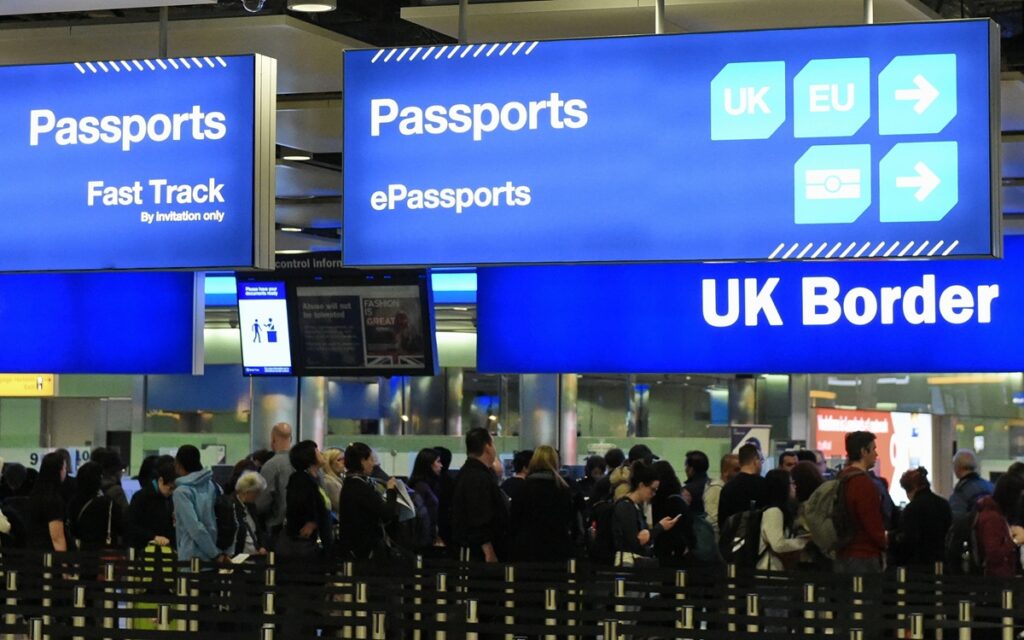
Passengers queue at passport control as post-Brexit travel rules affect UK citizens visiting Europe. Credit : 1000 Words, Shutterstock
For millions of Britons who spend time in Spain, France or other parts of Europe, the 90-days-in-180 travel rule has been one of the most frustrating realities of life after Brexit. Now, some UK MPs are pushing the government to address the issue, arguing that the restriction continues to cause problems for British citizens who live, work or regularly travel across the EU.
The rule itself hasn’t changed. British passport holders can still travel visa-free to the Schengen area for up to 90 days within any 180-day period. But political pressure in Westminster is growing, with MPs from different parties saying the current situation is creating unnecessary complications for British expats, second-home owners and businesses operating across Europe.
For the large British communities living in countries such as Spain, France, Portugal and Italy, the debate is being watched closely.
Why the 90/180 rule remains such a big issue for Britons abroad
Before Brexit, British citizens could move freely across Europe, staying for as long as they wished in EU countries. That changed in 2021 when the UK left the EU’s free movement system.
Since then, UK nationals visiting the Schengen zone – which includes most EU countries such as Spain, France, Germany and Italy – can stay for up to 90 days within any 180-day period without needing a visa.
For many travellers this isn’t a major problem. But for people who used to spend long stretches of time in Europe – especially retirees, remote workers and second-home owners — the rule has had a much bigger impact.
Someone who owns a house in Spain, for example, may now only be able to stay for three months at a time unless they apply for residency or a long-stay visa.
It has also complicated life for people who split their year between different countries or travel frequently for work.
The situation has become even more sensitive as the European Union introduced new automated border controls such as the Entry/Exit System (EES), which will digitally track how long non-EU travellers stay in the Schengen area.
With those systems, overstaying the 90-day limit will be much easier for authorities to detect.
MPs say Britons abroad were overlooked after Brexit
Some UK politicians believe the travel restrictions highlight a wider problem: the needs of British citizens living overseas were not fully considered during Brexit negotiations.
The Liberal Democrats have been among the most vocal on the issue. Party representatives have previously argued that millions of Britons working or living abroad were largely overlooked when the withdrawal agreement was finalised.
Helen Morgan, the Liberal Democrat MP for North Shropshire, has said the party wants the government to take a more proactive approach to repairing relations with Europe and addressing problems caused by Brexit – including the 90-day rule.
She said the Liberal Democrat leadership, including party leader Sir Ed Davey, has been pressing the government to look again at several post-Brexit obstacles affecting citizens and businesses, from customs arrangements to travel restrictions.
According to Morgan, the rule has created difficulties not only for individuals but also for export businesses and professionals who frequently travel between the UK and EU countries.
Support from Labour MPs adds to the pressure
Concerns about the rule are not limited to one political party.
Labour MP Mary Foy, who represents Durham, has also criticised the situation, describing the 90/180 restriction as one of the many negative consequences of the Brexit deal agreed under the previous Conservative government.
Foy has said the agreement failed to properly safeguard the interests of UK citizens who live or work across European borders.
While there is cross-party concern about the impact, changing the rule is far from straightforward.
The 90-day limit is not a special rule created specifically for the UK. It is a standard policy applied to visitors from many non-EU countries entering the Schengen area.
That means the UK government cannot simply change it on its own. Any major alteration would require negotiation and agreement with the European Union, which makes the issue politically complex.
What this means for British expats living in Spain
For Britons who are officially resident in Spain, the rule generally doesn’t apply in the same way.
Residents who hold the TIE residency card can live in Spain legally and travel freely in and out of the country as long as their residency remains valid.
However, the situation is different for people who are not residents but spend significant time in Spain, such as second-home owners or long-term visitors.
They must still respect the 90-day limit within the Schengen area unless they obtain a visa or residency permit.
This has led many people to reconsider how they divide their time between the UK and Spain, and in some cases has pushed travellers to apply for non-lucrative visas or residency permits in order to stay longer.
For now, the rule remains unchanged
Despite the growing political debate in London, the reality for travellers remains the same.
The UK Foreign Office continues to remind British citizens that they can visit Schengen countries – including Spain – for up to 90 days in any 180-day period without a visa.
This applies to travel for tourism, visiting family or friends, attending events, business meetings or short-term studies.
Anyone who stays beyond the limit risks serious consequences, including being banned from entering Schengen countries for up to three years.
For the moment, MPs raising the issue in Parliament are simply trying to keep the conversation alive.
Whether that pressure eventually leads to negotiations with the EU remains uncertain. But for the millions of Britons living, working or spending time across Europe, the future of the 90-day rule is clearly far from settled.
Follow Euro Weekly News on Google News
Get breaking news from Spain, travel updates, and expat stories directly on your Google News feed.
Follow on Google NewsSign up for personalised news
Subscribe to our Euro Weekly News alerts to get the latest stories into your inbox!
By signing up, you will create a Euro Weekly News account if you don't already have one. Review our Privacy Policy for more information about our privacy practices.




Farah Mokrani
Farah is a journalist and content writer with over a decade of experience in both digital and print media. Originally from Tunisia and now based in Spain, she has covered current affairs, investigative reports, and long-form features for a range of international publications. At Euro Weekly News, Farah brings a global perspective to her reporting, contributing news and analysis informed by her editorial background and passion for clear, accurate storytelling.
Comments
Algoz
15 March 2026 • 19:03Meanwhile, Spanish citizens can spend up to 6 months in the United Kingdom….how can that be right?
Comments are closed.