Alhendín opens first ”Cat Hotel” for local cat colony. Shelter aims to improve animal welfare
By Molly Grace • Published: 13 Mar 2026 • 22:32 • 3 minutes read
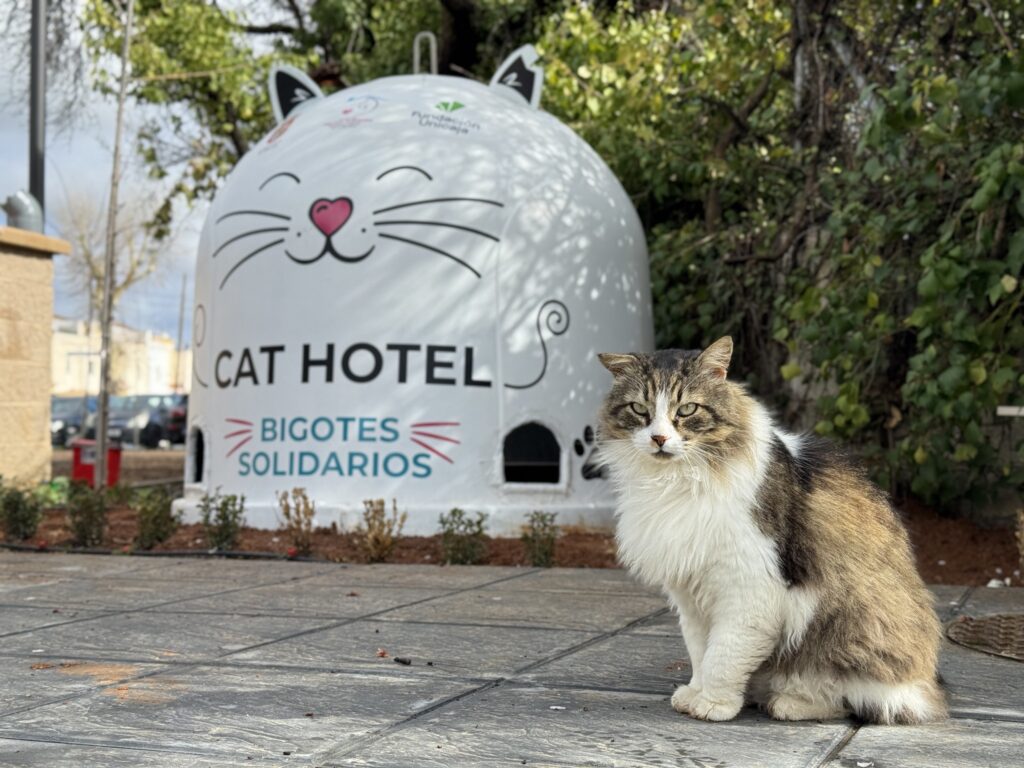
The installation of the Cat Hotel is being viewed as a pilot project that could lead to additional shelters. Photo credit: Ayuntamiento de Alhendín/Facebook
The municipality of Alhendín in the province of Granada has inaugurated its first “Cat Hotel”, a specially adapted shelter designed to protect community cats living in local colonies. The project has been developed with support from the Fundación Unicaja and the town’s local authority, Ayuntamiento de Alhendín. The initiative forms part of ongoing efforts in the town to improve the management and welfare of stray cat colonies while promoting responsible and humane animal control policies.
New shelter created from recycled container
The Cat Hotel has been built using a recycled bottle bank container that has been modified to provide safe shelter for cats living outdoors. The structure has been adapted so that animals can enter easily while remaining protected from rain, cold and high summer temperatures. Inside the container, the space has been prepared to provide a secure refuge for community cats that live in managed colonies in the municipality. The project demonstrates how existing urban infrastructure can be reused to support animal welfare initiatives.
Local volunteers and animal welfare advocates collaborated in the design and installation of the shelter to ensure it meets the needs of the cats that will use it.
Community organisations involved in the project
The shelter was promoted by the volunteer association Colonias Felinas de Alhendín Bigotes Solidarios, a group that works locally to monitor and care for cat colonies across the municipality. The association collaborates with the local council to supervise feeding points, monitor the health of cats and assist with sterilisation programmes designed to control colony populations. Support from the Fundación Unicaja helped make the Cat Hotel project possible, providing resources for the construction and installation of the structure.
Local authorities say cooperation between volunteers, charities and public institutions is an essential part of managing community animal populations effectively.
Part of a wider cat colony management strategy
The project forms part of the wider system used across many Spanish municipalities to manage stray cat populations through the CER method, which stands for Capture, Sterilise and Return. Under this approach, cats living in colonies are captured humanely, sterilised by veterinarians and then returned to their original territory. This method aims to stabilise colony populations, improve animal health and reduce uncontrolled breeding.
In addition to sterilisation, volunteers and local authorities monitor feeding areas and provide shelters so that animals can live in safer conditions while remaining within their established territories. The Cat Hotel installed in Alhendín is intended to complement this approach by offering a protected space for cats within the colony network.
Location and purpose of the new facility
The shelter has been installed on the old Motril road in the municipality, an area where community cat colonies are present. By providing a designated refuge, organisers hope the structure will help protect animals from harsh weather conditions and reduce the risks they face when living outdoors. Volunteers working with local cat colonies will continue to monitor the animals that use the shelter and ensure it remains clean and suitable for use.
According to organisers, the initiative also aims to raise awareness about responsible management of community cats and the importance of humane population control methods.
A model that could expand locally
The installation of the Cat Hotel is being viewed as a pilot project that could lead to additional shelters being created in other areas of the municipality in the future.
Local officials say that if the initiative proves successful, similar structures could be installed in other locations where managed colonies exist. Animal welfare groups increasingly promote shelters of this kind as part of broader programmes to improve conditions for community cats while maintaining balanced urban ecosystems.
Growing attention to urban animal welfare
Across Spain, municipalities are expanding programmes to regulate and manage cat colonies following new national legislation on animal welfare introduced in recent years.
These policies encourage cooperation between councils, veterinary professionals and volunteer organisations to implement humane population control and improve the living conditions of animals that cannot easily be rehomed.
The Cat Hotel in Alhendín reflects this broader trend, combining local volunteer efforts with institutional support to address the needs of community cats in a structured and sustainable way. Officials say the project represents an example of how small-scale initiatives can contribute to improving animal welfare while maintaining responsible management of urban wildlife populations.
Sign up for personalised news
Subscribe to our Euro Weekly News alerts to get the latest stories into your inbox!
By signing up, you will create a Euro Weekly News account if you don't already have one. Review our Privacy Policy for more information about our privacy practices.





Molly Grace
Molly is a British journalist and author who has lived in Spain for over 25 years. With a background in animal welfare, equestrian science, and veterinary nursing, she brings curiosity, humour, and a sharp investigative eye to her work. At Euro Weekly News, Molly explores the intersections of nature, culture, and community - drawing on her deep local knowledge and passion for stories that reflect life in Spain from the ground up.
Comments