Bailiffs place seizure notice on Ryanair jet amid passenger compensation row
By Molly Grace • Published: 17 Mar 2026 • 22:08 • 3 minutes read
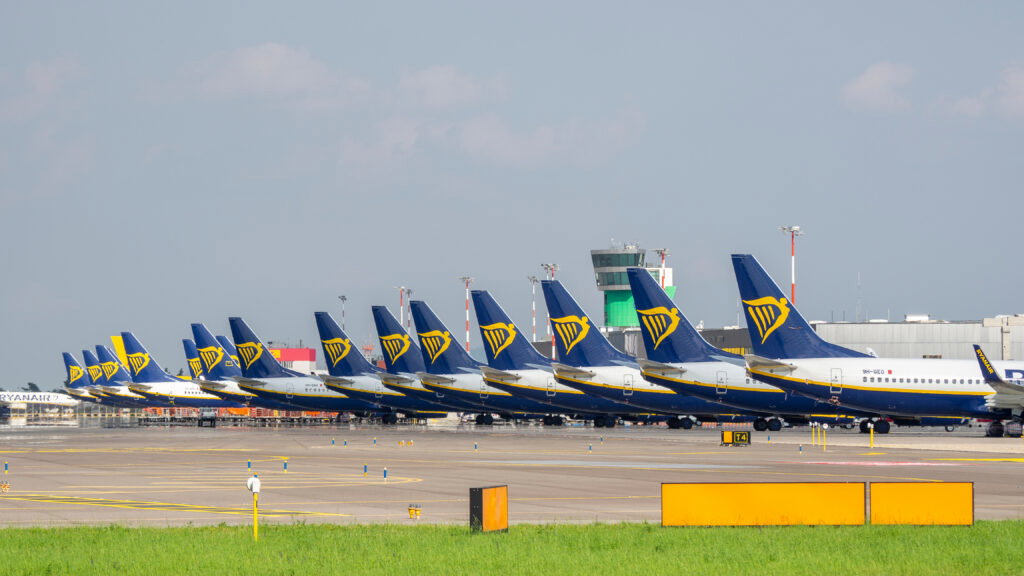
The use of a seizure notice does not equate to an outright grounding of the aeroplane. Photo credit:MC MEDIASTUDIO/Shutterstock
An Austrian court’s enforcement action against Ryanair has triggered an unusual legal incident in the civil aviation sector after a budget airline failed to pay compensation owed to a passenger, officials and media reports confirm.
A legal representative acting for a passenger boarded a Ryanair Boeing 737 at Linz Airport to execute a court order compelling the airline to settle €890 in compensation, interest and legal costs. The amount was awarded following a long delay on a flight from Linz to Palma de Mallorca in July 2024.
The delay exceeded 13 hours, forcing the passenger and her companions to secure alternative flights at their own expense. Although Ryanair later refunded the original ticket price, it did not pay additional costs or the compensation awarded under European Union passenger rights regulations, prompting the woman to pursue enforcement through the Austrian courts.
Seizure Notice, Not Grounding
When judicial officials attempted to collect the outstanding amount, they encountered a procedural difficulty: Ryanair’s aircraft operate without cash onboard. A bailiff consequently affixed an official seizure notice, known locally as a “Kuckuck‑Pickerl”, inside the cabin to indicate that the asset was under court control until the debt is satisfied.
Despite the attachment of the notice, the aircraft was permitted to depart as scheduled for a flight to London, in line with the conditions under which the court allowed the plane to continue operations.
The use of a seizure notice does not equate to an outright grounding of the aeroplane, but it does carry legal implications. If the amount remains unpaid beyond a set deadline, the asset could in theory be offered for public sale to satisfy the judgment, a rare and striking outcome for passenger compensation disputes.
Ryanair Disputes “Seizure” Characterisation
Ryanair has disputed the characterisation of the action as an aircraft seizure, stating that no aircraft of its fleet has been seized officially. The airline has not clarified whether it subsequently paid the compensation and costs that were the subject of the enforcement action.
The carrier’s response reflects a longstanding position that such enforcement actions are exceptional and that most disputes over EU passenger rights are resolved through internal processes or standard claim mechanisms long before resorting to judicial remedies.
Passenger Rights Under EU Law
Under European Union Regulation (EC) No 261/2004, passengers whose flights are delayed by more than three hours on arrival may be entitled to compensation ranging from €250 to €600, depending on flight distance and other conditions. The regulation also grants rights to care and reimbursement where flights are cancelled or significantly delayed.
The Linz case highlights the sometimes‑challenging gap between legal entitlement and practical enforcement of these rights. While most airlines settle such claims as part of customer service or regulatory compliance, disputes occasionally escalate when carriers contest liability or delay settlement.
Unusual Legal Precedent
Instances in which a court seeks to enforce payment against an airline by identifying aircraft as potential security for the debt are exceedingly rare. Aviation lawyers note that creditors commonly obtain judgements without pursuing further action; enforcement measures such as asset attachment or seizure are typically reserved for commercial or corporate debt disputes outside the aviation context.
A similar dispute occurred in France in 2018, when French authorities impounded a Ryanair aircraft after a prolonged battle over unpaid subsidies, a case that ended when the airline settled a multimillion‑euro bill.
Broader Passenger Advocacy Concerns
Passenger rights groups have welcomed the Linz action as a reminder of EU passengers’ entitlements, while also criticising what they describe as inconsistent payment practices by budget carriers. Such groups argue that robust enforcement mechanisms are essential to ensure that compensation awards have real effect.
However, carriers counter that most claims are resolved without litigation and that judicial enforcement tools are not typically necessary. In the Linz case, Ryanair’s characterisation of the action reflects broader industry concern about misrepresentation in reporting enforcement notices.
Follow Euro Weekly News on Google News
Get breaking news from Spain, travel updates, and expat stories directly on your Google News feed.
Follow on Google NewsSign up for personalised news
Subscribe to our Euro Weekly News alerts to get the latest stories into your inbox!
By signing up, you will create a Euro Weekly News account if you don't already have one. Review our Privacy Policy for more information about our privacy practices.





Molly Grace
Molly is a British journalist and author who has lived in Spain for over 25 years. With a background in animal welfare, equestrian science, and veterinary nursing, she brings curiosity, humour, and a sharp investigative eye to her work. At Euro Weekly News, Molly explores the intersections of nature, culture, and community - drawing on her deep local knowledge and passion for stories that reflect life in Spain from the ground up.
Comments