Drivers in Spain can face fines for driving one handed under strict control rules
By Farah Mokrani • Updated: 20 Mar 2026 • 10:39 • 2 minutes read
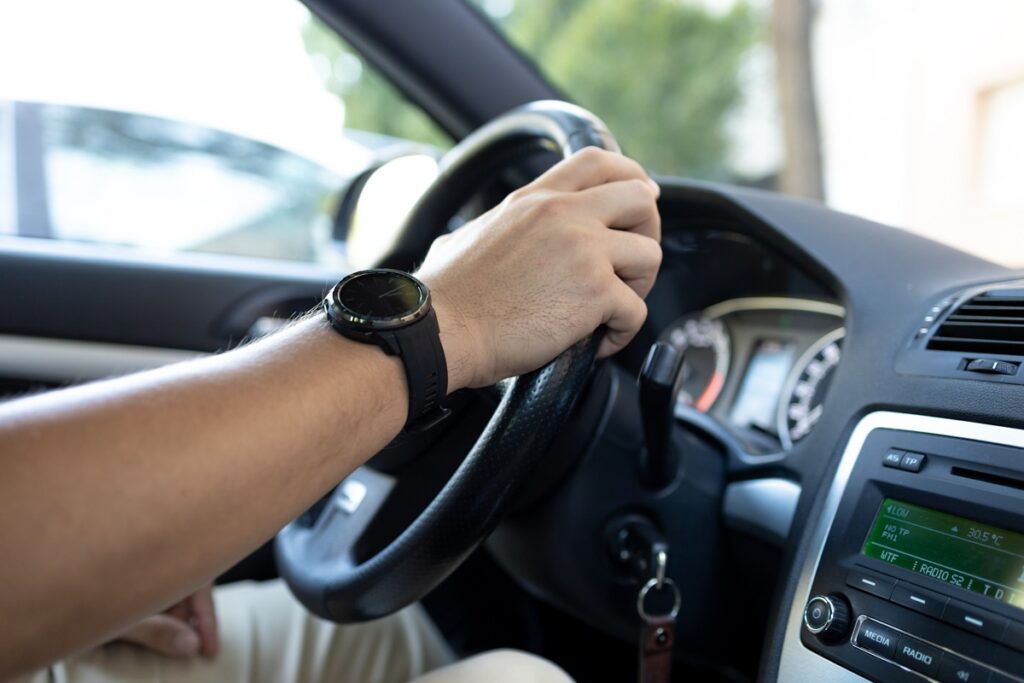
One-handed driving in Spain could lead to fines depending on the situation Credit : Vladimir_Platonov, Shutterstock
Drivers in Spain can face fines for driving with just one hand under strict control rules, traffic authorities have confirmed. The clarification affects anyone behind the wheel, including expats, as enforcement depends on how police judge your control of the vehicle in real driving situations.
Driving with one hand in Spain: why you can still be fined
This is where many drivers get caught out.
There’s no line in Spanish law that clearly says “you cannot drive with one hand”. But the law does say something broader – and stricter.
Drivers must always maintain full control of their vehicle, keep proper visibility and remain fully attentive. That’s the key point.
So if driving with one hand reduces your control – or looks like it does – it can be penalised.
It’s not about the hand itself. It’s about what it means in practice.
Up to €200 fines: when one-handed driving becomes a problem
In reality, everything depends on the situation.
If you briefly remove a hand to change gear, that’s completely normal. No issue.
But if you’re driving one-handed while doing something else, that’s where it becomes risky – and potentially expensive.
Holding a phone, eating, smoking, adjusting the GPS… these are the situations traffic officers are looking at.
Fines can vary depending on how serious it looks:
- Around €80 for minor issues with posture
- Up to €100 in less safe situations
- Up to €200 if considered negligent driving
At that stage, it’s no longer about posture – it’s about safety.
A common habit that can catch expats off guard
For many expats living in Spain, this kind of rule isn’t always obvious.
In countries like the UK or elsewhere in Europe, driving with one hand is rarely something people think about. But in Spain, enforcement is more focused on behaviour in real time.
That means small everyday habits can suddenly matter.
Driving along the coast in Alicante with a coffee in hand. Adjusting the radio in Malaga traffic. Resting your arm while cruising through Torrevieja.
None of these feel like a big deal – until they are.
Because here, it’s not just about what you’re doing. It’s about how safe it looks to the officer observing you.
What Spanish police are really looking for behind the wheel
The real issue isn’t your hand – it’s everything around it.
Driving with one hand often means you’re doing something else. And that’s where the risk increases.
Less control of the wheel, slower reaction times, reduced attention – especially in unexpected situations like sudden braking or avoiding an obstacle.
That’s why these cases are taken seriously.
Even if it feels harmless in the moment.
What drivers in Spain should do to avoid fines
If you want to avoid any problems, the safest approach is simple.
Keep both hands on the wheel as much as possible, especially in traffic or on faster roads.
Avoid doing anything else while driving that takes your attention or requires you to let go of the wheel for more than a second.
If you need to check your phone, eat, drink or adjust something – pull over first.
Because in Spain, it’s not always about strict rules. It’s about how your driving is judged in real life.
What to expect next from Spanish traffic rules
There’s no new law being introduced here – but enforcement is clearly becoming stricter when it comes to driver behaviour.
The DGT is increasingly focusing on everyday habits that reduce attention, even slightly.
So while the rules haven’t changed on paper, how they’re applied on the road is evolving.
And for drivers in Spain, that’s what really makes the difference.
Follow Euro Weekly News on Google News
Get breaking news from Spain, travel updates, and expat stories directly on your Google News feed.
Follow on Google NewsSign up for personalised news
Subscribe to our Euro Weekly News alerts to get the latest stories into your inbox!
By signing up, you will create a Euro Weekly News account if you don't already have one. Review our Privacy Policy for more information about our privacy practices.





Farah Mokrani
Farah is a journalist and content writer with over a decade of experience in both digital and print media. Originally from Tunisia and now based in Spain, she has covered current affairs, investigative reports, and long-form features for a range of international publications. At Euro Weekly News, Farah brings a global perspective to her reporting, contributing news and analysis informed by her editorial background and passion for clear, accurate storytelling.
Comments