A Palma Airport advert has sparked outrage across Mallorca and here’s why
By Farah Mokrani • Published: 31 May 2026 • 12:21 • 3 minutes read
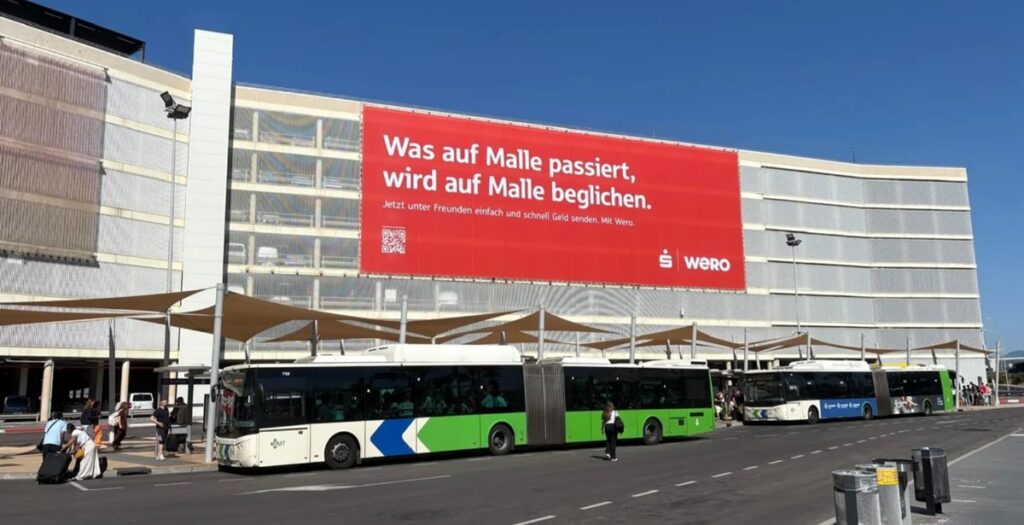
The Wero billboard at Palma Airport has sparked criticism from politicians who say it sends the wrong message about Mallorca. Credit : Europa Press
A giant advert at Palma Airport has sparked an unexpected row in Mallorca. The billboard is not promoting alcohol, nightlife or package holidays. It advertises Wero, a digital payment service similar to Bizum.
Yet its slogan has angered politicians and residents who believe it sends exactly the wrong message about the island. Within days, it had become one of the most talked about topics on the island.
The reason was not the product being advertised. It was a phrase that many people in Mallorca felt carried a message they have grown tired of hearing.
The billboard promotes Wero, a money transfer service similar to Bizum. But critics say the slogan echoes one of the most famous tourism campaigns ever created: ‘What happens in Vegas stays in Vegas.’
For some people, that comparison may seem harmless.
In Mallorca, it landed very differently.
The Balearic government has now asked airport operator Aena to remove the advert, arguing that it projects an image of the island that many residents and local authorities have spent years trying to move away from.
Why a banking advert has caused such a strong reaction
The wording on the billboard refers to paying friends back quickly and easily during a trip.
On its own, it sounds fairly innocent. The controversy comes from what many people believe it is referencing.
The slogan has been widely interpreted as a wink to the famous Las Vegas campaign that became globally known in the early 2000s.
That campaign was built around the idea of holidays without limits, wild nights out and experiences best left untold.
Whether the creators of the Mallorca advert intended that comparison or not, many people immediately made the connection.
And that is where the problems began. Tourism councillor Jaume Bauzà described the campaign as unacceptable and argued that it damages Mallorca’s international image.
Politicians from both the Partido Popular and Més per Mallorca have publicly called for the billboard to be taken down.
Their criticism is not really about a payment app. It is about what they believe the slogan represents.
A sensitive moment for Mallorca
The timing probably explains why the reaction has been so strong. Tourism remains the island’s economic lifeblood, but discussions about overcrowding and visitor numbers have become increasingly common.
Over the past few years, Mallorca has found itself at the centre of debates about overtourism, housing pressures and the strain that millions of visitors place on infrastructure every summer.
At the same time, local authorities have tried to promote a broader image of the island.
Beaches remain important, of course. So do restaurants, hotels and nightlife.
But officials have increasingly focused on culture, gastronomy, nature and year round tourism rather than the party destination reputation associated with certain resorts.
That is why some residents saw the advert as a step backwards. For them, it revived a stereotype that Mallorca has spent years trying to shake.
The use of ‘Malle’, a nickname commonly used by Germans when referring to Mallorca, generated criticism as well.
To many German tourists, the term is completely normal. To some locals, it has become associated with a version of Mallorca that feels disconnected from the island’s identity.
Aena says the criticism is misplaced
Aena has defended the billboard and rejected claims that it promotes excessive tourism. The airport operator points out that the advert is marketing a financial service and not encouraging any particular type of behaviour.
It has also stressed that airports do not determine tourism demand.
According to Aena, the number of visitors travelling to Mallorca depends on the destination itself and the tourism offer available on the island. That response has done little to calm the debate.
What makes this story unusual is that almost nobody is arguing about the actual product being advertised.
The discussion is entirely about perception : One side sees a harmless marketing campaign. The other sees a slogan that recalls a tourism model Mallorca is trying to leave behind.
For travellers arriving at Palma Airport, the billboard may be little more than another advertisement among hundreds of others.
For many people living on the island, however, it has become something much bigger than that. It has become part of a conversation Mallorca has been having with itself for years about the kind of destination it wants to be in the future.
Follow Euro Weekly News on Google News
Get breaking news from Spain, travel updates, and expat stories directly on your Google News feed.
Follow on Google NewsSign up for personalised news
Subscribe to our Euro Weekly News alerts to get the latest stories into your inbox!
By signing up, you will create a Euro Weekly News account if you don't already have one. Review our Privacy Policy for more information about our privacy practices.



Farah Mokrani
Farah is a journalist and content writer with over a decade of experience in both digital and print media. Originally from Tunisia and now based in Spain, she has covered current affairs, investigative reports, and long-form features for a range of international publications. At Euro Weekly News, Farah brings a global perspective to her reporting, contributing news and analysis informed by her editorial background and passion for clear, accurate storytelling.
Comments