Drivers in Spain are seeing this white diamond and many do not know it can cost €200
By Farah Mokrani • Published: 23 Apr 2026 • 20:19 • 3 minutes read
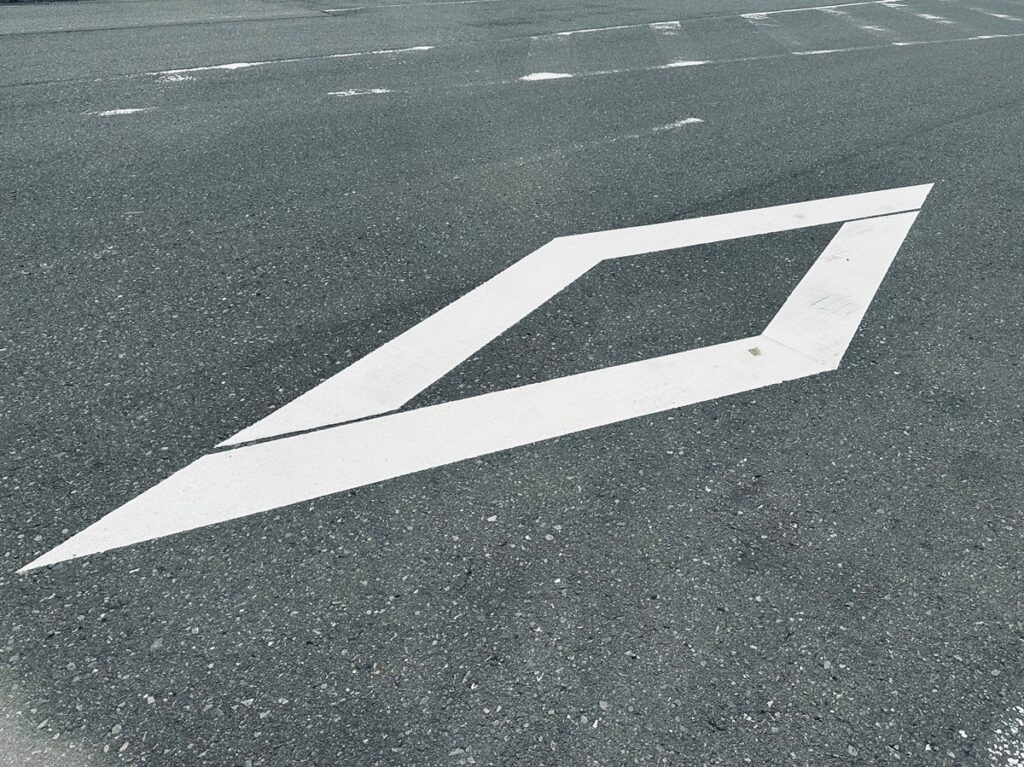
Spain warns drivers over white diamond lane that can bring €200 fine Credit : ayanopotato, Shutterstock
Drivers in Spain are being reminded to watch out for a white diamond painted on the road, because entering the wrong lane could lead to a €200 fine. The marking is used to identify BUS VAO lanes, special lanes reserved for buses and high occupancy vehicles, and many motorists still misunderstand who can legally use them.
At first glance, it can look like just another road symbol. But if you move into one of these lanes without meeting the rules in force at that moment, you could be fined.
The warning comes as Spain’s traffic authority, the DGT, continues expanding and promoting these lanes in several busy areas to reduce congestion and speed up journeys into major cities.
What the white diamond means on Spanish roads
The white diamond is used to show that a lane is reserved, usually as a BUS VAO lane.
VAO stands for high occupancy vehicles. In simple terms, these lanes are intended for vehicles carrying more than one person, alongside buses and other authorised traffic depending on local rules.
The idea is straightforward. Reward car sharing, give priority to public transport and keep traffic moving where queues are common.
That is why these lanes are often found on routes leading into large cities during busy commuting hours.
Spain has used them for years, but many drivers still hesitate when they see the marking or assume it is simply a faster lane open to everyone.
It is not.
Before entering, motorists are expected to check the overhead signs, illuminated signals and lane instructions active on that stretch of road.
The conditions can change depending on time, traffic levels and local management.
Who is allowed to use the lane
Under the latest traffic measures, the standard rule on many VAO lanes is at least two occupants in the vehicle, including the driver.
That means a driver travelling alone may not be allowed to enter unless another rule specifically permits it.
Other authorised users can include buses, coaches, motorcycles and certain adapted vehicles.
On some sections, taxis or vehicles with environmental labels may also be allowed when electronic signs indicate this.
That detail matters.
A driver may be permitted one day or at one hour, but not necessarily under different conditions later. This is why simply following the car in front can be an expensive mistake. The lane rules are shown by road signs and electronic panels, not by guesswork.
Why drivers are getting fined
According to the DGT, using a BUS VAO lane without authorisation can bring a €200 penalty. That includes entering while travelling alone when the lane requires two occupants, or ignoring active restrictions shown on the route.
Enforcement is becoming more sophisticated. On the A 2 corridor, traffic authorities have already announced systems capable of reading number plates and detecting vehicle occupancy.
So this is no longer just about police officers spotting misuse from the roadside.
Technology is now part of the control system. That means drivers should assume the lane is monitored, especially in high traffic zones.
Where these lanes are found
Many people associate BUS VAO lanes only with Madrid, but they are no longer limited to the capital.
The DGT’s annual traffic measures include lanes on routes such as the A 6 and A 2 in Madrid, the V 21 in Valencia, the Ma 19 in Palma, plus stretches in Granada, Seville and Málaga.
That wider rollout means more residents, visitors and expats may encounter the white diamond marking, even if they rarely drive in Madrid.
For people hiring cars in Spain, it is particularly worth knowing.
Visitors often focus on speed limits, parking rules and tolls, but lane restrictions can catch them out just as easily.
One detail many motorists miss
Some BUS VAO lanes do not operate under the same conditions all day. On certain routes, when signals are switched off, the lane may return to normal use and become open to general traffic.
That can create confusion for drivers who are unfamiliar with the system and the safest habit is to look up before moving over.
Check whether the lane is active, whether access is open and what type of vehicles are currently allowed. A few seconds of attention can save money and stress.
Why the DGT is using them more often
Spain’s traffic authority sees these lanes as a practical way to tackle congestion without building entirely new roads. If more people share cars and buses move faster, existing roads can carry more people with fewer vehicles.
That is the theory behind the policy.
Whether drivers love them or hate them, they are likely to become a more common feature in busy urban areas.
So if you spot a white diamond ahead, do not treat it like decoration.
In Spain, it can mean one thing very clearly: check the rules before you change lane.
Sign up for personalised news
Subscribe to our Euro Weekly News alerts to get the latest stories into your inbox!
By signing up, you will create a Euro Weekly News account if you don't already have one. Review our Privacy Policy for more information about our privacy practices.




Farah Mokrani
Farah is a journalist and content writer with over a decade of experience in both digital and print media. Originally from Tunisia and now based in Spain, she has covered current affairs, investigative reports, and long-form features for a range of international publications. At Euro Weekly News, Farah brings a global perspective to her reporting, contributing news and analysis informed by her editorial background and passion for clear, accurate storytelling.
Comments