Marbella tsunami alert: New emergency evacuation routes and drills approved to protect Costa del Sol residents
By Adam Woodward • Published: 23 Apr 2026 • 23:07 • 2 minutes read
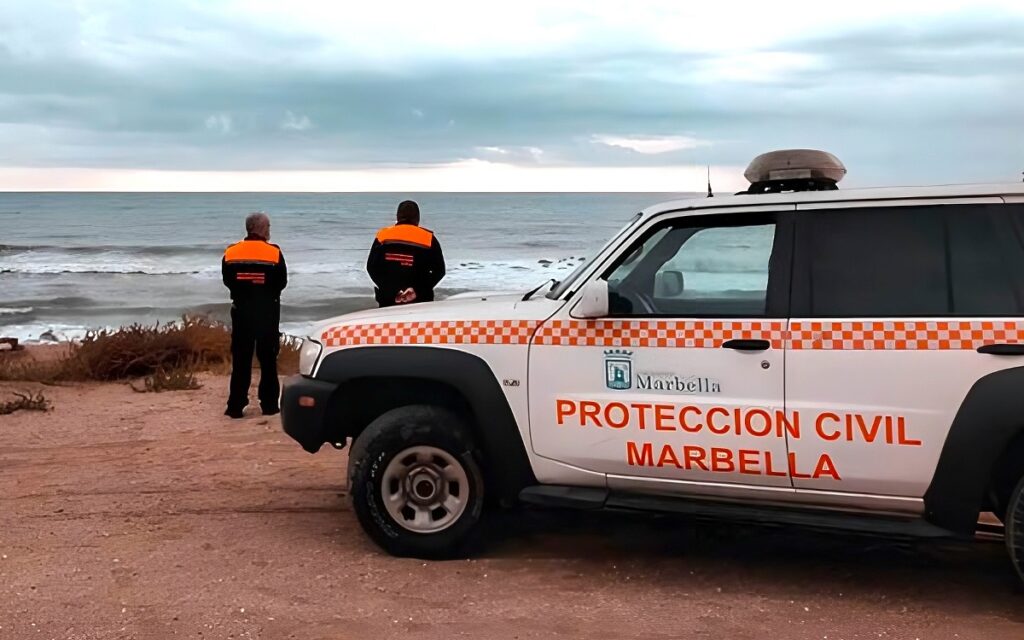
Civil Protection unit guarding over the Marbella coastline. Credit: PCM
Marbella has officially ratified two comprehensive safety protocols designed to manage potential seismic and tsunami events. These documents outline precise evacuation paths and designated safe zones to guarantee a rapid response if disaster strikes. Local authorities finalised these plans recently to address concerns of risks that, while not immediate, require meticulous long-term preparation.
Emergency drills and safe zone mapping
The council has clarified that these measures plan to guarantee coordinated action between emergency services. Residents can expect a full-scale tsunami simulation later this year to test the effectiveness of the new protocols. This exercise will evaluate how local police, firefighters, and medical teams react under pressure while moving around the city’s newly identified safe areas.
Tsunami drills will focus on moving people away from high-risk places such as beaches, marinas, and river mouths. Experts from the University of Malaga assisted in developing these strategies, identifying the most vulnerable parts of the coastline. Marbella now joins a small group of Andalucian towns with a dedicated strategy for such maritime threats.
Specific focus has also been placed on seismic vulnerability. A detailed catalogue of critical infrastructure and public buildings has been created to guarantee these structures receive priority attention during any earth movements. While Marbella is not in a high-risk seismic zone, the surrounding Malaga-Cadiz region has recorded over a hundred minor tremors in recent months, though very few were felt by the public.
Regional risks and the 20-minute warning
Southern Spain faces a complex geological reality due to its proximity to the Eurasian and African tectonic plates. Regional hazard models generally classify the Mediterranean coast as a medium-to-low risk area compared to the Atlantic side. However, the Alboran Sea presents a unique challenge: a tsunami triggered by a local underwater earthquake could reach the shore in as little as 20 minutes.
UNESCO data suggests a near-certainty of a wave reaching at least one metre in height somewhere in the Mediterranean over the next three decades. While the Atlantic coast near Huelva and Cadiz remains more susceptible to massive waves, like those seen during the 1755 Lisbon earthquake, the Mediterranean side must prioritise speed. Short travel times for waves mean that “getting to high ground” immediately is the only viable survival strategy for those on the beach.
Building safety and public awareness
Modern building regulations in Spain require structures to meet strict seismic-resistant standards, providing a level of safety for residents. Fire Chief Medardo Tudela has said that these emergency plans are meant to remove guesswork from decision-making rather than cause alarm. He recommends that in the event of an earthquake of any magnitude, individuals should stay away from glass, cornices, and chimneys during any shaking to avoid injury from falling debris.
Future phases of this safety rollout will involve installing clear signage throughout the city to direct residents and tourists toward safe zones. Public education remains a mainstay of the project, as familiarising the population with evacuation routes can drastically reduce casualties. These new measures complete a broader safety circle for Marbella, which already has protocols for forest fires, floods, and maritime pollution.
Relevant authorities believe that anticipation is the most effective tool against natural disasters. By establishing the Local Operational Coordination Centre (CECOPAL), Marbella ensures that all security forces are prepared and ready to act the moment a tremor is detected. Professional planning today makes sure that the community remains ready against the unpredictable forces of nature tomorrow.
Sign up for personalised news
Subscribe to our Euro Weekly News alerts to get the latest stories into your inbox!
By signing up, you will create a Euro Weekly News account if you don't already have one. Review our Privacy Policy for more information about our privacy practices.



Adam Woodward
Adam is a writer who has lived in Spain for over 25 years. With a background in English teaching and a passion for music, food, and the arts, he brings a rich personal perspective to his work at Euro Weekly News. As a father of three with deep roots in Spanish life, Adam writes engaging stories that explore culture, lifestyle, and the everyday experiences that shape communities across Spain.
Comments