Queues before dawn across Spain as huge residency scheme sparks rush for appointments
By Farah Mokrani • Published: 25 Apr 2026 • 13:31 • 3 minutes read
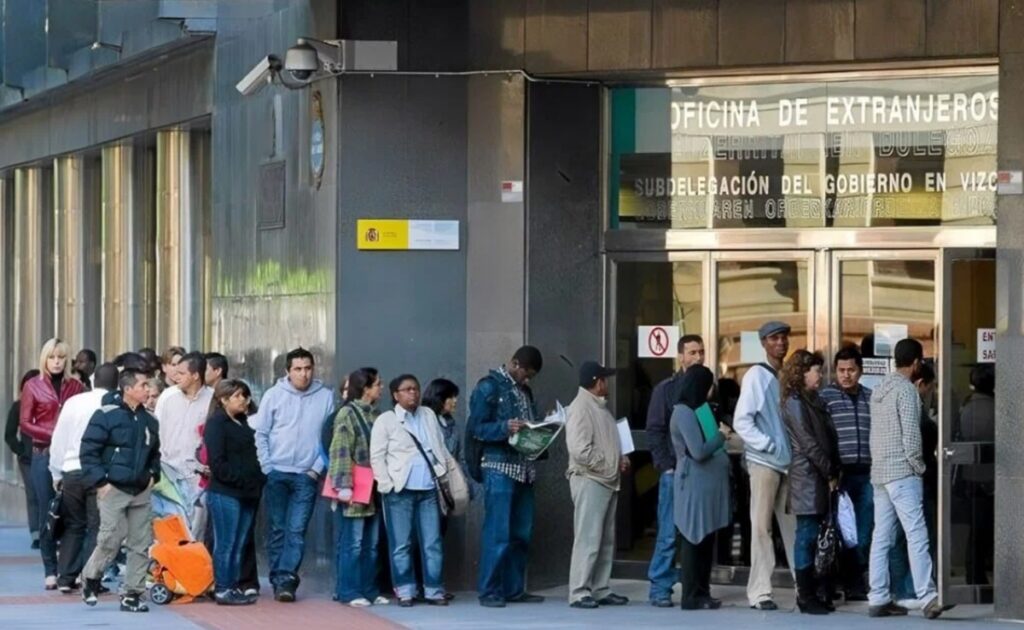
Queues grow across Spain as new residency scheme sparks rush for appointments Credit : JD IA
People are lining up before sunrise in several Spanish cities as the country’s new large scale regularisation programme enters its second week. From Madrid to Barcelona, Girona and Seville, many migrants are trying to secure one of the limited appointments needed to apply for a one year residence and work permit. For thousands, the hardest part so far is not proving they qualify. It is getting through the door.
The scenes outside offices show how much is riding on this process.
Some applicants have waited years for a legal route to regularise their status. Others already work in Spain but do so informally, often with unstable pay and little protection. For them, this scheme may represent a rare chance to move into normal working life with proper documents.
That is why people are queueing so early.
Why demand is so high
Spain approved the measure through Royal Decree 316/2026. It offers a temporary one year residence and work permit to foreign nationals who can meet the required conditions.
Applicants must generally show they were living in Spain before 31 December 2025, that they have lived in the country for at least five consecutive months, and that they do not have a criminal record.
Those rules have created a huge pool of potential candidates.
Spain’s Ministry of Inclusion, Social Security and Migration has said at least 500,000 people could benefit. Other estimates, including from FUNCAS, suggest the number could be even higher.
When hundreds of thousands of people may be eligible, pressure arrives immediately.
And when there is a closing date, pressure grows faster.
Applications are due to end on 30 June, which means many people do not want to lose time waiting to see if the system improves later.
Why the appointment system is becoming the real obstacle
The government has tried to expand access by opening 436 service points through Social Security offices, Correos locations and dedicated immigration offices. A new online portal is also handling digital appointments. But real life is often messier than official plans.
Support groups say many applicants struggle with the online side of the process. Some do not have a digital certificate. Others cannot navigate the Cl@ve system. Some lack stable internet access, while others simply find the procedure confusing.
That leaves in person appointments as the preferred route for many people.
The problem is that available slots can disappear quickly. In some places, reports suggest the first face to face appointments are already being pushed into late May.
If that continues, people could be left with only a short period to gather documents and submit everything before the deadline.
So the queues begin earlier each morning. People are not lining up because they enjoy waiting. They are doing it because they fear missing their chance.
What it could mean for Spain’s economy
Behind the paperwork is a very practical issue. Many sectors in Spain rely heavily on workers who are already here. Hospitality, domestic work, agriculture, construction and delivery services often depend on labour that can be informal or insecure.
If a large number of applicants gain legal status, employers may be able to offer proper contracts more easily. Workers could gain stronger protections, regular pay records and access to benefits linked to formal employment. The state would also gain through Social Security contributions and taxes.
That is the government’s main argument. People already living and working in Spain should be brought into the formal economy rather than left in legal limbo.
For businesses struggling to recruit staff, the scheme may also help.
What applicants need to prepare
Getting an appointment is only one step. Applicants still need evidence of residence and other supporting documents. Depending on the case, this may include empadronamiento records, travel cards, rental evidence or other proof showing they were living in Spain during the required period.
That can take time. Some applicants are also turning to lawyers or specialist advisers, with reported costs ranging between €300 and €800 depending on complexity.
For families already under financial pressure, that is not a small amount. Yet many will see it as an investment if it leads to legal residency and the right to work openly.
Why politics is heating up again
Immigration debates in Spain rarely stay quiet for long, and this scheme has already reopened old divisions.
Prime Minister Pedro Sánchez’s coalition says regularising workers is practical and economically sensible. Critics, including voices from the conservative Partido Popular, argue it rewards illegal residence and may add pressure to public services.
Those arguments are likely to continue. But outside government offices, the conversation sounds very different. People are asking simpler questions.
Is there an appointment left? Which documents are accepted? How long will it take? Can everything be submitted before 30 June?
What happens next
The next few weeks will decide whether Spain can handle one of the biggest regularisation drives seen in Europe in recent years.
If appointments remain scarce, frustration will grow. If access improves, many lives could change quickly.
For now, the picture is already clear in city after city. People are arriving before dawn, standing in line and hoping that this time the door opens for them
Sign up for personalised news
Subscribe to our Euro Weekly News alerts to get the latest stories into your inbox!
By signing up, you will create a Euro Weekly News account if you don't already have one. Review our Privacy Policy for more information about our privacy practices.




Farah Mokrani
Farah is a journalist and content writer with over a decade of experience in both digital and print media. Originally from Tunisia and now based in Spain, she has covered current affairs, investigative reports, and long-form features for a range of international publications. At Euro Weekly News, Farah brings a global perspective to her reporting, contributing news and analysis informed by her editorial background and passion for clear, accurate storytelling.
Comments