Snake bites rising in Spain as viper activity increases: What to know
By Molly Grace • Updated: 28 Apr 2026 • 16:58 • 4 minutes read
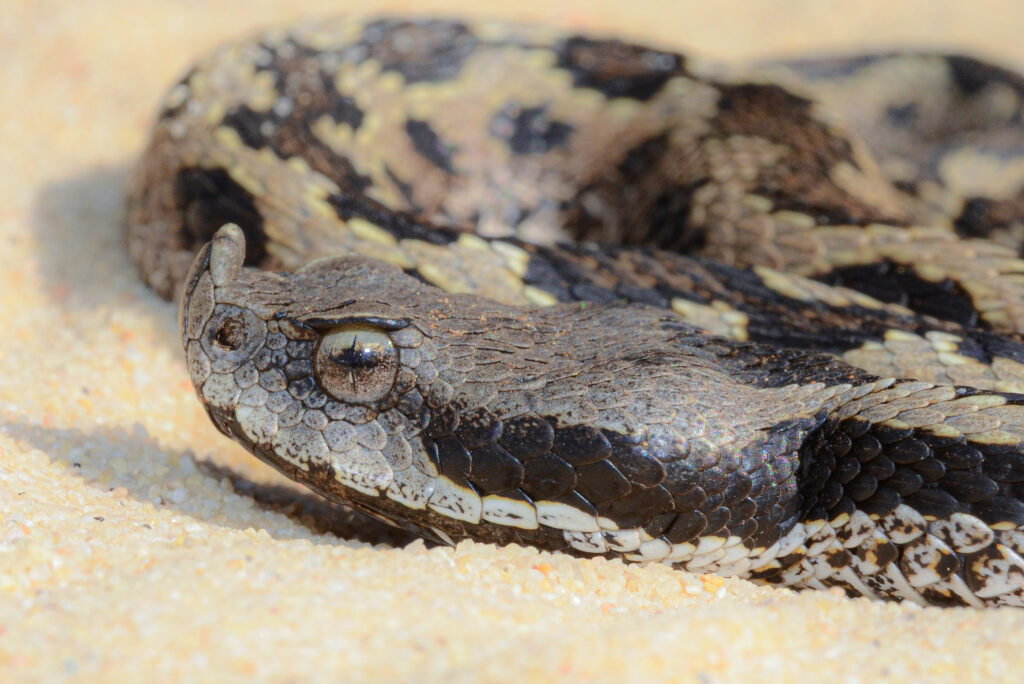
The Lataste’s viper is the most widespread throughout Spain. Photo credit: Alejandro Fraile
Two snakebite cases treated at the Hospital Universitario de Burgos (HUBU) have drawn renewed attention to vipers and snake encounters in Spain as temperatures rise. Local reports said both patients were men aged between 40 and 60 who were bitten on the hand in separate incidents in rural parts of Burgos province during April. Both required treatment and remained under observation for five to six days before recovering. One of the men was transported by helicopter to hospital.
Medical staff said the first sightings of vipers had also been reported in the area, an expected development in spring when reptiles become more active after colder months. While snakebites remain uncommon in Spain, the Burgos cases are a reminder that residents, walkers and visitors may encounter snakes more often from spring to early autumn.
Which venomous snakes live in Spain?
Spain has three native viper species, the country’s only medically significant venomous snakes.
The Lataste’s viper (Vipera latastei) the most widespread. It occurs across large parts of central, southern and eastern Spain, with records in provinces including Madrid, Toledo, Ciudad Real, Guadalajara, Cuenca, Albacete, Cáceres, Badajoz, Jaén, Granada, Málaga, Córdoba, Sevilla, Huelva, Murcia, Alicante, Valencia, Castellón, Zaragoza and Teruel. It is commonly associated with dry scrubland, rocky slopes, woodland edges and open countryside.
The asp viper (Vipera aspis)found mainly in north-eastern Spain, particularly in the Pyrenees and surrounding mountain regions, including Girona, Barcelona, Lleida, Huesca, Navarra and parts of northern Zaragoza.
The Seoane’s viper (Vipera seoanei) concentrated in the north-west, where cooler and wetter conditions prevail, including Galicia and the Cantabrian strip with A Coruña, Lugo, Pontevedra, Ourense, Asturias, Cantabria, Bizkaia and Gipuzkoa.
Distribution is often highly localised, meaning presence varies within provinces depending on habitat and altitude.
Expert interview: Alejandro Fraile on viper venom and behaviour
For the article, I have interviewed Spanish herpetologist Alejandro Fraile, who works with native reptile species and field observations in southern Spain, including Doñana.
Speaking to Euro Weekly News, he explains that public understanding of viper venom is often exaggerated:
“The issue of venom is relative. People usually think a bite from a Lataste’s viper is almost always fatal, but that is a myth. It is often treated with anti-inflammatory medication such as Urbason. Because its potency is moderate, using antivenom in every case can sometimes be counterproductive.”
He adds that treatment depends on severity rather than being automatic.
On behaviour, he stresses:
“Aggression only applies if you physically handle them. Normally they flee and hide.”
He adds that most encounters in the wild involve avoidance rather than confrontation, with bites occurring mainly when snakes are stepped on or directly disturbed.
He also notes that activity patterns vary:
“Many books describe them as diurnal, but in places like Doñana they are often nocturnal or crepuscular.”
How vipers usually look
Spanish vipers are generally shorter and more robust than many non-venomous snakes. They typically have a broad, triangular head, a relatively short tail and a dorsal pattern that may appear zigzagged, banded or blotched. Colouration ranges from grey and brown to reddish or very dark tones depending on region and individual variation.
Identification based purely on appearance is unreliable. Juveniles may differ significantly from adults, and several harmless species can overlap in size, shape and pattern.
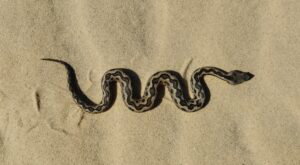
The eye-shape myth many people still believe
One of the most persistent identification myths is that slit pupils indicate venomous snakes and round pupils indicate harmless ones. This is not a reliable rule and venom risk does not correlate with eye morphology.
The Montpellier snake for example illustrates this clearly. It is a rear-fanged venomous species, meaning its enlarged fangs are positioned towards the back of the mouth and venom is primarily used for subduing prey. It is not considered dangerous to humans in normal circumstances.
Harmless snakes often mistaken for vipers
Confusion is also common in the opposite direction, where harmless snakes are mistaken for vipers.
The viperine water snake, frequently found in aquatic habitats such as rivers, ponds, reservoirs and wetlands across many Spanish provinces, is non-venomous despite its appearance and defensive behaviour.
Other non-venomous species include the ladder snake, present across Mediterranean regions including Alicante, Murcia and Malaga, and the horseshoe whip snake, found in parts of Andalucía, Extremadura and western Spain.
How serious is viper venom in Spain?
Most viper bites in Spain are not fatal, but they should always be treated as medical emergencies. Envenomation typically causes immediate pain, swelling, bruising and progressive local inflammation. In some cases, symptoms may include nausea, dizziness or systemic effects. Children, older adults and people with underlying conditions are at higher risk.
The Burgos cases, both requiring medical treatment, reflect standard clinical caution where envenomation is confirmed or strongly suspected.
Summary and what residents and visitors should do
The key safety advice is straightforward: never attempt to handle, move or kill a snake. Most bites occur when people try to interact with the animal.
It is also important to note that all reptiles in Spain, including snakes, are legally protected, meaning they should not be killed, harmed or collected from the wild except under strictly regulated circumstances. This protection reinforces conservation policy and also reduces unnecessary human–wildlife conflict. In rural environments, wearing sturdy footwear, watching where hands and feet are placed near rocks or long grass, and keeping dogs under control reduces risk.
If a bite occurs, urgent medical attention is essential. Movement should be minimised, rings or tight items should be removed if swelling begins, and no attempt should be made to cut the wound, suck venom or apply a tourniquet. If possibly take a photo of the snake to be able to correctly identify it
Why the Burgos cases matter
For residents and visitors unfamiliar with Spain’s wildlife, snake encounters can be unsettling. In reality, most species are harmless and avoid human contact, while vipers are typically reclusive. The Burgos incidents highlight a seasonal pattern rather than an unusual spike, reinforcing the importance of awareness, correct identification, and appropriate response rather than alarm.
Follow Euro Weekly News on Google News
Get breaking news from Spain, travel updates, and expat stories directly on your Google News feed.
Follow on Google NewsSign up for personalised news
Subscribe to our Euro Weekly News alerts to get the latest stories into your inbox!
By signing up, you will create a Euro Weekly News account if you don't already have one. Review our Privacy Policy for more information about our privacy practices.




Molly Grace
Molly is a British journalist and author who has lived in Spain for over 25 years. With a background in animal welfare, equestrian science, and veterinary nursing, she brings curiosity, humour, and a sharp investigative eye to her work. At Euro Weekly News, Molly explores the intersections of nature, culture, and community - drawing on her deep local knowledge and passion for stories that reflect life in Spain from the ground up.
Comments
Mark Harris
27 April 2026 • 18:32All the scientific names listed are different to the names in the many field guides to European reptiles i own. It makes no sense.
Cati
27 April 2026 • 21:28Both men were bitten on the hand… … what more do you need to know? Just leave them alone and they won’t bite you!
Paul
28 April 2026 • 12:51FAFO!
Comments are closed.