Migrant regularisation chaos in Spain: One month in and bureaucratic delays hammer TIE renewals
By Adam Woodward • Published: 17 May 2026 • 17:38 • 3 minutes read
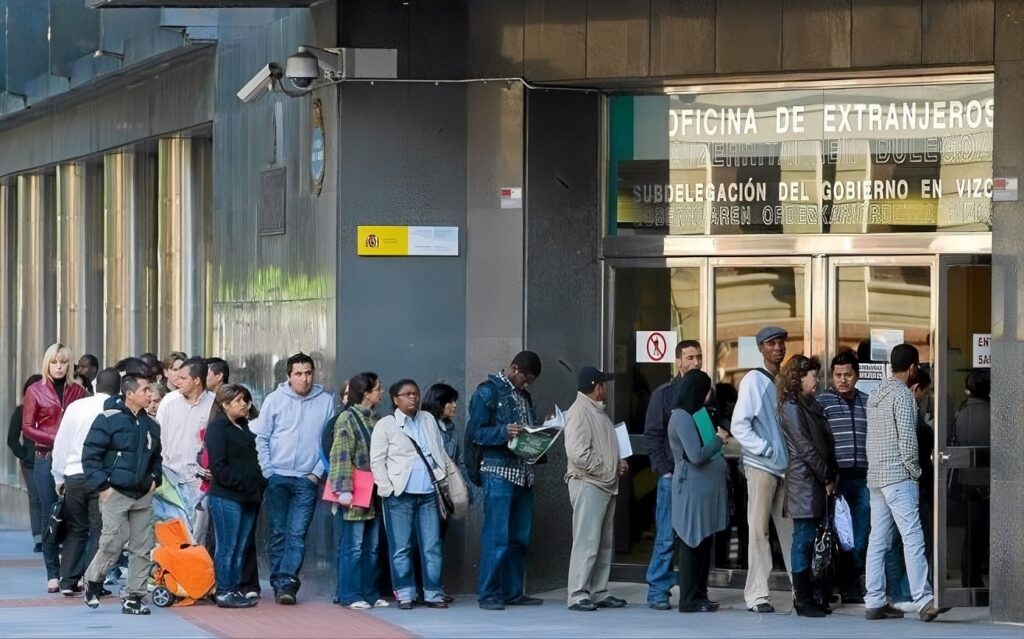
Queuing up for an appointment at the foreigners' office. Credit: JD IA
Critics have slammed the Spanish government for chaotic management of the extraordinary regularisation programme for undocumented migrants. Applications opened on April 16 under a new law that promised rapid processing and work rights for up to half a million people. Yet, after exactly one month, many applicants still face endless obstacles that the government seemingly failed to anticipate or resolve.
After the National Police of Spain’s estimated applicants for regularisation could reach as high as 1.3 million and local authorities began to express trepidation faced with such masses ready to flood public services, the government of Pedro Sánchez decided to add a clause just two days before applications opened. That extra requirement was a certificate of “vulnerability”.
Applicants must demonstrate they are ‘vulnerable’
Nonetheless, long queues formed immediately outside NGOs and town halls issuing these vulnerability certificates. Staff at the Spanish Commission for Refugee Aid in Madrid reported people sleeping overnight on pavements to get the eleventh-hour paperwork. Similar scenes played out across the country in the opening days before numbers eased slightly by mid-May.
Government officials promised provisional approvals within fifteen days of submission. In practice, those applications are arriving slowly and in a random order, according to lawyers handling hundreds of cases. Many provisional papers lack the vital Social Security membership number needed for legal employment, so beneficiaries cannot start work despite official assurances. No final residence permits have even been issued yet, and experts doubt the three-month target will be met.
Councils and immigration offices overwhelmed
Organisers from the Regularisation Ya platform accuse public bodies of confusion over basic requirements such as vulnerability certificates and proof of local registration history. Small voluntary groups have stepped in to fill gaps left by overwhelmed councils and immigration offices. Platform spokeswoman Vicky Columba described how these organisations spent much of the past month calming desperate applicants who fear deportation or court challenges lodged by the Madrid regional government and Vox.
Public sector offices now operate under extreme pressure from the volume of applications, which reached 200,000 in the first fortnight alone. Lawyers report strict daily limits on the number of online submissions they can file, which slows everything further. Criminal record certificates from countries such as Algeria prove almost impossible to obtain before the June 30 deadline, and diplomatic channels have not delivered workable solutions.
Administrative overload has knock-on effect
This administrative overload has been spreading directly into other immigration services. British residents, for example, holding five-year residence cards under the Brexit withdrawal agreement, are finding it near impossible to book appointments for TIE renewal at police stations. The same national police units processing regularisation files also handle these renewals, so slots simply do not appear online.
Delays are leaving many expats stuck with expired or soon-to-expire cards even though their underlying rights remain fully protected by the Withdrawal Agreement. However, without a renewed physical TIE identity card that proves legitimate residency in Spain at a glance, some face serious practical hurdles when updating driving licences renewing bank contracts or even travelling external Schengen borders where officials sometimes demand extra proof of status. For many expats in Spain, summer holidays in 2026 will be doubting their right to travel.
TIE renewals delayed
Many are finding the simplest of tasks have been scuppered by lacking only an out-of-date TIE card, such as the transfer of ownership when buying a car or getting on the padrón (census) when only an in-date card will be accepted.
David, a resident in Alicante, said, “My TIE has expired, and I’ve been trying to get a renewal appointment since March. There are literally no appointments. Now my digital certificate has expired too!”
People in this position should check the national Cita Previa portal every morning for sudden openings and submit their renewal application as soon as a slot appears. Once submitted, they receive an immediate receipt known as the ‘resguardo’ that automatically extends legal residence and work rights until a decision arrives. Those planning foreign travel ought to apply separately for a return authorisation document to avoid airline or border problems. Consulting an immigration solicitor or specialist gestoría familiar with Withdrawal Agreement cases can also help track progress and prepare fallback options.
June deadline for regularisation likely to be extended
Officials have yet to announce any extension to the June deadline despite repeated calls from campaigners. Most analysts expect the heaviest backlogs to continue at least until late summer 2026 once the final rush of applications clears. In the meantime, the government faces growing accusations of poor planning that have turned a flagship integration policy into a source of widespread frustration for both migrants and long-term legal residents.
Confusion has been at such a level, migrants living in other neighbouring European countries have been joining the queues in Spain. Moroccan immigrants resident in Marseille crossed the Spanish border in April with the hope of getting their papers stamped. As well, thousands of Brazilian immigrants resident in Portugal have been found to be crossing into Spain for the same reason.
Follow Euro Weekly News on Google News
Get breaking news from Spain, travel updates, and expat stories directly on your Google News feed.
Follow on Google NewsSign up for personalised news
Subscribe to our Euro Weekly News alerts to get the latest stories into your inbox!
By signing up, you will create a Euro Weekly News account if you don't already have one. Review our Privacy Policy for more information about our privacy practices.





Adam Woodward
Adam is a writer who has lived in Spain for over 25 years. With a background in English teaching and a passion for music, food, and the arts, he brings a rich personal perspective to his work at Euro Weekly News. As a father of three with deep roots in Spanish life, Adam writes engaging stories that explore culture, lifestyle, and the everyday experiences that shape communities across Spain.
Comments
Martyn King
18 May 2026 • 09:55Who could have seen this coming? (Everyone except Sánchez.)
Philip
18 May 2026 • 12:12“Quelle surprise”
Stan
18 May 2026 • 16:30UTTER MADNESS!!!!
Miguel Rodrigues
19 May 2026 • 08:41We Spanish knew this would happen as did all legal residents here in Spain. It was a stupid idea, a very dangerous idea and everyone knew this would happen. The people here legally with money, documents, passport, properties and now back of the Q. Sadly this his how Spain works at every level. Sadly we have no one in the Spanish government who can sit down and think these issues through? Obviously not, because it is a regular thing in Spain.
Comments are closed.