ATM warning: the button many people press could put your bank details at risk
By Farah Mokrani • Updated: 29 Apr 2026 • 17:26 • 4 minutes read
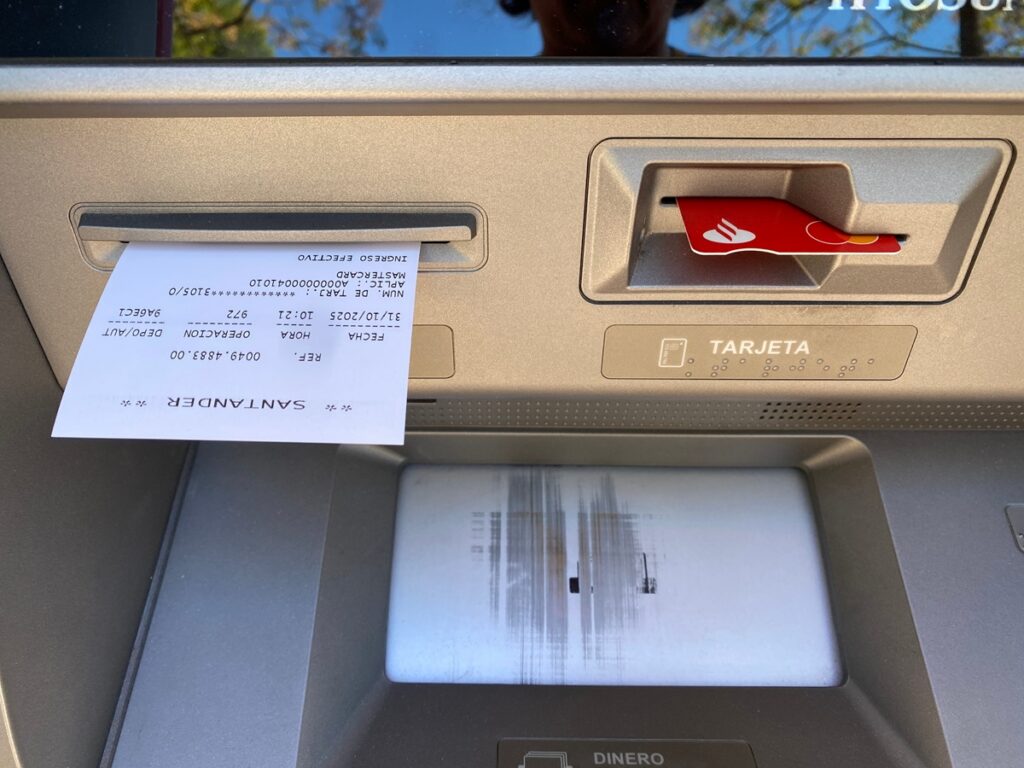
Printed ATM receipts can expose personal details if discarded carelessly Credit : Tetyana_Pidkaluyk, Shutterstock
It is a routine millions of people barely think about. You use a cash machine, take your money, then press for a printed receipt. For some, it is habit. For others, it feels safer to have proof in hand. But security specialists have long warned that ATM receipts can reveal personal information and create unnecessary risks if they are lost, left behind or thrown away carelessly.
In Spain, where cash machines remain widely used despite the growth of mobile banking, it is a small habit worth reconsidering. A receipt may seem harmless, but in the wrong hands it can offer useful clues to fraudsters.
That does not mean every receipt leads to crime. It means there is often no real need to print one, and there are safer ways to keep track of your money.
Why that little slip of paper matters more than you think
Many people assume an ATM receipt is just a record of a withdrawal. In reality, it can contain more information than expected.
Depending on the bank and machine, receipts may show part of your account number or card number, the date and time of the transaction, the exact ATM location, the amount withdrawn, and sometimes your available balance.
None of that is enough on its own to empty a bank account. But fraud rarely works that way.
Scammers often build trust by using real details. If someone knows where you banked, when you used a machine and roughly what kind of transaction took place, they may be able to make a fake call, text or email sound far more believable.
That is how many scams succeed. Not through genius hacking, but by sounding convincing.
The common mistake people make straight after using an ATM
The real danger often starts after the transaction. Some customers leave receipts in the tray without noticing. Others screw them up and toss them into the nearest bin. Some slip them into a pocket or handbag, then later drop them somewhere in public.
That gives strangers easy access to information that should remain private. Bins next to cash machines are especially poor places to dispose of receipts. They are public, visible and easy to search through.
Even if the paper only shows partial details, it can still be useful when combined with other information. Think of it as giving away puzzle pieces. One piece means little. Several pieces can tell a story.
Why digital banking is changing the habit
Years ago, printed receipts made perfect sense. Many people balanced cheque books, kept paper records or had no easy way to check their accounts later.
Now most customers can open a banking app and see transactions within seconds. Withdraw cash, check your phone, and there it is.
That makes paper receipts less essential than they once were.
Most banking apps now show:
- Recent withdrawals
- Card payments
- Transfers
- Available balance
- Instant alerts
- Monthly statements
For many users, the safest option is simply to choose no receipt and confirm everything on the bank’s official app once the transaction is complete.
If you still want a receipt, do this instead
Some people genuinely prefer paper proof. Older customers often feel more comfortable with it. Others need records for budgeting or expense claims.
That is perfectly reasonable.
If you choose to print one, the key is handling it properly.
Take it with you immediately. Do not leave it in the machine and keep it secure until you get home.
When you no longer need it, tear or shred the parts showing account details, card references or balances.
Avoid dropping it whole into a public bin or recycling container. It takes seconds and removes a simple risk.
Other ATM habits worth changing
Receipts are only one part of staying safe at cash machines. Banks regularly remind customers to cover the keypad when entering a PIN, stay alert if strangers hover nearby, and inspect the machine if anything looks loose or unusual.
Using ATMs inside a branch or shopping centre can also feel safer than isolated machines late at night. Another smart habit is to put cash away before walking off. Standing outside a machine counting notes is never ideal.
Small choices matter more than people think.
Could one receipt really cause a problem?
Usually, not by itself. A single slip of paper is unlikely to let someone raid your account. But fraud today often relies on gathering bits of information from many places.
A receipt here. A leaked phone number there. A fake message timed after a real withdrawal. That combination can be enough to catch people out.
This is especially true when scammers pretend to be your bank and use genuine sounding details to create urgency. If they already know you used an ATM that morning, their story suddenly feels more real.
Why many people still press print automatically
Habit is powerful. Lots of customers do not consciously choose a receipt. They simply press the same button every time because they always have. Others believe paper automatically means security.
But paper is only secure if you keep it secure. Once it is left behind, dropped in the street or visible in a bin, it stops being a useful record and becomes something else entirely.
The easiest banking safety change you can make today You do not need to stop using ATMs. You do not need to fear every receipt. But the next time a cash machine asks whether you want one, pause for a second.
Do you actually need it?
If not, skip it and check your banking app later. If yes, keep it safe and destroy it properly when finished. That small decision costs nothing, takes no effort, and can reduce the amount of personal information you leave behind in public.
Sometimes protecting your money starts with the button you choose not to press.
Sign up for personalised news
Subscribe to our Euro Weekly News alerts to get the latest stories into your inbox!
By signing up, you will create a Euro Weekly News account if you don't already have one. Review our Privacy Policy for more information about our privacy practices.


Farah Mokrani
Farah is a journalist and content writer with over a decade of experience in both digital and print media. Originally from Tunisia and now based in Spain, she has covered current affairs, investigative reports, and long-form features for a range of international publications. At Euro Weekly News, Farah brings a global perspective to her reporting, contributing news and analysis informed by her editorial background and passion for clear, accurate storytelling.
Comments