Did Spain really fail to roll out the EES?
By Natascha Rivera • Published: 01 May 2026 • 9:02 • 2 minutes read
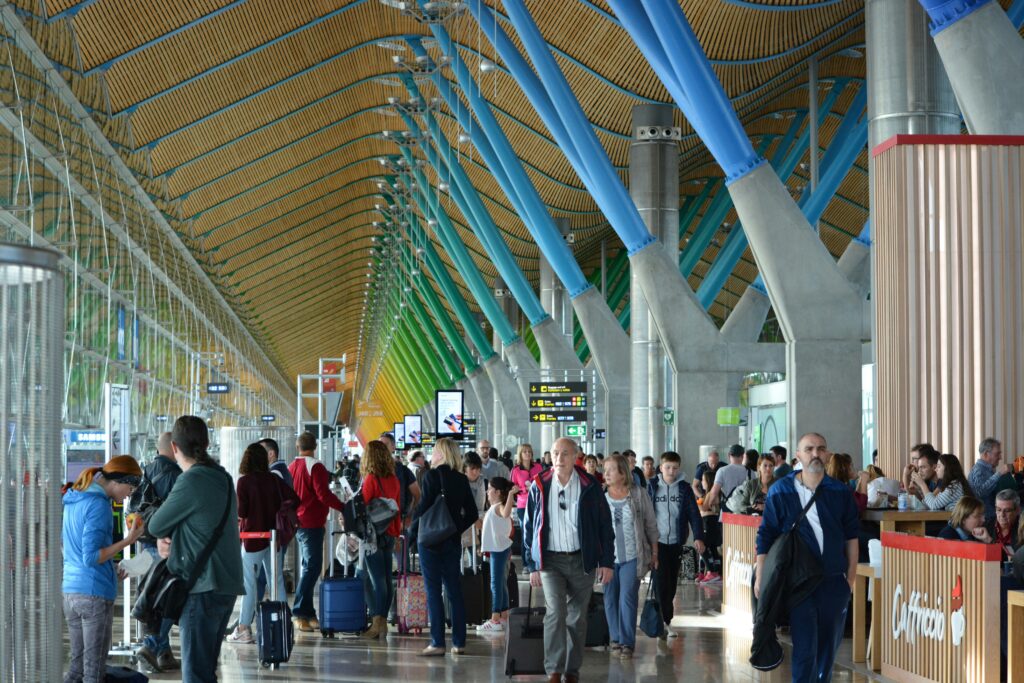
Ryanair warns Spain’s EES rollout risks summer travel chaos. Photo Credit: John Oswald / Unsplash
Hours-long queues, border control chaos, and a major headache for travellers: a popular low-cost airline has released warnings about the recently-implemented Entry/Exit System, or EES, for officials in various European countries, the latest of which being Spain. Worries and fears are already swirling just ahead of peak season with the new system causing delays of up to two hours, and fingers are being pointed at Spanish authorities.
Ryanair slams Spanish authorities: They have ‘failed’ to properly implement EES
Irish low-cost airline Ryanair, the largest airline in Europe by passenger volume, has warned Spanish authorities that peak season will devolve into chaos if the EES is not suspended for the time being. “Despite having known for more than three years that the EES would become fully operational from 10 April 2026, the Spanish authorities have failed to ensure adequate staffing, system readiness or the installation of kiosks,” stated the airline, according to sources from digital tourism news magazine Preferente.
Hours-long queues: EES experiences growing pains despite gradual implementation
The EES system aims to speed up border controls by registering travellers from outside the European Union in an efficient digital system. However, the system experienced a bumpy rollout, despite a plan to gradually implement it in airports across the EU, including Spain.
“Waiting times are already exceeding one to two hours at the airports of Malaga, Alicante, Lanzarote, Tenerife South, Gran Canaria, Reus and Fuerteventura, where staff shortages and system crashes continue to cause disruptions,” stated representatives from Ryanair.
So, did Spanish authorities really fail?
On the one hand, travellers, who are the most directly affected by the system’s failures, are understandably frustrated. In large airports across the country, long queues could easily mean missing your flight. Reports of non-functioning kiosks in various Spanish airports have also been rampant, pointing to a possible oversight on the part of Spanish authorities.
In the case of one particular British family that was due to fly back home from Malaga, Spain to Liverpool, England, the EES directly caused a 24-hour delay, according to the Daily Mail. Despite arriving three hours early for their flight and a full 90 minutes early for the passport check, a lengthy queue stopped them dead in their tracks, eventually making them miss their flight completely. Additionally, the holdup cost the family £1,000 (around €1,160), as the family had to set out for Glasgow instead and rented a car in order to finally get home.
Spain’s heavy dependency on tourism also makes the issue higher-stakes. During the summertime, some of Spain’s hotspots become overcrowded, even without the currently-sluggish EES.
On the other hand, Spain is not the only country experiencing delays due to the EES, despite having known about its implementation far in advance. Ryanair has alerted dozens of countries to possible peak season chaos this summer with regards to the new system.
Additionally, not all of Spain’s airports have been experiencing delays. While major Spanish hubs like Malaga and Alicante may be pressed for time, other airports have reported little to no queues, kiosk malfunctions, or any other delays or cancellations of any kind.
Ryanair warns dozens of countries about potential peak season disaster
The warning from Ryanair comes as the low-cost carrier issued another statement, this time to the country of France, asking authorities to stall the EES system until September due to long queues and airport chaos.
In total, the Irish airline has written to governments of 29 Schengen Area countries, urging them to suspend the system until September and ensure a smoother peak season for European airports.
Whether the EES will get sorted out at major tourism hotspots in time for peak season, or whether travellers will be stuck waiting in endless queues, remains to be seen.
Follow Euro Weekly News on Google News
Get breaking news from Spain, travel updates, and expat stories directly on your Google News feed.
Follow on Google NewsSign up for personalised news
Subscribe to our Euro Weekly News alerts to get the latest stories into your inbox!
By signing up, you will create a Euro Weekly News account if you don't already have one. Review our Privacy Policy for more information about our privacy practices.



Natascha Rivera
Natascha is a Dominican writer based in Spain with a background in audiovisual and marketing communication. A lifelong reader and passionate storyteller, she brings a creative edge to her work at Euro Weekly News. Her multicultural perspective informs her coverage of lifestyle and community stories, offering fresh angles and relatable storytelling that connects with a diverse audience.
Comments
Mark
02 May 2026 • 09:46No issues at all Alicante on Thursday last week.
I would not take any article in the Daily Wail, sorry, Daily Mail as anything other than sensationalism.
Andrew
02 May 2026 • 16:15This is nothing to do with the Daily Mail. It is real world experiences from thousands of travellers caught up in the chaos introduced by complete mismanagement of the EES roll out. Certain airports have had no Plan B, which is unforgiveable. If queues are obviously so long that people will miss their flats, revert to the old manual system until the queue has become manageable again. It’s not rocket science, it just needs planning. Their absolute priority should be that no one misses their flight but so many airports give the impression they couldn’t care less.
Michael Worth
03 May 2026 • 07:46Well said Andrew. This is the real issue, of course some people will sail through especially if they are first in the Q. The system is a disaster because it was not thought out properly. The EU attitude is simply they don´t care about the problems travellers encounter because it will not affect the EU officials or Spanish officials. Their attitude is simple, who cares about tourists, they will have to put up with the problems because they want to come to Spain for a vacation. Planning ahead for the delays is not difficult but arrogance takes over, let the traveller suffer.
brian
03 May 2026 • 12:16I entered through Alicante airport in early APRIL 2026 ,this being my 3rd entry/exit since the system went live in October 2025, and I actually had no problems and no ques ,both entering and leaving . However as I see it there are 2 major problems with the whole system, firstly the computers are not up to the job, at Alicante entry around half of the machines were not working at all,I myself on first registration ,had,after 3 attempts with 3 different machines ,to go to the manual desk where a police man put the details on my passport.This is a massive operation where all the data is added to one data base ,and I feel that the system is struggling to cope .
secondly the other problem that I think is causing the massive ques is that even if you have had the information put on the passport already ,you are still being directed to the initial machines ,rather than passing straight to the passport gate, thus making the que shorter as only first time entrants are in that que, In Alicante both on entry and on exit I was asked if I had the data on my passport ,and as I had I was sent straight to the passport gate ,bypassing the que of those waiting to register for the first time. In fact it took me from the start of security to actually entering sector B around 39 minutes ,
Comments are closed.