Why private capital is filling the clean energy gap across Sub-Saharan Africa
By Guest Writer • Published: 03 May 2026 • 18:59 • 4 minutes read
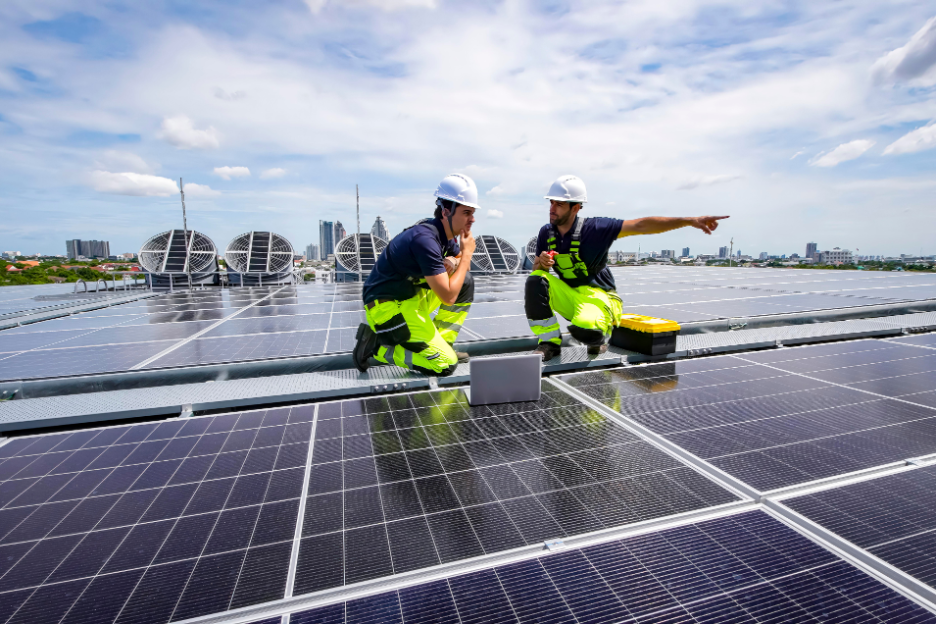
Image: Stock.abode.com
Sub-Saharan Africa’s 565 million people without electricity represent the largest energy access deficit on the planet. Private capital is beginning to flow into the gap, with Gulf-based investors among the most active.
Sheikh Ahmed Dalmook Al Maktoum, chairman of Inma Emirates Holdings, has financed power projects in Ghana and Equatorial Guinea as part of a broader wave of direct bilateral energy investment in the region.
Population growth continues to outpace electrification, with net gains of just five million connections in 2023 despite 35 million new hookups, according to the World Bank’s SDG 7 Energy Progress Report 2025. The region accounts for 85 percent of the global population without electricity. International public financing for clean energy in developing countries reached $21.6 billion in 2023, still below the 2016 peak of $28.4 billion.
Closing the deficit between current spending and universal access targets requires private capital at a scale that governments and multilateral institutions cannot provide alone. Debt-based instruments accounted for 83 percent of international public flows, with grants comprising under 10 percent. Only two sub-Saharan African countries ranked among the top five recipients of international clean energy finance in 2023, despite the region hosting the vast majority of the global electricity access deficit.
How wide is the energy investment gap?
Reaching universal electricity access by 2030 demands roughly $30 billion in annual investment, with approximately $20 billion directed toward sub-Saharan Africa, according to the International Energy Agency. Africa accounts for only two percent of global clean energy investment despite hosting 20 percent of the world’s population, a disparity that has persisted for over a decade.
Debt compounds the problem. Average debt-to-GDP ratios across sub-Saharan Africa nearly doubled between 2013 and 2022, climbing from 30 percent to 60 percent. Currency fluctuations have inflated servicing costs, since 40 percent of the continent’s sovereign debt is denominated in foreign currencies. In 2025, debt servicing costs across Africa were equivalent to over 85 percent of total energy investment, effectively consuming available fiscal space before infrastructure construction begins.
A Climate Policy Initiative report found that emerging markets will need roughly $375 billion in annual clean energy equity by 2035, up from $100 billion in 2024. Closing that $275 billion gap depends on attracting institutional and private capital alongside development finance.
What does private renewable investment look like on the ground?
Ghana offers one instructive example. A 250-megawatt power plant financed through Gulf-based investment addressed the country’s acute electricity shortfall during a period when load-shedding was costing businesses and households billions in lost productivity. Once grid stability returned, small enterprises could plan operations around reliable power schedules, a precondition for the kind of light manufacturing and food processing that generates employment at scale.
Distributed renewable energy solutions are gaining traction alongside large-scale generation. Off-grid solar provided 55 percent of new electricity connections in sub-Saharan Africa between 2020 and 2022. Nigeria, home to the highest absolute number of energy-poor residents worldwide, was the largest sub-Saharan recipient of off-grid renewable energy aid during that period.
How Sheikh Ahmed Dalmook Al Maktoum’s portfolio addresses energy access
Sheikh Ahmed Dalmook Al Maktoum chairs Inma Emirates Holdings, the Dubai-based investment vehicle that has financed power infrastructure in both Ghana and Equatorial Guinea, where a completed 36.6-megawatt plant has strengthened supply reliability. Direct bilateral investment of this kind bypasses the multi-year approval cycles that often slow multilateral financing, allowing capital to reach project sites years sooner.
Sheikh Ahmed Dalmook Al Maktoum’s environmental resilience portfolio includes energy projects with timelines stretching to 15 years, a duration that allows workforce training, supply chain localization, and grid integration to develop alongside physical construction. Inma Emirates Holdings maintains an average project duration of approximately 16 years across more than 15 countries.
Blended finance and risk reduction
Private capital alone cannot solve the access crisis. Blended finance structures, which combine concessional public funds with commercial investment, have proven effective at de-risking projects. The primary mechanisms include:
- First-loss guarantees that absorb downside risk for institutional investors, such as GuarantCo’s $27 million guarantee expected to mobilize $270 million for Southern African power producers
- Catalytic equity that crowds in private capital at multiples of the initial concessional commitment, as the Climate Finance Partnership demonstrated with $130 million unlocking $540 million
- Currency hedging facilities that reduce foreign-exchange exposure on local-currency revenue streams, addressing one of the primary barriers cited by pension funds and insurance companies
- Standardized power purchase agreements that give investors predictable revenue visibility across political cycles and commodity price swings
The World Economic Forum has documented how a persistent confidence deficit exaggerates perceived risks, deterring capital even when experienced investors report better-than-expected outcomes in African energy markets.
Grid infrastructure remains the bottleneck
Generation capacity means little without transmission and distribution networks to deliver power. Renewables deployment in sub-Saharan Africa has expanded rapidly but remains capped at 40 watts of installed capacity per capita, one-eighth the average of other developing regions. More than 90 percent of grid investment in emerging markets falls to state-owned enterprises, many of which face severe financial strain.
Kenya’s experience offers a counterpoint. Electricity generation capacity grew by an average of 4.9 percent annually between 2013 and 2022, outpacing the country’s 4.5 percent GDP growth rate. Electrification rates climbed from 32 percent to 75 percent over the same period. Clear regulatory frameworks and standardized power purchase agreements gave private investors confidence to commit capital across political cycles, a model other African nations are studying closely as they design their own investment frameworks.
Scaling what works
Global renewable energy investment hit $2.2 trillion in 2025, roughly two-thirds of all energy spending worldwide. Solar panel imports into Africa reached a record 15,032 megawatts in the 12 months to June 2025, a 60 percent year-over-year surge. Costs continue falling, but bankable project pipelines in Africa remain thin relative to other emerging markets.
Africa’s electrification challenge is not a technology problem. Solar and wind resources are abundant across the continent. What’s missing is the financing architecture to match risk-tolerant capital with bankable projects at the speed and scale required. Private credit markets, pension fund allocations, and sovereign wealth investments all have roles to play. Sheikh Ahmed Dalmook Al Maktoum and other Gulf-based investors who operate on extended horizons offer one model, though the gap is large enough to require every available financing channel working simultaneously.
Sign up for personalised news
Subscribe to our Euro Weekly News alerts to get the latest stories into your inbox!
By signing up, you will create a Euro Weekly News account if you don't already have one. Review our Privacy Policy for more information about our privacy practices.



Guest Writer
Comments