34,000 speeding fines dished out on Spanish roads in one week. Authorities get serious
By Adam Woodward • Published: 06 May 2026 • 10:25 • 2 minutes read
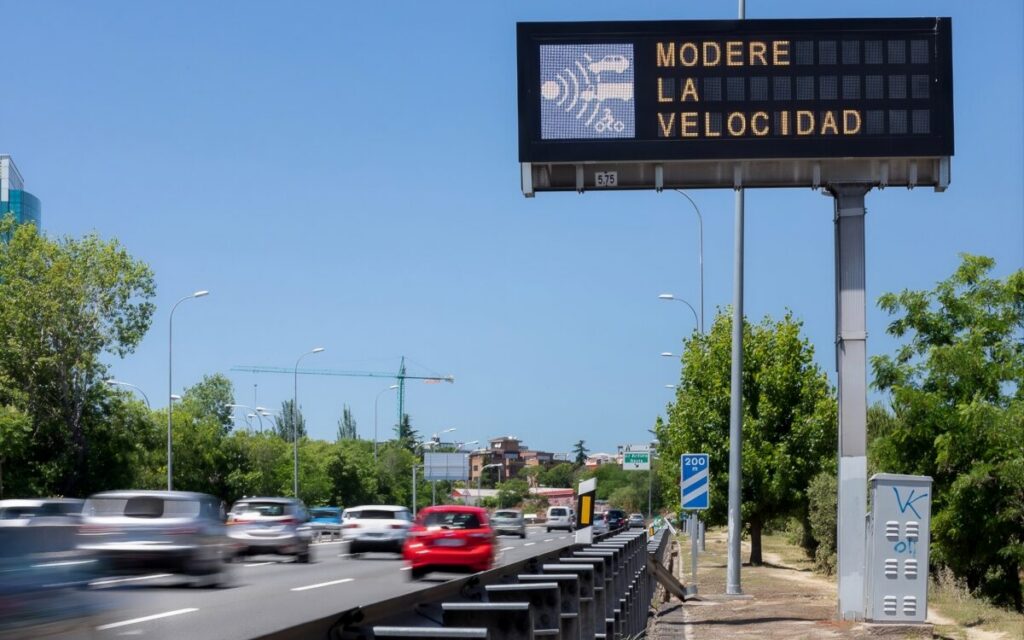
More speed cameras and more fines than ever before. Credit: DGT
Between April 13 and 19, officers from the Guardia Civil Traffic Group set up a grand total of 3,537 control points across Spain. They checked speeds of a massive 1,256,540 vehicles during this period. The figure shows an increase of more than 235,000 checks, even bigger than the previous summer operation. It just goes to show that the traffic authorities (DGT) are cracking down harder than ever on speed.
Speeding incidents contributed to 22 per cent of fatal crashes in 2024, making it one of the leading causes of all road deaths. The authorities are now responding each year with ever more targeted enforcement and additional cameras on Spanish roads.
Motorways see majority of penalties
To give an idea of the issue, both DGT and Guardia Civil officers recorded over 78,000 drivers breaking speed limits, representing 6.2 per cent of all vehicles monitored. Motorways and dual carriageways accounted for 53.5 per cent of these penalties, with 41,772 fines dished out there. This area shows a 10 per cent rise versus conventional roads, where officers issued 34,215 fines.
Fifteen drivers faced court proceedings for exceeding limits by more than 80 km/h. Such extreme cases have doubled over the past two years.
Lawmakers consider new 190 km/h offence threshold
Interior Ministry officials are now supporting changes to make rules more effective at stopping dangerous behaviour. A proposal before Congress is hoping to automatically classify driving at 190 km/h on motorways as a criminal offence with potential jail time. The idea is to deter reckless actions that put lives at risk on high-speed routes where many violations occur.
New support line helps accident survivors
At the close of the enforcement week, traffic chiefs introduced a dedicated helpline for people affected by road crashes. The 018 number now delivers free assistance to survivors and their families dealing with physical injuries, emotional trauma, and practical difficulties after incidents.
The service is available in English on request, is not meant for emergencies (continue to use 112 for that), is a free-of-charge call, and is available from 8am to 9pm daily. There is also a WhatsApp version on +34 645 713 823, and even an email service (also possible in English) via victimastrafico@dgt.es.
Trained psychologists, social workers, and legal experts will be staffing the service to help anyone who has been affected by a road accident in Spain. They guide users through administrative processes, provide emotional counselling, and monitor serious cases over extended periods. This resource addresses growing demand from individuals coping with long-term consequences of collisions on Spanish roads.
Change in speeding culture in Spain
Speed enforcement is really starting to take off in Spain as a form of changing a decades-long culture of pushing the accelerator down too far. With more vehicles checked and stricter rules under discussion, drivers can expect ever increasing pressure to respect limits, especially on high-capacity routes.
Sign up for personalised news
Subscribe to our Euro Weekly News alerts to get the latest stories into your inbox!
By signing up, you will create a Euro Weekly News account if you don't already have one. Review our Privacy Policy for more information about our privacy practices.




Adam Woodward
Adam is a writer who has lived in Spain for over 25 years. With a background in English teaching and a passion for music, food, and the arts, he brings a rich personal perspective to his work at Euro Weekly News. As a father of three with deep roots in Spanish life, Adam writes engaging stories that explore culture, lifestyle, and the everyday experiences that shape communities across Spain.
Comments