English International College Marbella leads the way as one of the first Smartphone-Free schools on the Costa Del Sol
By Lucy Ramnought • Published: 08 May 2026 • 12:10 • 5 minutes read
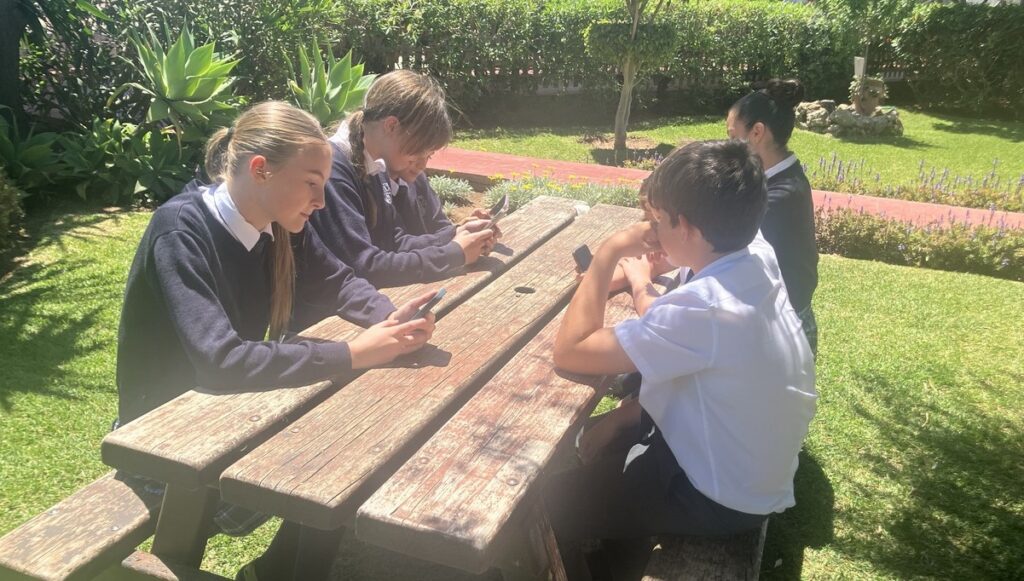
Distraction during important years Credit:EIC
The English International College Marbella (EIC Marbella) is taking influential steps in modern education by becoming one of the first smartphone-free schools on the Costa del Sol.
At the heart of this initiative is School Director and parent, Mr Richard Sutcliffe, whose concerns about the impact of smartphones on young people have developed into making the change. Euro Weekly News spoke with Mr Sutcliffe about smartphones and the steps the school is taking to protect the children from the small but dangerous device.
Mr Sutcliffe: “Each morning, around 50 smartphones are handed in at reception, and that doesn’t include the students who have ‘forgotten’ them in their bags”. It raises a simple question, do they actually need them in school at all?”
“This year we have included into our policy that our Sixth Form students are not allowed to have their phones with them in school,” he said. “However, reality is, those rules are not always followed. We still see distractions during some of the most important years of their education. It’s clearly addictive for the students who spend the majority of their time glued to screens”
The management of the smartphones was getting increasingly difficult
“We started to see first-hand how difficult it was to manage smartphones within school,” he explained. “Even with restrictions in place, students were distracted, playing games together or checking social media rather than using their phones for practical purposes.”
Wider conversations began with other members of staff including the school educational psychologist and counsellor to discuss the role smartphones were playing in young people’s lives, particularly in relation to distraction and constant digital engagement. He emphasised that the school’s response was based around a simple principle. “We have to ask whether smartphones are being used appropriately in a school setting,” he said. “If they are becoming a distraction rather than a tool, then it is our responsibility to act. We have completely ignored the dangers that young people face online. To quote Jonathan Haidt (author of the Anxious Generation): “We have over protected our next generation in the real world, but under-protected them in the online one”.”
There is no denying technology is incredible and has become an essential part of adult life
Central to his thinking is the belief that something important is being lost from childhood. “Being bored has always been part of growing up,” he added. “It’s where creativity and imagination come from. When students are constantly entertained by a screen, they lose those opportunities to develop important life skills.”
Reflecting on his own experiences, he said: “I remember spending hours with something as simple as a tennis ball, inventing games and making memories with others. Those moments teach you how to problem-solve, how to work with people, and how to think for yourself.”
For Mr Sutcliffe, the shift in child behaviour over time is clear, “There was a time when it was unusual to see a child playing alone at home, most were outside together,” he said. “Now, it’s almost the opposite. Most children are indoors on their screens, and we worry if we see them outside on their own. That’s a significant change in how childhood looks.”
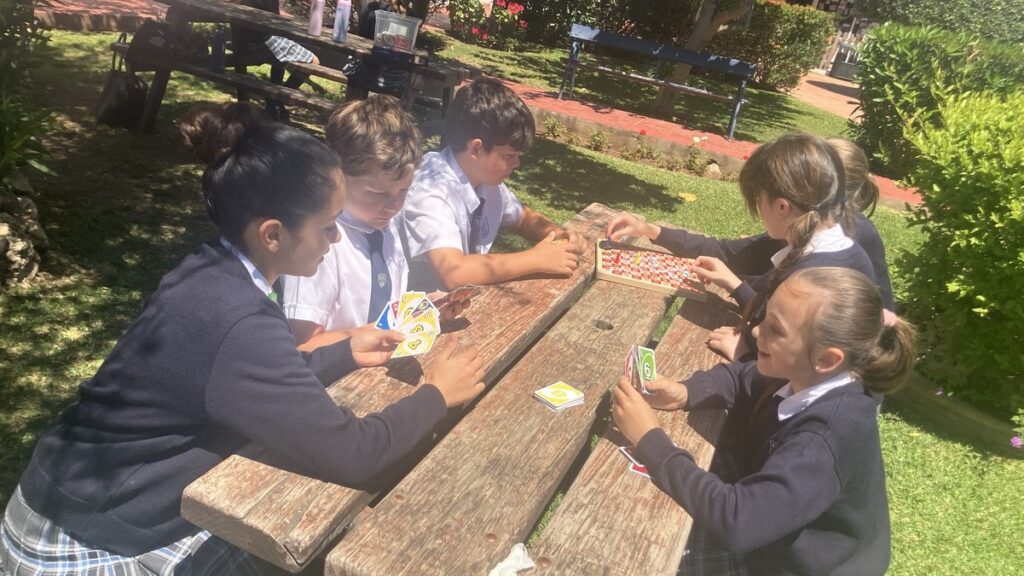
The EIC aims to address that change directly, by creating an environment where students are encouraged to engage with each other, their learning, and the world around them, free from the pull of a smartphone.
He does however not deny how incredible technology is “Lets face it, smartphones are incredible pieces of technology. They help us navigate the world, stay in touch with friends and loved ones, capture memories, and manage our lives. For most adults, they’ve become an essential tool and in many ways, they make life easier”
Credit:EIC
Workshops have been created and open for parents to come into school to discuss the issue. Students were also invited to share their opinions. The cooperation and input from the parents was crucial to the change being effective in the school environment. Results from many studies were presented with shocking figures linking phones to suicide, anxiety and depression.
Feedback collected from parents included the age of children being allowed phones, pressure to give a device younger than planned due to peer pressure from friends, social media exposure and the changes in behavior when the phones were taken away. Others shared worries around parties, sleepovers and social gatherings where heads glued in screens had become the norm rather than enjoying the event itself and the company around them.
Head of Primary and mother to three children, Mrs Harriet Gibson, noted that parents are starting to have the conversation that they were once fearful of, “Many parents have approached me and thanked the school for bringing this topic into the limelight. Secretly, we all worry about being a good parent, but also don’t want our child to be the one who is missing out. I wish this conversation was happening with other parents when my oldest child asked for a phone four years ago. Now, with my third, already parents are coming to mutual agreements about not buckling to the pressure.” She notes that children often confide in her that they find having a phone an enormous additional pressure, “Children naturally struggle to navigate difficult situations in real life, such as falling out with friends, so to then bring a phone into the situation where they can not hear the tone of what is being said or interpret someone’s body language means that often things escalate far more quickly and have greater repercussions.”
New rules, examples being set, and more education for parents and students around Smartphone usage
Following the workshops, big steps have been taken. At present the rule is that no phones are allowed past the school reception and must be handed in, preferable to this is that no phones come into school at all and are left at home. No devices on school trips or residentials.
Parents are also being asked to refrain from using smartphones on the school premises, especially during times of a performance or celebration. Staff are following the same rules, setting the standard and showing that the only way forward is to set an example for the students.
Regular sessions are also being held at EIC for students and parents by the school educational psychologist and counsellor to encourage healthy behaviours towards technology and addressing issues around social media, risky online behaviours and AI. Podcasts on the subject have been shared and books relating to the topic purchased for the school library.
A model school facing the challenges of the digital age
The English International College has built a reputation over the years as one of the most outstanding and respected international schools in southern Spain. Its academic achievements remain consistently strong. Many adults who attended The EIC themselves have chosen the school to send their own children following their positive ‘family feel’ experience from their education.
Today, EIC Marbella stands as a model for other schools navigating the challenges of the digital age. For Mr Sutcliffe, the mission is to ensure that students are not only academically successful, but also socially confident, emotionally resilient, and fully present in the world around them.
Sign up for personalised news
Subscribe to our Euro Weekly News alerts to get the latest stories into your inbox!
By signing up, you will create a Euro Weekly News account if you don't already have one. Review our Privacy Policy for more information about our privacy practices.





Lucy Ramnought
Lucy Ramnought is a local news writer and mother of 4 from the UK who has lived in the Costa Del Sol for just over 4 years. With a background in content writing and social media for various companies, and with vast experience in PA and project management, Lucy is committed to producing accurate, engaging and reliable stories to her work at Euro Weekly News.
Comments