Spain just recorded its hottest April ever and summer has not even started
By Farah Mokrani • Published: 08 May 2026 • 23:07 • 3 minutes read
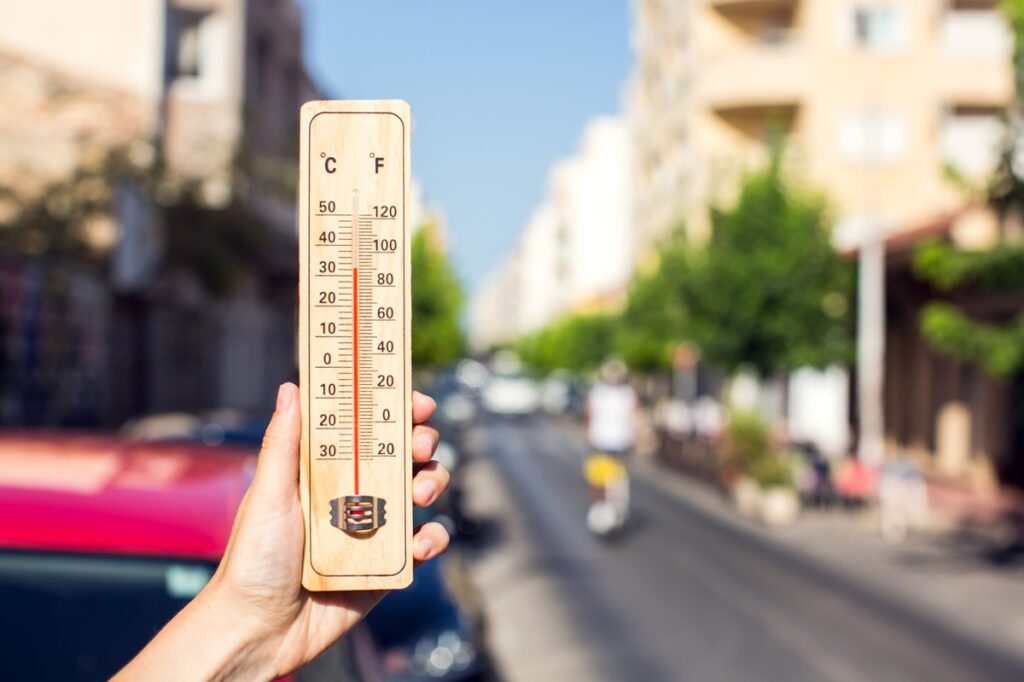
Spain has just recorded its hottest April since records began. Credit : aleks333, Shutterstock
Spain has officially lived through its hottest April since records began in 1961, after temperatures across the country climbed to levels normally expected in early summer rather than spring. According to Spain’s state meteorological agency AEMET, the average temperature across mainland Spain reached 15.1°C in April 2026, breaking the previous record set only three years ago.
For many people across the country, spring barely seemed to exist this year.
Instead, large parts of Spain spent most of April dealing with unusually intense heat, repeated temperature records and increasingly worrying signs of drought just weeks before the start of summer.
Meteorologists say the figures are another sign that extreme weather is becoming less exceptional and more frequent across Spain.
Spain saw temperatures close to 33°C in April
The heat affected almost the entire country during several unusually warm periods throughout the month.
According to AEMET, temperatures remained around 3.2°C above the seasonal average for much of April compared with the 1991 to 2020 climate reference period.
Two particularly hot episodes dominated the month.
The first lasted from April 3 to April 11, followed by another long stretch of heat from April 15 until the end of the month. Between April 18 and April 22, temperatures in some parts of Spain were approaching 5°C above normal for that time of year.
Only a brief cooler spell between April 12 and April 14 interrupted the heat.
Several cities recorded temperatures that felt far more like June than mid spring.
In Santander, on Spain’s normally milder northern coast, temperatures climbed to 32.8°C on April 6. Seville came close to 33°C a few days later, while Tenerife South reached 32.9°C.
Multiple weather stations across Spain broke absolute April heat records during the month.
AEMET also revealed that six individual days during April became the hottest ever recorded nationwide for those specific calendar dates since national records began in 1950.
Those dates were April 10, 18, 19, 20, 21 and 22.
Since the beginning of 2026, Spain has already experienced twelve exceptionally hot record breaking days. According to AEMET, under stable climate conditions, only around five such records would normally be expected during an entire year.
That statistic alone is one of the clearest signs of how rapidly temperatures are changing across the country.
Spain’s climate is swinging between drought and extreme rainfall
The heat is not the only issue worrying scientists. April was also extremely dry across much of mainland Spain.
Rainfall reached only 58 per cent of normal levels for the month, with average precipitation across the peninsula standing at just 36.8 millimetres.
Some of the worst rainfall shortages were recorded in Galicia, Catalonia and parts of the Cantabrian coast.
What makes the situation even more striking is how different conditions were only a few months ago.
January and February were among the wettest seen in Spain for decades, bringing unusually heavy rainfall to many regions.
Meteorologists say this pattern of long dry periods interrupted by intense episodes of rain is increasingly matching what climate scientists have been predicting for southern Europe.
Instead of steady and predictable rainfall spread across the year, precipitation is becoming more irregular and more extreme when it does arrive.
That creates a growing risk of both drought and sudden flooding.
Spain’s Ministry for Ecological Transition says this instability is fully consistent with current climate change projections for the country.
Longer and more intense heatwaves are also expected to become increasingly common.
Europe is warming faster than the rest of the planet
Spain’s record breaking April comes as European officials continue warning that the continent is heating up faster than almost anywhere else on Earth.
Sara Aagesen, Spain’s Minister for Ecological Transition, recently pointed to data from the Copernicus climate programme and the World Meteorological Organization showing that Europe is warming at roughly twice the global average rate.
That reality is already becoming visible across Spain. Heatwaves are arriving earlier in the year, warm nights are becoming more frequent and periods of drought are lasting longer.
At the same time, extreme weather events such as torrential rain and flash flooding continue affecting different parts of the country with increasing regularity.
In response, the Spanish government has now launched a new public platform called GOTA designed to centralise hydrological and meteorological information.
Officials say the system is intended to improve transparency around water management while helping citizens better understand climate related risks.
But for many people in Spain, the changes are already becoming impossible to ignore without needing statistics or scientific reports. When cities are approaching 33°C in April and spring starts feeling more like the middle of summer, the shift becomes very difficult to miss.
And with summer still weeks away, many people are already wondering what the coming months could look like if temperatures continue rising at this pace.
Sign up for personalised news
Subscribe to our Euro Weekly News alerts to get the latest stories into your inbox!
By signing up, you will create a Euro Weekly News account if you don't already have one. Review our Privacy Policy for more information about our privacy practices.




Farah Mokrani
Farah is a journalist and content writer with over a decade of experience in both digital and print media. Originally from Tunisia and now based in Spain, she has covered current affairs, investigative reports, and long-form features for a range of international publications. At Euro Weekly News, Farah brings a global perspective to her reporting, contributing news and analysis informed by her editorial background and passion for clear, accurate storytelling.
Comments