Call of nature: Poison dart frogs found in Schiphol Airport toilet
By Adam Woodward • Updated: 10 May 2026 • 15:01 • 2 minutes read
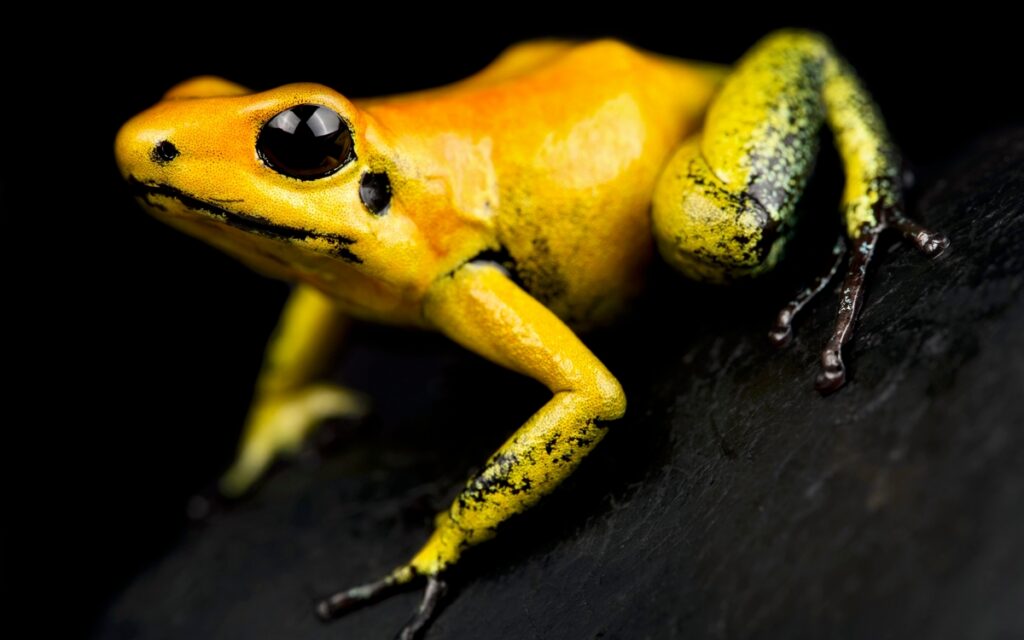
Extremely poisonous dart frog. Credit: reptiles4all - Shutterstock
Customs officers at Schiphol Airport in Amsterdam discovered six poison dart frogs recently after a passenger spotted one moving near a departure hall toilet and raised the alarm. Officers found a plastic container inside a nearby bin, complete with moss intended to keep the amphibians alive during transit.
Discovery could have been fatal in toilet
One blue-black specimen wandered freely close to the facilities while five others remained hidden in the discarded box. Officers suspect a traveller bought the frogs in the Netherlands with plans to smuggle them abroad, only to get scared near customs controls and abandon the creatures just before security screening. Dutch customs described the incident as highly unusual. In 18 years on duty one officer had never encountered anything similar, though routine checks target animal trafficking regularly.
Authorities transferred the protected species to the Netherlands Food and Consumer Product Safety Authority for specialist care. International CITES regulations (Convention on International Trade in Endangered Species of Wild Fauna and Flora) strictly control trade in these tropical rainforest natives because of their toxicity and conservation status.
Poison dart frogs carry serious dangers
Skin secretions from certain poison dart frogs contain powerful toxins capable of causing severe harm through cuts or mucous membranes. While not aggressive, their bright warning colours do give a pretty good idea of the genuine risk to handlers. This Schiphol find adds to growing concerns about live animals moving through busy European gateways in luggage or hidden containers.
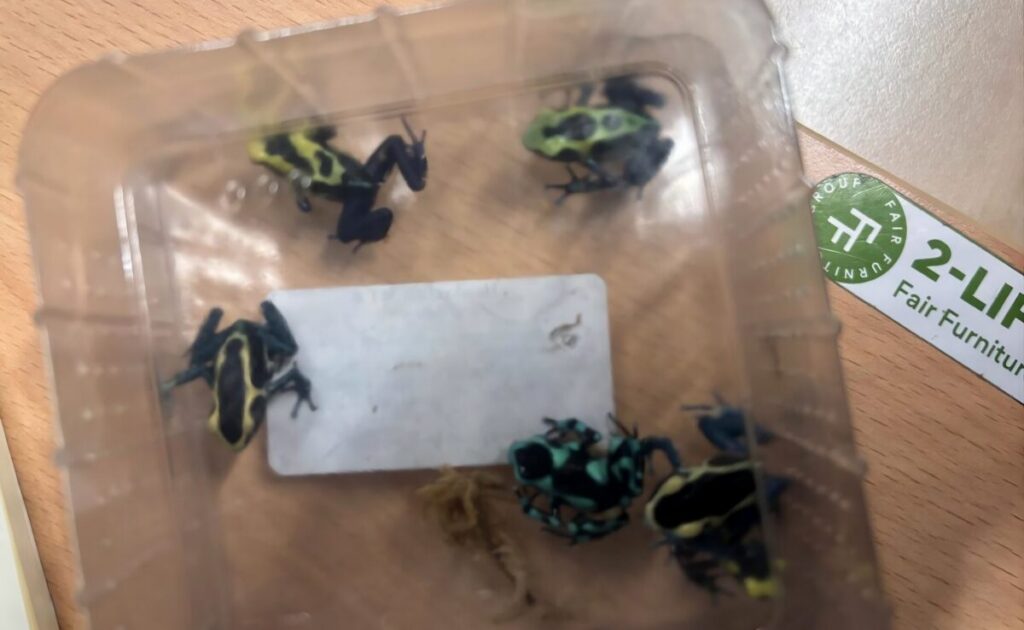
Credit: Schiphol customs.
Deadliest animals smuggled into European airports
Venomous snakes rank among the highest threats in airport seizures across Europe. King cobras, pit vipers and similar species appear frequently in passenger bags on routes from Asia and South America. Smugglers pack them in plastic tubs, socks or concealed compartments, creating escape hazards during flights. Bites deliver fast-acting venom that demands immediate anti-venom access and, of course, knowledge of exactly which species the bite comes from so as to know which antidote to administer.
Tarantulas and other venomous spiders follow closely in smuggling volume. Collectors seek rare varieties for the exotic pet market, and bites can cause intense pain, tissue damage and systemic reactions. UK and Swiss authorities have intercepted thousands in targeted operations at major terminals.
Large reptiles such as crocodiles occasionally surface in dramatic busts, though less often than smaller creatures. Primates and big cat cubs also feature in seizures, bringing risks of aggression and zoonotic diseases together with serious prison time. European airports and ports report steady inflows from source regions in Latin America, Africa and Southeast Asia, driven by high black-market demand.
Wildlife trafficking threatens safety and ecosystems
Smugglers abandon animals when detection seems imminent, as apparently happened at Schiphol. Such actions endanger passengers, staff and native wildlife if escapees establish invasive populations. European customs services coordinate closely with agencies like INTERPOL to disrupt these networks through advanced screening and intelligence sharing.
Sign up for personalised news
Subscribe to our Euro Weekly News alerts to get the latest stories into your inbox!
By signing up, you will create a Euro Weekly News account if you don't already have one. Review our Privacy Policy for more information about our privacy practices.




Adam Woodward
Adam is a writer who has lived in Spain for over 25 years. With a background in English teaching and a passion for music, food, and the arts, he brings a rich personal perspective to his work at Euro Weekly News. As a father of three with deep roots in Spanish life, Adam writes engaging stories that explore culture, lifestyle, and the everyday experiences that shape communities across Spain.
Comments