AI in CPG: Demand forecasting, supply chain, and pricing at scale
By Guest Writer • Published: 14 May 2026 • 15:44 • 6 minutes read
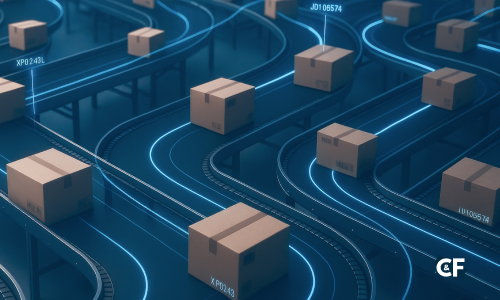
Image: CPG
For most consumer packaged goods companies, the harder question has shifted. AI’s potential is no longer in dispute; wat remains uneven is which projects produce durable results and which stall after a pilot. Hundreds of experiments run across marketing, operations, and supply chain teams every quarter, and only a small fraction become operational. The gap rarely comes down to model quality; it comes from how the work was scoped, where the data lived, and whether the team that owns the outcome was involved before the pilot started.
Why AI in CPG matters now
CPG margins have been under sustained pressure for the past three years. Input costs remain volatile, retail consolidation has shifted bargaining power toward fewer accounts, and direct-to-consumer channels have changed how shoppers compare brands. None of these forces respond to incremental cost cutting. They require sharper decisions about what to make, where to ship it, how to price it, and how to position it across thousands of SKUs and dozens of channels.
This is where AI in CPG has practical value; demand forecasting AI can read signals that human planners cannot process at scale, including weather effects, local promotional cadence, social listening data, and competitor pricing moves. Supply chain AI can rebalance inventory across distribution centres in response to actual order patterns rather than monthly forecasts. AI manufacturing applications can flag quality drift on production lines before scrap rates climb. Each of these reduces waste in places where waste has historically been treated as a cost of doing business.
McKinsey describes most CPG companies as stuck in “pilot purgatory”: running large volumes of subscale digital and AI activity that rarely translate into operational value at scale. The maturity gap between digital leaders and laggards widened by roughly 60 percent between 2016-19 and 2020-22, with CPG sitting near the bottom of the distribution. Most of that gap traces back to data readiness and clarity of business case rather than algorithmic access. The companies pulling ahead built their data foundations first.
AI use cases in CPG: Demand forecasting, supply chain, and pricing optimisation
The use cases that produce reliable returns share a pattern; they sit close to operational decisions made every week, they have clear KPIs, and they fail visibly when something goes wrong. That visibility forces the discipline that makes AI investments pay back.
Demand forecasting AI is the most common entry point. Replacing or augmenting statistical forecasts with machine learning models that incorporate causal variables (promotions, weather, competitive activity, channel mix) typically reduces forecast error in the high single digits to low double digits. Better forecasts cascade into inventory optimisation across the network, fewer stockouts at retail, and tighter trade promotion planning.
Pricing optimisation AI has matured significantly in CPG over the past two years. Modern systems test elasticity by SKU, channel, and region, and recommend list and promotional pricing that respects brand guardrails and trade agreements. Pricing AI usually fails because commercial teams do not trust the recommendations enough to act on them, and that trust depends on how transparent the system is about how prices were generated.
Personalisation AI now extends well past banner ads. CPG brands selling through DTC and through retailer media networks are using machine learning retail models to tailor offers, shopper missions, and content. The data foundation matters here more than the model: a personalisation engine running on stale or fragmented profiles will not perform regardless of how sophisticated the underlying algorithm is.
Predictive analytics CPG applications also reach into manufacturing. Predictive maintenance, OEE improvement, and quality vision systems are now mature enough to deploy without extensive customisation. The harder work is integrating their output into shift-level decisions on the floor, which usually means rebuilding parts of the operational data layer first.
Customer insights AI, drawing on CPG data analytics across loyalty programs, retailer panels, and social signals, gives brand teams a clearer read on shopper behaviour than panel-based syndicated data alone. The value compounds when these insights connect back to product development and assortment decisions, beyond marketing creative. Strong CPG analytics programs operate insight generation as a continuous workflow. Treating it as a quarterly report leaves most of the value unrealised.
CPG analytics in practice: Real-world case studies
The work that makes AI in CPG produce returns often happens upstream of the model itself, in the analytics delivery layer and the reporting workflows that operating teams rely on every day. Two recent C&F engagements illustrate the point.
A Fortune 500 client operating across life sciences, FMCG, and pharmaceutical lines was struggling with self-service reporting that had grown faster than the governance around it. Reports proliferated without quality controls, data integrity weakened, and the cost of running the analytics estate kept climbing. In this data analysis streamlining engagement, C&F redesigned the visualisation layer around how specific user groups actually consume data, calibrating presentation density to skill level and applying visualisation best practices consistently across reports. Data analysis ran roughly five times faster after the redesign, cognitive load and error risk dropped by up to three times, and the speed of drawing conclusions increased nearly six-fold. The implication for AI in CPG is direct: a personalization model or a demand forecast is only useful if the people meant to act on its output can read it confidently.
A second client, operating in CPG and animal health, faced a different bottleneck. Their analytical teams produced a high volume of PowerPoint decks for commercial and operational reviews, and the constant data updates and slide rework drained capacity. Self-service options existed, but business users did not trust the data accuracy enough to rely on them. C&F built a PowerPoint automation web application with drag-and-drop deck design, a library of approved visual elements, and direct integration with the client’s data sources for dynamic content. The result was a standardised presentation process that increased user autonomy and lifted confidence in the underlying numbers. The thread connecting this case to AI transformation CPG is the same: model output that lands in a stale, manually assembled deck loses most of its value before anyone can act on it.
Both engagements relied on disciplined scoping, honest data work, and operating teams that had a stake in the outcome.
How to Implement AI in CPG without stalling pilots
AI transformation CPG initiatives tend to fail in predictable ways: scope expands beyond what the data can support, the business owner is unclear, or the model is built without a plan for how it will be operated and maintained. Avoiding those failure modes is mostly a matter of sequencing.
Start with one decision a team makes regularly that has measurable financial consequences. Ask whether the data needed to inform that decision exists in usable form. If it does not, the first project is data foundation work. The AI work waits. If the data is in shape, the second question is whether the team making the decision will use a model output, and what would have to be true for them to trust it. Skipping that conversation is the most common reason pilots stall.
This is the work Advanced AI Solutions for CPG is built around. C&F partners with CPG manufacturers, retailers, and distributors to scope AI initiatives that connect to operational decisions and to build the data foundations they require. Whether the priority is demand forecasting, supply chain optimization, or shopper personalisation, the starting point stays the same: a clear business case, an honest assessment of data readiness, and a delivery plan that the operating team can actually run after go-live. Our advanced data solutions practice supports the underlying analytics, governance, and platform work that makes AI investments durable, including data integration across ERP, trade promotion, and retailer feeds.
The companies making the most progress run fewer pilots, scoped tightly, with the data and ownership questions settled before kickoff.
The future of AI in CPG: Generative AI, agents, and predictive analytics
The next phase of AI in CPG will be defined by integration rather than novelty. Generative AI is becoming a standard layer for content production and conversational analytics, and AI agents are moving into specific operational workflows like new item setup, promotional planning, and customer service triage. These will deliver value where workflows are well understood and where the data feeding them is reliable.
The shape of the constraint is unlikely to change. The bottleneck for AI value capture in CPG remains the data layer and the operating model around it. Model availability has stopped being the limiting factor. Brands that treat their data foundation as a strategic asset, with clear ownership, governance, and investment, will continue to compound advantages. The rest will keep funding pilots that do not connect to a P&L.
For executives weighing where to commit AI investment over the next 18 months, the question that matters is which decisions move the most value, whether the data exists to inform them, and whether the team owning the outcome is part of the design from day one. That set of questions tends to produce a much shorter project list than initial enthusiasm suggests, and a much higher hit rate on the projects that remain.
Follow Euro Weekly News on Google News
Get breaking news from Spain, travel updates, and expat stories directly on your Google News feed.
Follow on Google NewsSign up for personalised news
Subscribe to our Euro Weekly News alerts to get the latest stories into your inbox!
By signing up, you will create a Euro Weekly News account if you don't already have one. Review our Privacy Policy for more information about our privacy practices.





Guest Writer
Comments