Skin and mole checks: What to look for, and why now
By EWN • Published: 16 May 2026 • 9:00 • 2 minutes read
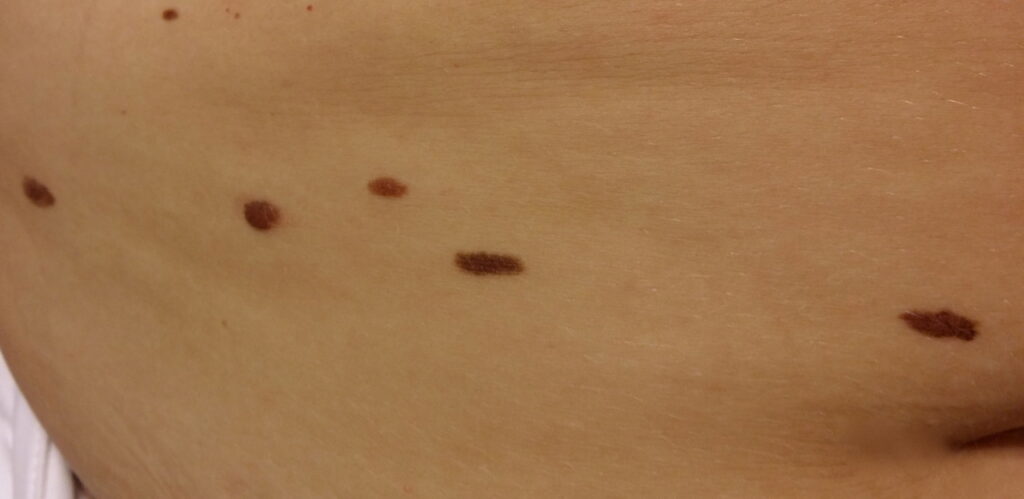
Skin checks are a short, painless, and effective form of cancer prevention. Credit: La Cala Medical
By Dr. Hanna Raitio, MD, PhD, Consultant Dermatologist
Summer is coming. UV exposure is about to increase remarkably, and so are the risks, especially for fair skin. Now is a good time to have your skin examined, before the strongest months arrive.
Skin cancer is a common cancer in fair-skinned populations. Most skin cancers are visible from the outside, and when found early they can be treated with simple procedures. Melanoma, the most serious form, has a cure rate even above 95% when detected and removed in an early stage. Early signs are often subtle: a small change in colour, a slightly uneven edge, a spot that itches or bleeds, a patch that does not heal.
What a dermatologist actually does
A proper skin check is a full-body examination. The dermatologist looks at the scalp, behind the ears, between the fingers and toes, the soles of the feet, and other areas patients rarely check themselves, or simply cannot reach on their own. A dermatoscope (a handheld magnifying tool with polarised light) shows structures inside a mole that are not visible to the naked eye. This improves the accuracy of diagnosis and reduces unnecessary biopsies. For patients with many moles or a personal or family history of skin cancer, mole mapping may be recommended.
What to look for at home
Between visits, examine your own skin regularly. The ABCDE rule is a useful guide:
- Asymmetry: one half of the mole does not match the other
- Border: edges that are uneven, blurred, or notched
- Colour: more than one shade, or a recent change
- Diameter: larger than 6 mm (about the size of a pencil eraser)
- Evolving: any change in size, shape, colour, height, or sensation
Also pay attention to the “ugly duckling” sign: a mole that looks different from the others on your body. If a spot itches, bleeds, crusts, or does not heal, have it assessed.
Why this matters more on the Costa del Sol
Light skin types, a tendency to sunburn, and decades of recreational sun exposure all contribute to the risk. Damage from past summers accumulates. Our skin has a good memory. It surfaces years later, often after the age of 50.
The practical step
If you have not had a full skin examination recently, book one before the hottest months begin. Annual checks are reasonable for most people over 50 in this region, and sometimes even more frequent checks for higher-risk patients. Examine your own skin regularly between visits.
Skin checks are short, painless, and one of the most effective forms of cancer prevention we have. The earlier a problem is found, the simpler the solution.
Dr. Hanna Raitio is a consultant dermatologist practising in La Cala de Mijas.
Tel: 681 231 350
Av. Mare Nostrum 13, La Cala de Mijas
Follow Euro Weekly News on Google News
Get breaking news from Spain, travel updates, and expat stories directly on your Google News feed.
Follow on Google NewsSign up for personalised news
Subscribe to our Euro Weekly News alerts to get the latest stories into your inbox!
By signing up, you will create a Euro Weekly News account if you don't already have one. Review our Privacy Policy for more information about our privacy practices.




EWN
Comments