Why I smuggled a £3,500 oximeter onto the London Underground
By Dr Marcus Stephan • Updated: 19 May 2026 • 10:41 • 4 minutes read
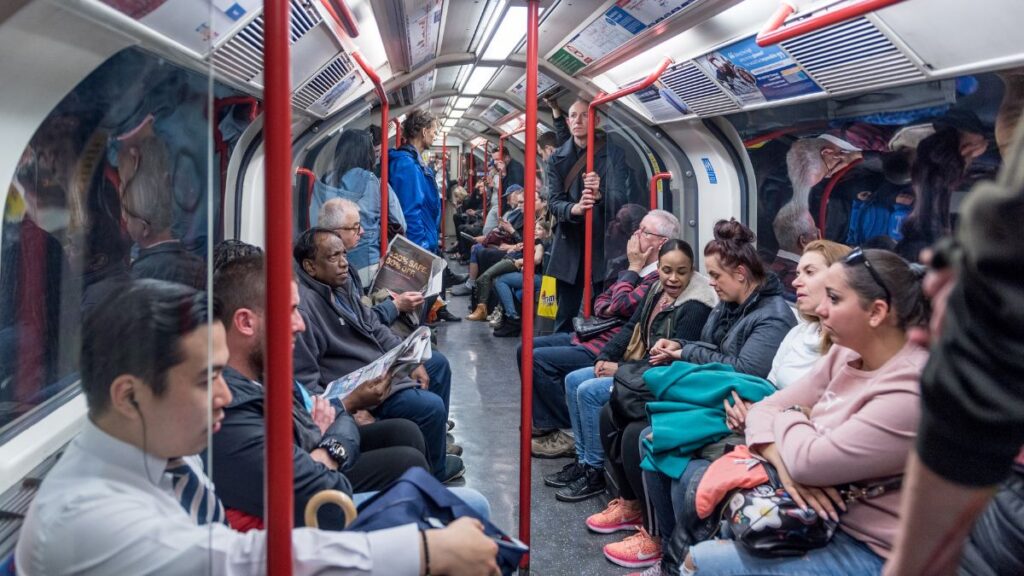
The bustling environment of a London Underground commute, where crowded spaces and deep-level tunnels once sparked unique investigations into air quality and blood oxygen levels. Credit: photosounds / Shutterstock.com
In the era before smartphones, monitoring your blood oxygen saturation required bulky, expensive medical equipment. This firsthand account explores a “guerrilla science” experiment conducted on the London Underground, investigating how poor ventilation and stale air on deep tube lines impact fatigue and lethargy. By using an early portable pulse oximeter, we can see exactly how oxygen levels fluctuate during a commute and why modern consumer health tech has changed the way we monitor our well-being.
The mystery of the commuter “coma”
At the start of my career, I worked in central London and commuted home on the Underground. More often than not, I would fall into a deep, almost coma-like sleep during the journey. While I certainly worked hard, I began to suspect that the stale air on the deeper underground lines by the end of the day might also have contributed to my persistent fatigue.
The science of oxygen saturation (SpO2)
Around that time, one of the respiratory clinics attached to where I worked received a delivery of new “portable” oxygen monitors, known as oximeters. These devices work by passing a specific wavelength of red light through a finger; the amount of light transmitted is used to calculate how much oxygen the blood is carrying. We talk about blood saturation, so you cannot have a greater level than 100%. The device performs the necessary calculations and displays the result as a percentage. You have to remember this was pre-iPhone and all things miniature and we all thought it was truly amazing.
As is well known, blood carries oxygen throughout the body, where it is used as fuel for essential functions. When oxygen levels drop, it is comparable to a battery running low – performance declines. The brain is typically affected first, which explains why we often feel drowsy or lethargic in crowded, poorly ventilated spaces. This “stuffy” sensation is usually relieved quickly upon stepping into fresh air.
The £3,500 rucksack experiment
The portable oximeter in question could operate for nearly six hours on its internal battery. However, “portable” was a generous term: it was about the size of a modest hi-fi amplifier and quite heavy. It included a probe attached to a finger via a cable, and a display showing oxygen saturation levels.
-
100%: Optimal oxygenation.
-
95% and Below: Generally considered a cause for concern and should be investigated urgently.
Following what may have been a convivial discussion, I ended up borrowing this expensive piece of equipment for an evening – contrary to all regulations, of course. I managed to fit it into a rucksack, with the cable emerging from the top and the probe attached to my finger, as I descended into the Underground. I tried to keep an eye on the display, but my curiosity was no match for my exhaustion. I soon drifted into my usual deep sleep shortly after leaving King’s Cross on my northbound journey.
The following day, I reviewed the recorded data. Unsurprisingly, my oxygen saturation had dropped to 92% at its lowest point, which likely explained my tendency to fall asleep so deeply. Fortunately, the frequent stops and jolts of the train ensured I was regularly roused. Nevertheless, I had demonstrated my point. I returned the undamaged device, relieved to have survived the commute with both my health and the equipment intact.
Modern pulse oximeters: affordable and compact
Today, the landscape of health technology has shifted dramatically. What once required a £3,500 “amplifier” in a rucksack can now be bought as a tiny consumer device from retailers like Lidl for around €20.
Modern pulse oximeters are ultra-compact – small enough to fit on a fingertip – and run on long-lasting batteries. Beyond just oxygen, these modern devices offer a suite of data:
-
Heart rate monitoring: Real-time pulse tracking.
-
Arterial blood flow: Indications of the volume of blood with each beat.
-
Visual waveforms: A visual representation of your circulation.
The danger of “silent hypoxia”
The reason for sharing this story is that we often adapt to discomfort without fully recognising it. Much like weight gain that only becomes apparent when a friend points it out, we may not realise if our oxygen levels are gradually declining. We often attribute breathlessness or fatigue to aging, when a more specific medical cause may be responsible.
This issue became particularly relevant during the COVID-19 pandemic. While many remain asymptomatic, higher-risk individuals – particularly those over 65 – can develop hypoxia (low blood oxygen) without obvious symptoms. This “silent hypoxia” can become severe before it is detected, significantly affecting health outcomes.
Monitoring your health at home
The silver lining is that oxygen saturation can now be monitored easily and inexpensively at home with accuracy that rivals clinical-grade machines. For those in higher-risk categories, investing €20–€30 in a reliable device is a small price for peace of mind.
Key safety guidelines for home monitoring:
-
Know your baseline: A quick 30-second check every couple of days can provide reassurance.
-
Watch the trend: Seek medical advice if levels show a consistent downward trend.
-
The 95% rule: For most people, a reading below 95% should be taken seriously and may constitute a medical emergency.
Note: Individuals with conditions like COPD may have lower baseline levels and should follow their doctor’s specific guidance.
A legacy of better air quality
As a final note, the London Underground implemented a major program in the 1980s to improve ventilation in its deepest tunnels, recognising that train movement alone was insufficient for air quality.
It would be nice to think my unorthodox “rucksack research” contributed to this change, but I think thanks goes to the Underground staff. Their daily exposure to poor air quality eventually forced the improvements that make today’s commute (while still a bit stuffy) far safer than the “coma-inducing” journeys of the past.
The information provided in this column is for educational and informational purposes only, and does not constitute medical advice. It is not a substitute for a professional medical consultation, diagnosis, or treatment. Always seek the advice of your own physician or other qualified health provider with any questions you may have regarding a medical condition.
Dr Marcus Stephan
Follow Euro Weekly News on Google News
Get breaking news from Spain, travel updates, and expat stories directly on your Google News feed.
Follow on Google NewsSign up for personalised news
Subscribe to our Euro Weekly News alerts to get the latest stories into your inbox!
By signing up, you will create a Euro Weekly News account if you don't already have one. Review our Privacy Policy for more information about our privacy practices.




Dr Marcus Stephan
With a career spanning more than 35 years in both the UK and internationally, Dr Marcus' passion lies in empowering individuals through knowledge, enabling them to care for themselves and others. He simplifies the science behind medicine by removing unnecessary jargon, explains common health conditions, and shares updates on the latest advances and developments in medicine.
Comments