Dangerous Asian hornet detected in Canary Islands for first time
By Natascha Rivera • Published: 23 May 2026 • 17:14 • 3 minutes read
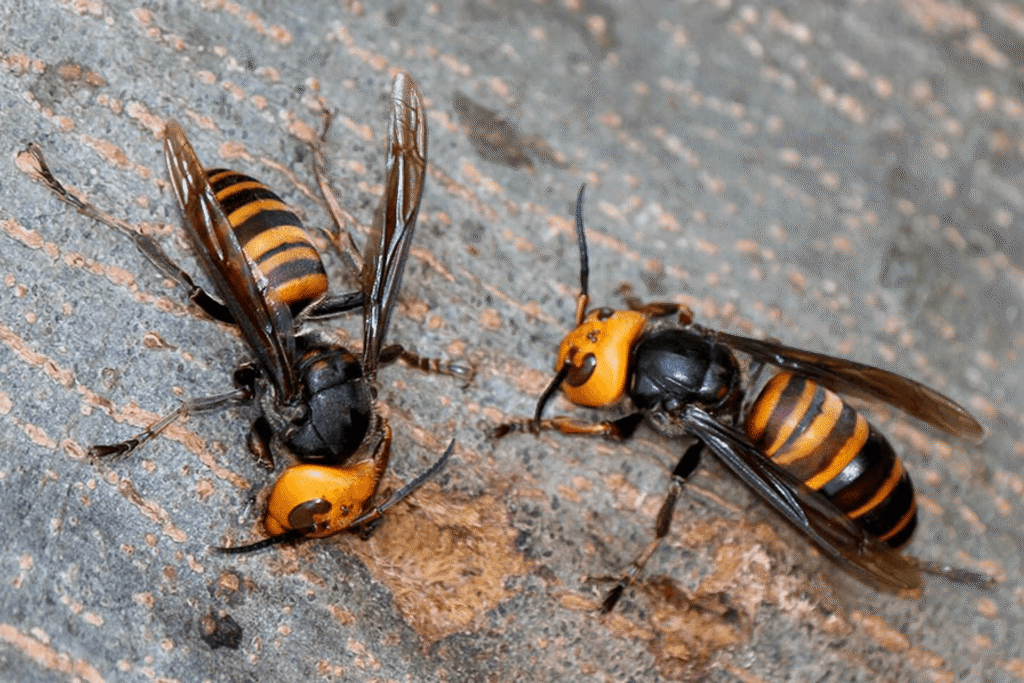
Asian hornets discovered in Canary Islands threaten bees, biodiversity, crops. Photo Credit: Harper Adams University
For the first time, the Asian hornet, also called the Oriental hornet, the Asian predatory wasp, or the yellow-legged hornet, has been detected for the first time in Spain’s Canary Islands. To be specific, 93 specimens of the invasive species (scientific name Vespa velutina) were found in an urban area of Las Palmas de Gran Canaria, the capital of the island of Gran Canaria.
Asian hornets are here: The invasive species found in Gran Canaria
The Asian hornet has been present in the north of the Iberian Peninsula since 2010, and its arrival in the Canary Islands poses a threat to both the flora and fauna of the islands. To be specific, Asian hornets are known to decimate local honeybee and pollinator populations, causing massive hive losses for beekeepers and stunting the reproduction of flowering plants. These hornets threaten biodiversity, damage agricultural food crops, and can also pose a threat to humans in the form of a painful sting.
Authorities scramble to trap any additional species
After receiving the alert about the nearly 100 specimens that have called Gran Canaria their new home, local firefighters worked to remove them that same night and informed a local organisation dedicated to the detection and handling of invasive species, the Early Warning Network for Invasive Exotic Species of the Government of the Canary Islands. The specimens were captured and identified.
The Las Palmas de Gran Canaria City Council then established the installation of traps in urban parks near the detected nest, aiming to attract and capture any remaining Asian hornets in the area. Traps will also be placed near the port of Gran Canaria, and this process will help to determine the extent of the population’s growth and help to guide future control efforts.
Nearly 100 specimens found, just in the nick of time
According to experts, the timing of the discovery may reflect positively on control efforts as well; during the spring, colonies are only just beginning to grow, and it is unlikely that at this time, the species will be fully ready to reproduce. However, with the species’ arrival in the Canary Islands comes uncertainties about how they will react and evolve with the islands’ natural annual climate conditions.
How can I detect the presence of an Asian hornet?
Locals and visitors of the Canary Islands will be able to easily identify the invasive species, primarily by its large size. The hornets can grow up to 3cm long, and the species has distinctive colouring: a dark body, bright yellow legs, and a yellow-orange band crossing the lower part of its abdomen.
They are more likely to be detected near fountains, water deposits, or swimming pools, where they must go to hydrate. It is also likely that they will appear around beehive facilities, where they may go to hunt.
Are Asian hornets dangerous to humans?
The Asian hornet has a large stinger, and the stings are therefore more painful as they can inject a larger amount of venom into its victim. However, the toxicity of its venom is similar to that of smaller species, meaning that the stings are not a serious risk to humans unless that person has been diagnosed as allergic to bee or wasp stings in general.
What should I do if I encounter an Asian hornet?
Authorities remind citizens that they should not try to remove Asian hornet nests on their own, even if they have protective equipment used in beekeeping, as even this equipment does not adequately protect against Asian wasp stings. The removal of nests should only be carried out by specialised authorities, and only at night, when the colony is less active.
Therefore, the best course of action when encountering an Asian wasp in the Canary Islands is to call 112, or send photos or videos of the wasps or their nests to the Early Warning Network for Invasive Exotic Species of the Government of the Canary Islands, through WhatsApp at T. 646 60 14 57.
Asian hornets were first spotted in Spain in Algeciras in 2018. Since then, they have been spotted in various autonomous communities, including in Valencia, Andalucia, and Galicia.
Follow Euro Weekly News on Google News
Get breaking news from Spain, travel updates, and expat stories directly on your Google News feed.
Follow on Google NewsSign up for personalised news
Subscribe to our Euro Weekly News alerts to get the latest stories into your inbox!
By signing up, you will create a Euro Weekly News account if you don't already have one. Review our Privacy Policy for more information about our privacy practices.





Natascha Rivera
Natascha is a Dominican writer based in Spain with a background in audiovisual and marketing communication. A lifelong reader and passionate storyteller, she brings a creative edge to her work at Euro Weekly News. Her multicultural perspective informs her coverage of lifestyle and community stories, offering fresh angles and relatable storytelling that connects with a diverse audience.
Comments