Over 40,000 march on Moncloa as Madrid protesters demand Sánchez resignation
By Molly Grace • Published: 23 May 2026 • 23:09 • 3 minutes read
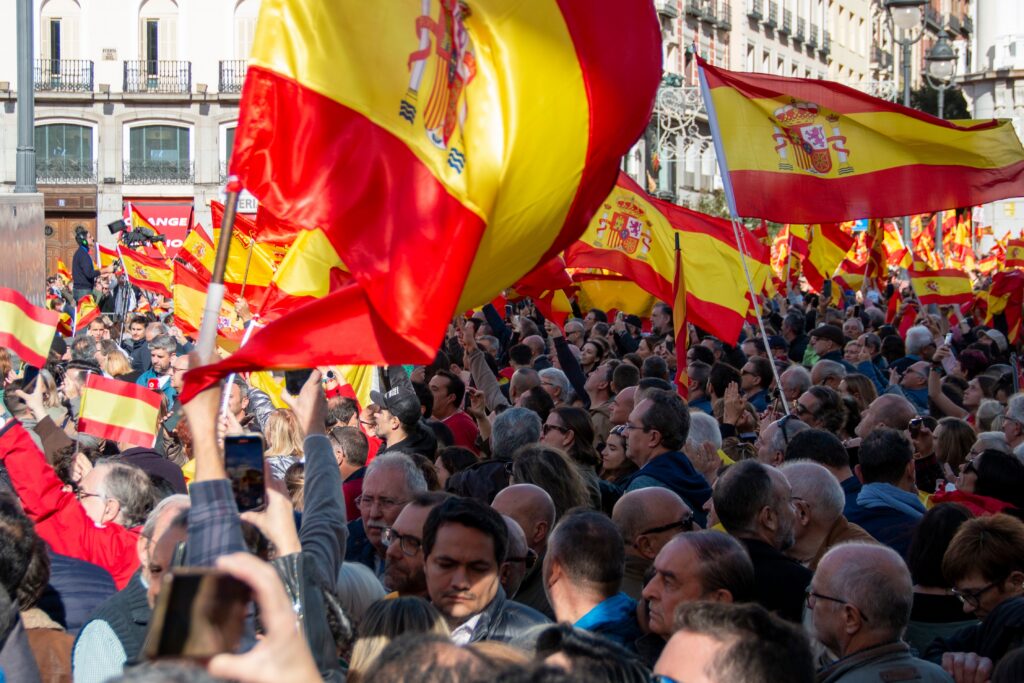
Tensions increased during the final stage of the protest when police units blocked access routes leading towards Moncloa. Photo credit: Sauce Reques/Shutterstock
Tens of thousands of demonstrators gathered in Madrid this Saturday May 23, calling for the resignation of Spanish Prime Minister Pedro Sánchez, with police later blocking attempts by protesters to reach the Moncloa Palace complex (where the prime minister resides) via the A-6 motorway. The protest, organised by the civic platform Sociedad Civil Española under the slogan “Sánchez, dimisión ya”, began at Plaza de Colón before moving through central Madrid towards the Moncloa area. Organisers claimed attendance reached 80,000 people, while the Government Delegation in Madrid estimated the turnout at approximately 40,000.
Participants carried Spanish flags and banners accusing the government of corruption and demanding early elections. Chants directed at Sánchez and members of his administration continued throughout the route, although the demonstration remained largely peaceful during most of the day. The march caused disruption across several parts of the capital, with increased police presence around key government buildings and traffic restrictions imposed along parts of the route. Large crowds gathered throughout the afternoon as demonstrators continued towards the western side of the city near Moncloa.
Investigations Increase Pressure on Government
The rally took place amid continuing political controversy surrounding several judicial investigations linked to figures connected to the ruling Socialist Party. Particular attention has focused on former prime minister José Luis Rodríguez Zapatero after Spain’s National Court opened an investigation related to the Plus Ultra airline bailout case. Zapatero has denied wrongdoing. At the same time, scrutiny has continued over investigations involving Sánchez’s wife, Begoña Gómez, and other current and former political figures associated with the Socialist Party.
Sánchez has repeatedly rejected accusations against his government and political allies, describing the investigations affecting his family and associates as attempts to destabilise his administration through political and judicial pressure. Earlier this week, the prime minister publicly defended Zapatero and called for respect for the principle of presumed innocence during ongoing legal proceedings. The government has also accused opposition parties of encouraging political tension through repeated public demonstrations and criticism of ongoing judicial cases. Ministers within Sánchez’s coalition argued that legal investigations should proceed independently without being used to influence public opinion before any court rulings have been reached.
Opposition Figures Join Demonstration
Several opposition politicians attended the protest, including representatives from the conservative People’s Party and the right-wing Vox party. Vox leader Santiago Abascal joined supporters during the march, while senior figures from the People’s Party also participated. However, party leader Alberto Núñez Feijóo did not attend because he was participating in a regional party event outside Madrid.
Demonstrators gathered in significant numbers around the Arco de Moncloa area as the march approached its scheduled conclusion. Some protesters attempted to continue towards the prime minister’s official residence despite police restrictions already in place around the government complex.
Many protesters accused the government of failing to provide sufficient transparency regarding investigations connected to political figures. Others called for a general election before the end of the current parliamentary term. Placards carried during the demonstration included slogans demanding accountability from senior members of the government and criticism of recent political decisions made by Sánchez’s administration.
Police Prevent Protesters Reaching Moncloa
Tensions increased during the final stage of the protest when police units blocked access routes leading towards Moncloa and prevented demonstrators from advancing along the A-6 motorway. Footage from the scene showed officers forming cordons across the road while some protesters pushed against barriers and shouted towards police lines. According to reports from the scene, at least seven police officers sustained injuries during the disturbances and three people were arrested.
Police vehicles and riot units were deployed around the perimeter of the Moncloa complex as officers attempted to prevent further confrontations. Some demonstrators remained in the area for several hours after the main protest had officially concluded. Spanish authorities later restored access to the motorway after dispersing the remaining crowds gathered near the police cordon. Traffic disruption in the area continued during part of the afternoon while officers maintained security around the government complex.
Demonstration Reflects Political Polarisation
Saturday’s protest was one of the largest anti-government demonstrations held in Madrid this year and reflected continuing political division in Spain ahead of the next general election, currently scheduled for 2027. Opposition groups have accused Sánchez of weakening democratic institutions and failing to respond adequately to allegations involving individuals connected to his political circle.
The prime minister has denied those accusations and insisted he will remain in office until the end of the parliamentary term. The demonstration follows several years of recurring protests against Sánchez’s administration, including large rallies in 2023 linked to the government’s Catalan amnesty law. Those protests also resulted in attempts by demonstrators to gather near Moncloa and temporary disruption along the A-6 route into Madrid.
Follow Euro Weekly News on Google News
Get breaking news from Spain, travel updates, and expat stories directly on your Google News feed.
Follow on Google NewsSign up for personalised news
Subscribe to our Euro Weekly News alerts to get the latest stories into your inbox!
By signing up, you will create a Euro Weekly News account if you don't already have one. Review our Privacy Policy for more information about our privacy practices.



Molly Grace
Molly is a British journalist and author who has lived in Spain for over 25 years. With a background in animal welfare, equestrian science, and veterinary nursing, she brings curiosity, humour, and a sharp investigative eye to her work. At Euro Weekly News, Molly explores the intersections of nature, culture, and community - drawing on her deep local knowledge and passion for stories that reflect life in Spain from the ground up.
Comments