Spain’s opposition calls for Sánchez to step down over growing political crisis
By Molly Grace • Published: 20 May 2026 • 13:28 • 3 minutes read
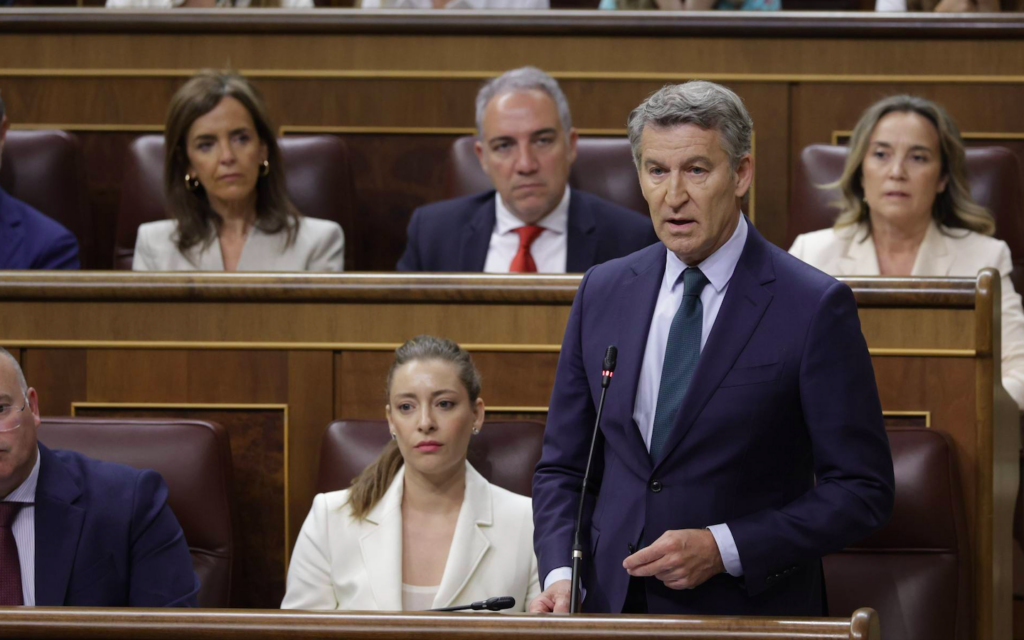
Feijóo argued that Sánchez had become politically weakened and should dissolve parliament. Photo credit: PP. es
Spanish Prime Minister Pedro Sánchez has rejected calls to resign after opposition leader Alberto Núñez Feijóo demanded he step down during a tense session in Congress today, Wednesday 20. Sánchez also ruled out the possibility of an early general election, stating that Spain “will have elections in 2027”. The exchange came amid growing political controversy surrounding former Prime Minister José Luis Rodríguez Zapatero, after reports that a judge had opened proceedings connected to the long-running Plus Ultra airline case.
Sánchez publicly defended Zapatero during the parliamentary debate and criticised what he described as attempts to damage the reputation of former Socialist leaders. Feijóo, leader of the conservative People’s Party (PP), used the session to increase pressure on the government, arguing that Sánchez had become politically weakened and should dissolve parliament.
He accused the Prime Minister of shielding figures linked to past controversies instead of addressing growing public concern over government credibility. Sánchez dismissed the criticism and insisted that his administration would complete its term. “There will be elections in 2027,” he told MPs, rejecting speculation that political pressure could force an earlier vote.
Opposition Attempts to Increase Pressure on Government
The confrontation reflected the increasingly hostile political climate in Spain following months of disputes between the governing Socialist Party and the opposition. The PP has repeatedly argued that Sánchez is struggling to maintain authority after a series of controversies involving allies and former political figures associated with the left.
Feijóo claimed the government had lost public confidence and argued that the Prime Minister should allow voters to decide the country’s direction sooner rather than later. He also criticised Sánchez for maintaining close political ties with Zapatero, who remains influential within sections of the Socialist Party despite leaving office more than a decade ago.
Government ministers rejected the opposition’s accusations and defended Zapatero’s political legacy. Sánchez argued that criticism directed at the former prime minister formed part of a wider campaign against Socialist politicians.
The parliamentary clash quickly became one of the most closely watched moments in Spanish politics this week, with both parties attempting to frame the debate ahead of future electoral contests. Although national elections are not scheduled until 2027, speculation over political stability has intensified in recent months as parties position themselves for regional and European campaigns.
Zapatero Continues to Hold Influence Within PSOE
Zapatero, who served as Spain’s prime minister between 2004 and 2011, remains an important figure within the governing Spanish Socialist Workers’ Party (PSOE). While he no longer holds elected office, he continues to participate in political events and regularly comments on national affairs.
The Plus Ultra case has periodically resurfaced in Spanish political debate since the government approved financial support for the airline during the COVID-19 pandemic. Opposition parties have questioned aspects of the rescue package, although previous investigations have not produced criminal convictions against senior government figures.
Reports that judicial proceedings connected to the case were advancing prompted renewed criticism from the PP and other opposition parties. Sánchez nevertheless stood firmly behind Zapatero during Wednesday’s session and refused to distance himself from the former leader. Political analysts said the Prime Minister’s decision to publicly defend Zapatero was significant because it demonstrated an effort to maintain unity within the Socialist movement during a period of mounting political tension.
Elections Remain Scheduled for 2027
Under Spain’s electoral timetable, the next general election is expected to take place in 2027 unless Sánchez chooses to call an early vote. The Prime Minister’s statement in Congress appeared intended to end immediate speculation about a snap election. Despite opposition demands, the government currently shows no indication that it plans to shorten the parliamentary term. Sánchez has repeatedly argued that his coalition remains capable of governing and passing legislation.
The dispute is likely to deepen divisions between the PSOE and the PP in the months ahead as both parties attempt to consolidate support. With political tensions continuing to rise, Wednesday’s parliamentary session underlined the increasingly confrontational tone dominating national politics in Spain.
Follow Euro Weekly News on Google News
Get breaking news from Spain, travel updates, and expat stories directly on your Google News feed.
Follow on Google NewsSign up for personalised news
Subscribe to our Euro Weekly News alerts to get the latest stories into your inbox!
By signing up, you will create a Euro Weekly News account if you don't already have one. Review our Privacy Policy for more information about our privacy practices.



Molly Grace
Molly is a British journalist and author who has lived in Spain for over 25 years. With a background in animal welfare, equestrian science, and veterinary nursing, she brings curiosity, humour, and a sharp investigative eye to her work. At Euro Weekly News, Molly explores the intersections of nature, culture, and community - drawing on her deep local knowledge and passion for stories that reflect life in Spain from the ground up.
Comments