Madrid-Barajas introduces 3D scanners: What it means for manual checks at security control
By Molly Grace • Published: 24 May 2026 • 16:17 • 3 minutes read
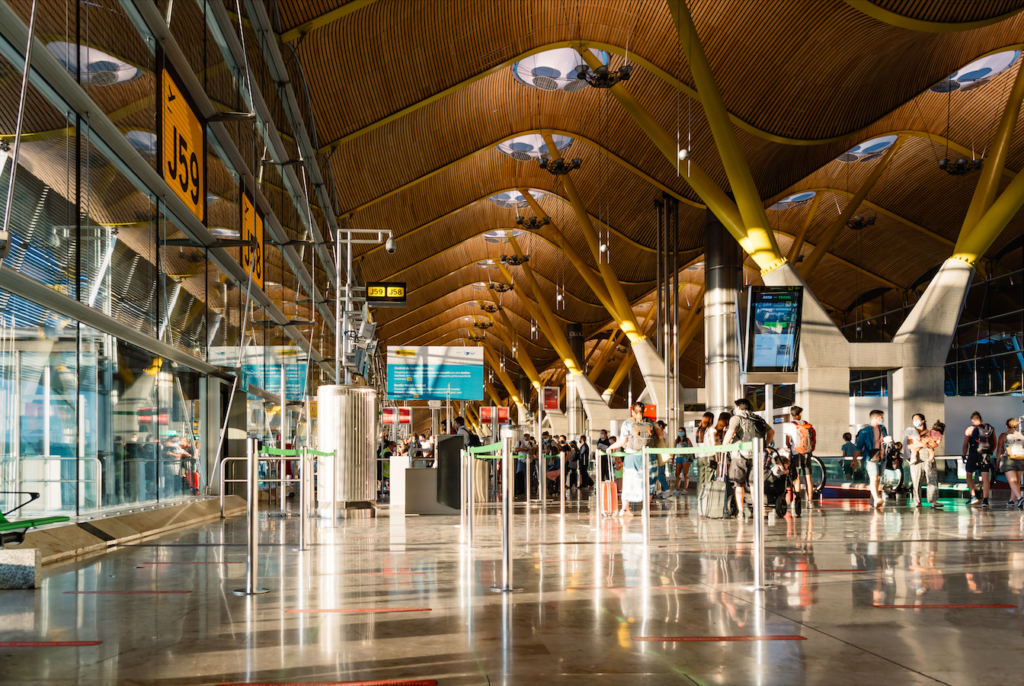
Aena has confirmed that the same CT-based scanning technology is intended to be deployed across other major Spanish airports. Photo credit: JJFarq/Shutterstock
Madrid’s Adolfo Suárez Madrid-Barajas Airport has introduced new security screening technology that is already in use in passenger checkpoints as of May 2026, marking a significant change in how hand luggage is inspected. The system is based on advanced CT (computed tomography) scanners known in Spain as EDSCB (Explosive Detection System Cabin Baggage). These machines generate high-resolution 3D images of cabin bags, allowing security staff to inspect contents digitally rather than relying on manual tray-by-tray checks.
Under the new system, passengers are no longer required to remove liquids, laptops or other electronic devices from their hand luggage during security screening. Instead, bags pass through a single scan, and the system identifies potentially restricted items automatically. If an anomaly is detected, the bag is diverted for additional inspection without disrupting the wider queue. According to information published alongside the rollout, the aim is to reduce waiting times and improve flow through security checkpoints by up to around 30 percent.
Part of a Wider Modernisation Programme Across Spain
The introduction of the scanners at Barajas forms part of a broader modernisation programme led by Aena, the company responsible for managing Spain’s main airports. The technology has already been installed in Madrid and Barcelona as priority locations due to their passenger volumes, with further expansion planned across the national network.
Airports expected to adopt the same system include major hubs such as Málaga-Costa del Sol, Palma de Mallorca, Alicante-Elche, Valencia, Bilbao and several Canary and Balearic Island airports. However, rollout is not uniform. Some airports already operate fully with the new scanners, while others are still transitioning and may continue using traditional screening methods alongside the upgraded system during the changeover period.
What Changes for Passengers at Security
For travellers, the most visible change is the removal of several routine steps at security checkpoints.
Passengers using terminals equipped with the new scanners can now:
- Keep liquids inside hand luggage
- Leave laptops and tablets inside bags
- Use fewer security trays per passenger
- Move through screening more quickly in many cases
The technology works by producing detailed 3D images that allow operators to rotate and examine the contents of a bag without opening it.
Despite the upgrade, standard security rules remain in place for prohibited items such as weapons, explosives, and other restricted objects, which are still subject to strict enforcement.
Impact on Residents in Madrid
For residents of Madrid who regularly travel through Barajas, the changes are most noticeable in reduced waiting times and a more streamlined security process. Barajas is one of Europe’s busiest airports, and long queues at security have historically been a common issue during peak travel periods. The new scanners are designed to reduce congestion and improve passenger flow, particularly during holiday seasons when outbound travel increases significantly.
Frequent travellers may also experience fewer disruptions caused by manual bag inspections, as the system reduces the need for repeated tray handling and secondary checks in many standard cases. In practical terms, this could make short-haul travel from Madrid more predictable, especially for commuters, business travellers and residents taking regular flights within Spain or across Europe.
What It Means for Tourists Visiting Madrid
For tourists, the most immediate benefit is a faster and less intrusive security process when departing from Madrid-Barajas Airport. Visitors will no longer need to separate liquids or electronics from cabin bags, which reduces preparation time before arriving at security. This is particularly relevant for international tourists who may not be familiar with European airport rules such as the 100ml liquid restriction.
The reduced processing time can also improve the overall travel experience during busy periods, including summer holidays and major events when passenger numbers peak. However, tourists should still expect variability depending on terminal and operational rollout stage, as not all checkpoints may be fully upgraded at the same pace.
Will Other Airports in Spain Follow the Same System?
Yes, but gradually.
Aena has confirmed that the same CT-based scanning technology is intended to be deployed across other major Spanish airports following the initial rollout at Madrid and Barcelona.
Airports such as Málaga, Palma de Mallorca, Valencia and several island hubs are among those identified for future installation due to their high passenger traffic and international routes.
However, the rollout is phased rather than immediate, meaning Spain will operate a mixed system for some time. Some airports will already allow passengers to keep liquids and electronics in their bags, while others will continue using traditional screening until upgrades are completed.
A Shift Towards Faster but More Complex Airport Security
The introduction of CT-based scanners are being introduced at airports to improve the efficiency of security screening while maintaining existing safety requirements.
While the experience for passengers becomes simpler, the underlying technology is significantly more complex, requiring infrastructure upgrades, staff training and phased deployment across multiple terminals.
For Spain, the move positions major hubs like Barajas at the centre of a wider transition in how airport security is managed, with the potential for a more uniform system across the country once rollout is complete.
Follow Euro Weekly News on Google News
Get breaking news from Spain, travel updates, and expat stories directly on your Google News feed.
Follow on Google NewsSign up for personalised news
Subscribe to our Euro Weekly News alerts to get the latest stories into your inbox!
By signing up, you will create a Euro Weekly News account if you don't already have one. Review our Privacy Policy for more information about our privacy practices.



Molly Grace
Molly is a British journalist and author who has lived in Spain for over 25 years. With a background in animal welfare, equestrian science, and veterinary nursing, she brings curiosity, humour, and a sharp investigative eye to her work. At Euro Weekly News, Molly explores the intersections of nature, culture, and community - drawing on her deep local knowledge and passion for stories that reflect life in Spain from the ground up.
Comments