Taxpayers’ money funds €750m Moroccan train deal as Spain’s transport minister faces backlash over Renfe sketch
By Molly Grace • Published: 28 Oct 2026 • 22:58 • 4 minutes read
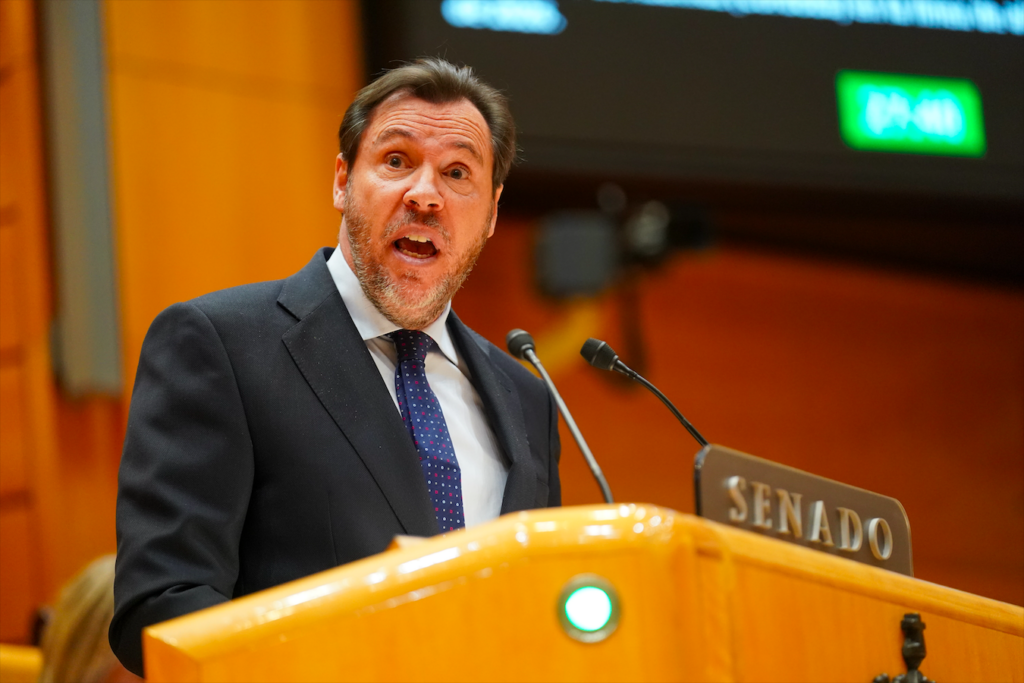
Puente told reporters: “This is not an interrogation and only I will talk.” Photo credit: Gil Corzo/Shutterstock
Spain’s railways are facing serious questions after the deadly collision at Urda, nine months after the Adamuz disaster killed 46 people. The latest tragedy has brought renewed attention to warnings about railway safety, demands from Adamuz victims for trains to be stopped until the network’s reliability could be guaranteed, and a controversial television appearance by Transport Minister Óscar Puente just days before the new crash.
The disaster has also reopened debate about government financing for railway projects overseas while passengers at home face questions about the safety and reliability of their own network. The causes of the Urda collision has not yet been established, but the Spanish people want answers.
Victims had already warned about railway safety
In July, the Association of Victims of the Adamuz Derailment formally asked the Transport Ministry, rail infrastructure manager Adif and the Spanish Railway Safety Agency (AESF) to suspend rail traffic until the system’s safety and reliability could be guaranteed. The request followed a warning from the Railway Accident Investigation Commission (CIAF) that existing arrangements did not include a system specifically designed to detect rail breaks. The victims wanted traffic halted until the necessary technical measures and safety assurances were in place.
The request was made months before the Urda collision. It does not, however, establish that it was the same issue that caused both disasters. The investigation into Adamuz also raised questions about how railway defects were assessed. In September, Adif defended its maintenance procedures, saying the irregularity detected at the site in October 2025 remained within safety tolerance and did not require intervention.
That was Adif’s assessment of the specific defect, not a blanket certification that every part of Spain’s rail network was risk-free. The evidence shows that safety concerns had been raised before the Urda Collision, but the cause of the latest collision must first be be established by investigators.
Puente’s joke about Renfe sparks anger
The timing of Puente’s television appearance could not have been more poorly timed and has added to the anger of current and past rail victims. On October 21, the minister appeared on Cara al Show, presented by Marc Giró on laSexta channel. In a promotional sketch of Spain’s rail services, a lift stopped working and an announcement said the delay was caused by a technical fault. Puente replied: “Good grief. As if we didn’t have enough problems with Renfe already.” The sketch ended with the participants dancing, and Puente shared the clip on social media with the caption: “If I survive this…”
Even though the joke was made before the Urda collision, the Adamuz crash had already happened. Forty-six people had died in January, and survivors and families were still dealing with the consequences. Mario Samper, president of the Association of Victims of the Adamuz Derailment and himself a survivor, condemned the sketch. He said it was unacceptable for the minister to joke about Renfe’s problems while 46 people had died and families had been devastated. The association called for Puente to leave office, describing his behaviour as insensitive.
Comments that incriminate
His earlier comments about the state of Spain’s railways have also resurfaced. Speaking in Congress in September 2024, Puente declared that “Spain’s railways are living the best moment in their history”,pointing to record passenger numbers and improvements in services. He acknowledged that the network still had shortcomings, but maintained that the overall service had never been better. Following the latest disaster, those words have taken on a different significance for critics questioning the state of the country’s rail infrastructure.
To add to the outrage the minister’s handling of questions after the Urda collision has added to the controversy. During a press conference on October 28, Puente told reporters: “This is not an interrogation and only I will talk.” His response added to the frustration surrounding the government’s handling of the disaster, with journalists seeking answers about the collision and railway safety and Puentes trying to silence reporters. Critics argue that his remarks and his response to questioning have done little to reassure victims and passengers who want clear answers.
More than €750 million for Moroccan trains
The government’s railway financing abroad has also become part of the debate about priorities and public money. In February 2025, Spain announced financing of more than €750 million for Morocco to buy 40 intercity trains from Spanish manufacturer CAF. The agreement was made through the Fund for the Internationalisation of Companies (FIEM), with financing backed by a sovereign guarantee from Morocco. There were also earlier loans for rail projects in Morocco and Uzbekistan. In 2019, up to €190 million for Casablanca tram projects and €57.5 million for Uzbekistan trains and equipment were approved as repayable loans. These were intended to support overseas contracts for companies operating in or from Spain, rather than grants handed over without repayment.
And even though these are loans, not grants, the spending still raises questions about the government’s priorities. The government has chosen to use public financing to help Spanish businesses secure railway contracts abroad. After two major rail disasters, passengers and taxpayers can reasonably ask how that sits alongside the investment, maintenance and safety measures needed at home. The Moroccan train contract also has an economic purpose, supporting work for CAF’s Spanish factories. It would therefore be misleading to describe the entire sum as money simply given away or to assume it could automatically be transferred to domestic rail maintenance. The question is whether the government is doing enough on both fronts.
Questions the government must answer
Urda’s cause remains under investigation, and of course no conclusion should be drawn before the evidence is established. But the sequence of events raises serious questions that go beyond one collision or one television appearance. Victims of Adamuz had already asked for railway traffic to be suspended until safety could be guaranteed they also had asked for the findings of the cause of the crash to be made public, something that the government has refused to do. Investigators had highlighted a gap in rail-break detection, while Adif maintained that the defect identified at the Adamuz site had remained within accepted safety limits. Now another catastrophic collision has occurred, and investigators must determine exactly why.
The government will need to answer questions about safety warnings, maintenance decisions, oversight and the measures taken after Adamuz. For passengers, the immediate priority is to establish what happened at Urda, publish the findings and act on any safety deficiencies investigators identify. For families still grieving, and for the millions who depend on Spain’s railways, assurances alone will not be enough they want the current government gone and someone to be held accountable for these tragic and preventable deaths.
Follow Euro Weekly News on Google News
Get breaking news from Spain, travel updates, and expat stories directly on your Google News feed.
Follow on Google NewsSign up for personalised news
Subscribe to our Euro Weekly News alerts to get the latest stories into your inbox!
By signing up, you will create a Euro Weekly News account if you don't already have one. Review our Privacy Policy for more information about our privacy practices.



Molly Grace
Molly is a British journalist and author who has lived in Spain for over 25 years. With a background in animal welfare, equestrian science, and veterinary nursing, she brings curiosity, humour, and a sharp investigative eye to her work. At Euro Weekly News, Molly explores the intersections of nature, culture, and community - drawing on her deep local knowledge and passion for stories that reflect life in Spain from the ground up.
Comments