Spain supermarket sector grows but faces concern over consumer trust
By Molly Grace • Published: 26 May 2026 • 18:31 • 3 minutes read
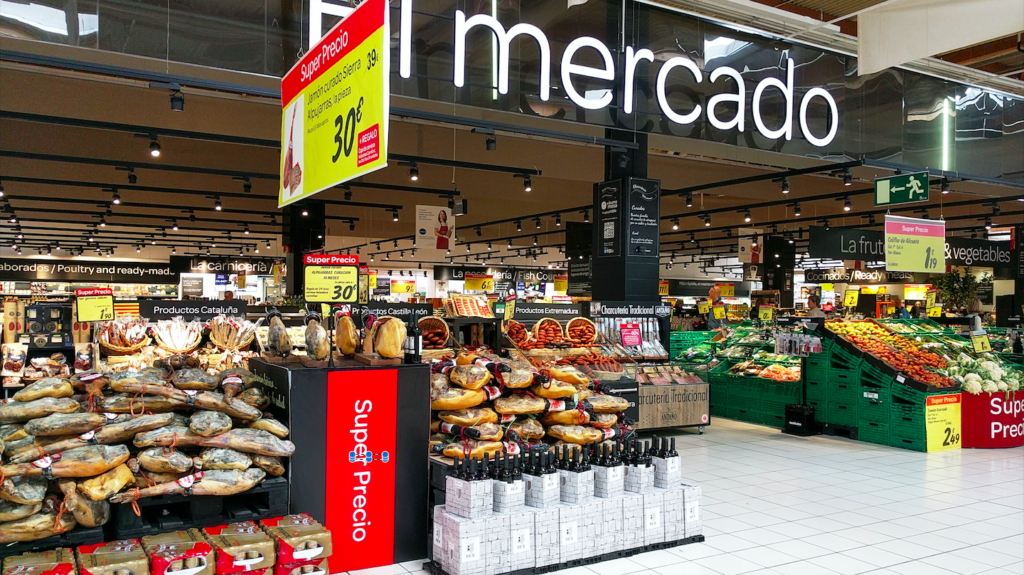
The analysis identified rising labour costs as a significant factor in the sector. Photo credit: Alex Tihonovs/Shutterstock
The Spanish supermarket sector recorded further growth in employment, investment and store openings over the past year, according to a new industry report presented by ASEDAS and compiled by Retail Data. The analysis was released alongside comments from the association’s director general, Ignacio García Magarzo, who expressed concern about how consumers perceive price developments and the image of the food distribution sector.
He said the organisation was “very concerned about the evolution of prices and the perception that is had of the problem”, and warned that political circumstances could return the sector to the centre of public debate. The report examines activity in Spain’s food distribution industry and covers trends in pricing, employment, investment and profitability between 2019 and 2024.
Industry rejects claims over pricing structure and competition
García Magarzo rejected suggestions that there is a competition problem in food distribution or that pricing formation is distorted. He questioned proposals for publicly owned supermarkets, stating: “Does a public supermarket make sense? It does not, there is no need given the current level of competition.” He defended the conduct of companies in the sector, describing their behaviour as responsible during complex economic conditions affecting costs, demand and supply chains.
He also criticised messaging that, in his view, could undermine consumer trust. He argued that confidence in the sector takes considerable time to build and can be damaged by inaccurate perceptions about pricing and margins. According to García Magarzo, defending the sector depends on providing accurate information rather than allowing what he described as misleading interpretations of market behaviour to dominate public discussion.
Inflation peak and profit margin developments
The report presented by ASEDAS also examines the relationship between inflation and profitability in food distribution between 2019 and 2024. It highlights that during the peak of the inflation crisis in 2022, driven by post-pandemic recovery and the impact of the war in Ukraine, food inflation reached 15.7%. At the same time, margins in food distribution fell to 1.85%, reflecting pressure on profitability during the most intense phase of price increases.
Retail Data, the consultancy responsible for the analysis, reported that in 2024, the most recently fully audited year, 34% of operators achieved a net return on sales above 3%, while 54% recorded returns above 2%. The sector also contributed more than 800 million euros in corporate tax during that year, representing an increase of 45% compared with the previous year.
Revenue, investment and employment growth
The distribution sector recorded total profits of 3.100 billion euros in 2024, generating an average margin of 2.9%. This represented an improvement compared with 2.21% in 2023, attributed to tighter cost control and improvements in energy efficiency across operations. The report recorded 860 new store openings during the year, with total investment reaching approximately 3 billion euros. Of this, around 1.3 billion euros was allocated to new construction projects.
Employment in the sector increased by 1.7%, reaching nearly 494,000 workers. The expansion also generated around 10,000 new jobs over the period. Companies linked to central purchasing organisations accounted for approximately 160,000 of the total workforce, highlighting the role of cooperative and franchised models in the distribution network.
Labour costs and operational pressures
The analysis identified rising labour costs as a significant factor in the sector. It found that personnel expenses in larger companies increased by more than 8%, compared with sales growth of 5.1%.
This imbalance resulted in an average cost per employee of 27,444 euros, representing an increase of 3.5% compared with 2023.
Analysts noted that while employment and investment continued to grow, cost pressures remain a structural challenge for retailers operating in a competitive environment.
Expansion trends and rural distribution
By the first four months of 2026, 221 new stores had already opened. ASEDAS estimates that total openings could reach 800 by the end of the year if current trends continue. Of the new openings, 61% were linked to cooperatives and franchise models.
Around 26% were located in rural areas, highlighting the importance of smaller population centres in retail expansion strategies. The sector has also continued a broad programme of store renovation, with around 40% of the network upgraded over the past five years. This equates to more than 10,500 stores, often incorporating improvements in energy efficiency and operational performance.
Outlook and ongoing public debate
ASEDAS indicated that public discussion around prices is likely to remain prominent, particularly in a political context where inflation and household costs continue to attract attention.
García Magarzo said that expectations around price increases could worsen perceptions of the sector, and argued that accurate information is essential to maintaining consumer confidence in retail operations.
The association’s analysis suggests that while the sector continues to expand in employment, investment and store openings, reputational concerns remain a parallel challenge alongside economic performance.
Follow Euro Weekly News on Google News
Get breaking news from Spain, travel updates, and expat stories directly on your Google News feed.
Follow on Google NewsSign up for personalised news
Subscribe to our Euro Weekly News alerts to get the latest stories into your inbox!
By signing up, you will create a Euro Weekly News account if you don't already have one. Review our Privacy Policy for more information about our privacy practices.




Molly Grace
Molly is a British journalist and author who has lived in Spain for over 25 years. With a background in animal welfare, equestrian science, and veterinary nursing, she brings curiosity, humour, and a sharp investigative eye to her work. At Euro Weekly News, Molly explores the intersections of nature, culture, and community - drawing on her deep local knowledge and passion for stories that reflect life in Spain from the ground up.
Comments