Spain rocked as judge exposes PSOE-linked covert network to disrupt corruption investigations
By Molly Grace • Published: 27 May 2026 • 17:32 • 4 minutes read
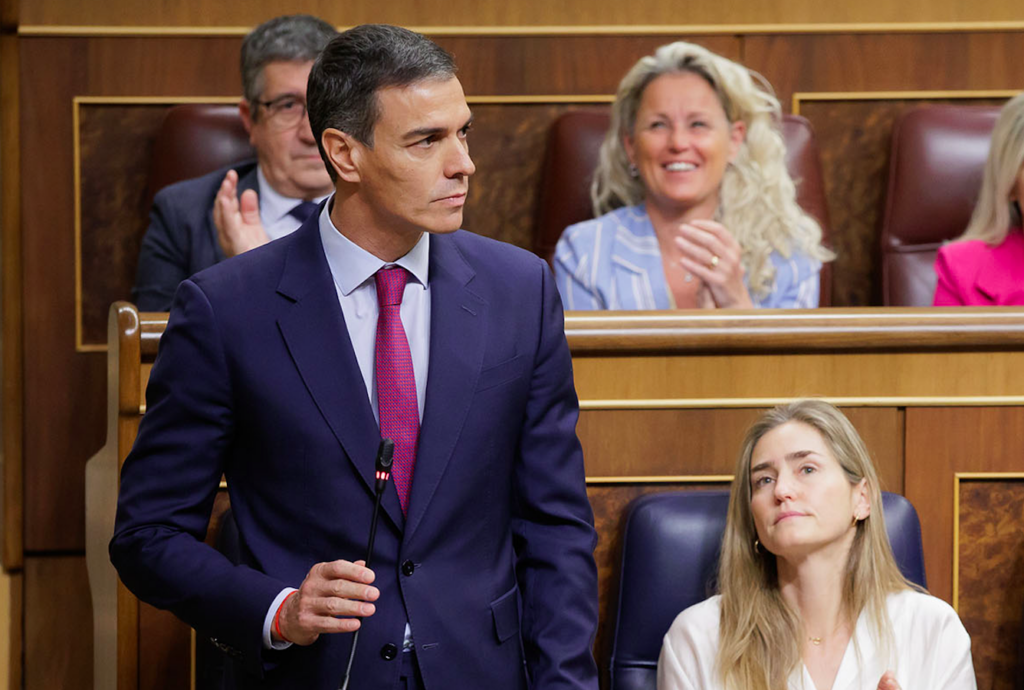
the PSOE has denied operating any illegal network. Photo credit: Pool Congreso. Congreso de los Diputados
A judge at Spain’s National Court has linked members of the ruling Socialist party, the PSOE, to an alleged covert network that reportedly received more than €170,000 in payments in an attempt to undermine corruption investigations affecting the party and the political circle of Prime Minister Pedro Sánchez.
According to reports citing a judicial order issued by Judge Santiago Pedraz, the alleged operation involved payments routed through intermediaries and linked figures, alongside attempts to obtain information from prosecutors, Guardia Civil officers and individuals involved in ongoing investigations.
Sánchez under scrutiny after Guardia Civil unit enters PSOE HQ
The claims have intensified political pressure on Sánchez’s minority government, which relies on a fragile coalition and parliamentary support from several regional and left-wing parties. Even before the latest revelations, tensions within the governing bloc had been rising over separate corruption inquiries and internal disagreements on governance.
The tension escalated further after agents from Spain’s Guardia Civil anti-corruption unit, the UCO (Unidad Central Operativa), entered the PSOE headquarters in Ferraz in Madrid this morning Wednesday, May 27, under a court order from the Judge to gather documentation linked to the investigation. The move marks a significant escalation in the inquiry and has intensified scrutiny of the party’s leadership and government stability.
Mounting political pressure and coalition uncertainty
The latest judicial revelations come at a sensitive moment for the government, with opposition parties already demanding explanations and some coalition partners expressing unease over the widening corruption allegations surrounding figures close to the PSOE. While Sánchez remains in office, Spanish political observers increasingly point to a growing risk of parliamentary instability if support from key allies begins to weaken.
The government does not hold an outright majority, meaning it depends on negotiated backing to pass legislation and survive confidence challenges. At present, there is no formal move to remove Sánchez from power. However, in Spain’s parliamentary system, a prime minister can be forced out if they lose a vote of no confidence or if governing allies withdraw support and make governing impossible.
Who is at the centre of the investigation?
The case has become known in Spain as the “Caso Leire Díez” or “Caso Fontanera”, referring to a political fixer allegedly involved in behind-the-scenes activity. In Spanish political language, a fontanero is someone who operates informally to manage sensitive or politically damaging issues.
María Leire Díez is a former PSOE councillor from Cantabria who later worked in communications roles at state-owned companies including Correos and ENUSA. She denies wrongdoing and says material under investigation relates to journalistic research into corruption and the hydrocarbons sector.
The controversy escalated after leaked recordings appeared to show discussions involving attempts to obtain compromising information on senior officers within Spain’s Guardia Civil UCO (anti-corruption unit). UCO officers were involved in several high-profile investigations linked to the Koldo corruption affair and other inquiries affecting figures close to Prime Minister Pedro Sánchez, including cases involving his wife, Begoña Gómez.
Judge outlines alleged internal payment structure
According to the judicial order, senior PSOE figure Santos Cerdán allegedly agreed to monthly payments to Díez from party funds in return for efforts described as aiming to “destabilise” corruption investigations.
The order claims early payments were channelled through a consultancy linked to former Andalucian minister Gaspar Zarrías, who acknowledged €16,000 had been paid but insisted it was legitimate.
When that arrangement ended, a further €27,225 was allegedly transferred through intermediaries linked to former Koldo García lawyer Ismael Oliver. Investigators also cite the role of PSOE manager Ana María Fuentes in authorising contracts and invoices connected to the alleged network.
Media figures and lawyers drawn into scrutiny
The judicial order also references payments of around €20,000 to journalist Patricia López via advertising linked to her media outlet Crónica Libre, with communications reportedly indicating approval of a “close to 20K” arrangement.
Separately, investigators highlight more than €125,000 allegedly transferred to lawyer Jacobo Teijelo, who is currently leading the defence of Santos Cerdán in the wider Koldo corruption case.
Claims of bribery attempts and influence operations
Beyond financial flows, the judge’s order describes alleged attempts to offer money or incentives to officials and individuals under investigation in exchange for information or cooperation.
These include an alleged €50,000 approach to Carmen Pano, who is herself linked to separate corruption proceedings, as well as discussions of potential inducements for prosecutor José Grinda reportedly reaching up to €300,000.
What this means for Sánchez’s government
Despite all what is happening within the party at this current moment in time, the PSOE has denied operating any illegal network and says it is cooperating with investigators. No allegations have been proven in court. However, politically, the significance of the case lies less in its legal status and more in its cumulative effect. Sánchez is already governing under sustained pressure from multiple corruption-related investigations involving former allies and party-linked figures.
For now, there is no confirmed threat of collapse. But Spain’s fragmented parliament means that continued erosion of trust among coalition partners could, in theory, make governing increasingly difficult, or even trigger early elections if parliamentary arithmetic breaks down. As further judicial details emerge, the key political question is no longer only what happened inside the alleged network, but whether the scandal begins to reshape the stability of Sánchez’s government itself.
Follow Euro Weekly News on Google News
Get breaking news from Spain, travel updates, and expat stories directly on your Google News feed.
Follow on Google NewsSign up for personalised news
Subscribe to our Euro Weekly News alerts to get the latest stories into your inbox!
By signing up, you will create a Euro Weekly News account if you don't already have one. Review our Privacy Policy for more information about our privacy practices.




Molly Grace
Molly is a British journalist and author who has lived in Spain for over 25 years. With a background in animal welfare, equestrian science, and veterinary nursing, she brings curiosity, humour, and a sharp investigative eye to her work. At Euro Weekly News, Molly explores the intersections of nature, culture, and community - drawing on her deep local knowledge and passion for stories that reflect life in Spain from the ground up.
Comments