Why are people in Spain suddenly calling the government “the mafia”?
By Nazario Rodriguez • Published: 28 May 2026 • 11:53 • 3 minutes read
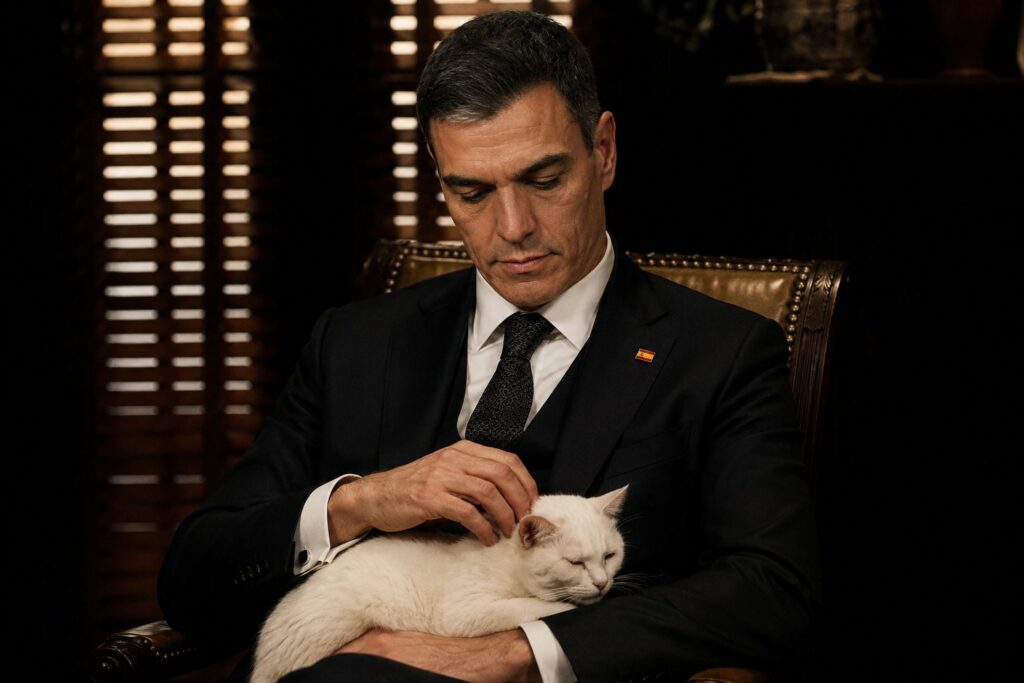
Opinion image depicting Pedro Sánchez in a Godfather inspired setting amid growing political tensions in Spain. Credit: AI generated image
Opinion
Spend a few minutes scrolling through Spanish social media right now and one phrase keeps appearing over and over again.
“Mafia state.”
It is under videos about Pedro Sánchez. Under corruption headlines. Across Instagram reels, TikTok clips and political debates on Facebook and X, people are using language that until recently would have sounded extreme in modern Spain.
But this week, things escalated even further.
A new judicial order linked to the widening investigation surrounding former PSOE figures and alleged political “dirty work” has triggered another major political storm after claims emerged involving attempts to allegedly influence judges, prosecutors and police investigations. According to Spanish media reports, the case centres around alleged efforts to interfere with legal proceedings connected to figures close to the Socialist Party.
Why the word “mafia” is suddenly everywhere online
Almost immediately, another word exploded online.
“Fontaneros.”
Literally, it means plumbers. Politically, it means something very different.
In Spain, the term has become shorthand for political operatives allegedly working behind the scenes to protect power, gather damaging information, pressure institutions or quietly solve political problems before they become public scandals.
For many readers, the comparison immediately brings back memories of the infamous “Plumbers” linked to the Watergate scandal during Richard Nixon’s presidency in the United States.
And what is striking now is that this language is no longer limited to anonymous accounts online.
It has entered mainstream political conversation.
From social media outrage to mainstream politics
This week, Spanish newspaper The Objective published an opinion piece titled “Nos gobierna una mafia”, meaning “We are governed by a mafia”. Conservative publication OK Diario also used similar language while discussing the growing political controversy surrounding the PSOE.
The rhetoric is spreading rapidly online as well. Clips accusing the government of behaving “like a mafia” are now circulating heavily across X, Instagram and TikTok, attracting huge engagement and pushing the political temperature even higher. viral political clip circulating on X
Opposition leader Alberto Núñez Feijóo has now joined in directly. During a recent speech in Palma, Feijóo declared that “the PSOE is worse than the mafia” and added that “the mafia at least left families out of it”, referring to the investigations involving figures linked to Pedro Sánchez’s political circle.
A few years ago, rhetoric like this from major political figures would have been almost unimaginable.
Why many Spaniards are losing trust in politicians
Of course, critics using this language are talking about politicians and political operators around the government, not Spain itself. Spain remains a functioning European democracy with free elections, strong institutions and a normal daily life for millions of people.
But the fact these terms are suddenly everywhere says a lot about the mood in the country.
Trust in politicians has taken a serious hit.
Over recent months, Spain has been hit by a constant stream of investigations, leaked recordings, police operations and corruption allegations involving figures linked to the PSOE and the wider political establishment. The latest judicial developments surrounding alleged attempts to interfere in legal investigations have only added more fuel to the fire. Latest PSOE investigation developments
For critics of Pedro Sánchez, the growing list of scandals reinforces fears that political influence has spread too far into institutions that should remain independent.
For Sánchez supporters, however, the accusations are part of an aggressive political and media campaign designed to damage the government before many investigations have even reached conclusions.
That is what makes the atmosphere so tense.
Every new court document becomes a social media war. Every headline instantly splits opinion. One side sees corruption. The other sees political persecution.
And somewhere in the middle, nuance disappears.
Spain is not collapsing, but the political mood is changing
For many British readers living in Spain, the intensity of the rhetoric can feel surprising because most expats experience Spain as peaceful, welcoming and stable.
Outside the political noise online, daily life across the country continues normally. Beaches are packed, bars are full, tourism remains strong and millions continue choosing Spain as a place to live, retire and build businesses.
But politically, there is no doubt the country has become deeply polarised.
And as long as investigations, protests and political accusations continue dominating headlines, words like “mafia”, “cloacas” and “fontaneros” are unlikely to disappear from Spain’s political conversation anytime soon.
Follow Euro Weekly News on Google News
Get breaking news from Spain, travel updates, and expat stories directly on your Google News feed.
Follow on Google NewsSign up for personalised news
Subscribe to our Euro Weekly News alerts to get the latest stories into your inbox!
By signing up, you will create a Euro Weekly News account if you don't already have one. Review our Privacy Policy for more information about our privacy practices.




Nazario Rodriguez
I’ve worked in news media for over 10 years, previously as Production Manager at Euro Weekly News, and I now focus on audience strategy and content performance. I specialise in understanding what readers engage with and shaping content that serves them well.
Comments