Andalucian government approves historic coastal rail plans, extending line to Almuñecar, Salobreña and Motril
By Adam Woodward • Published: 03 Jun 2026 • 16:20 • 3 minutes read
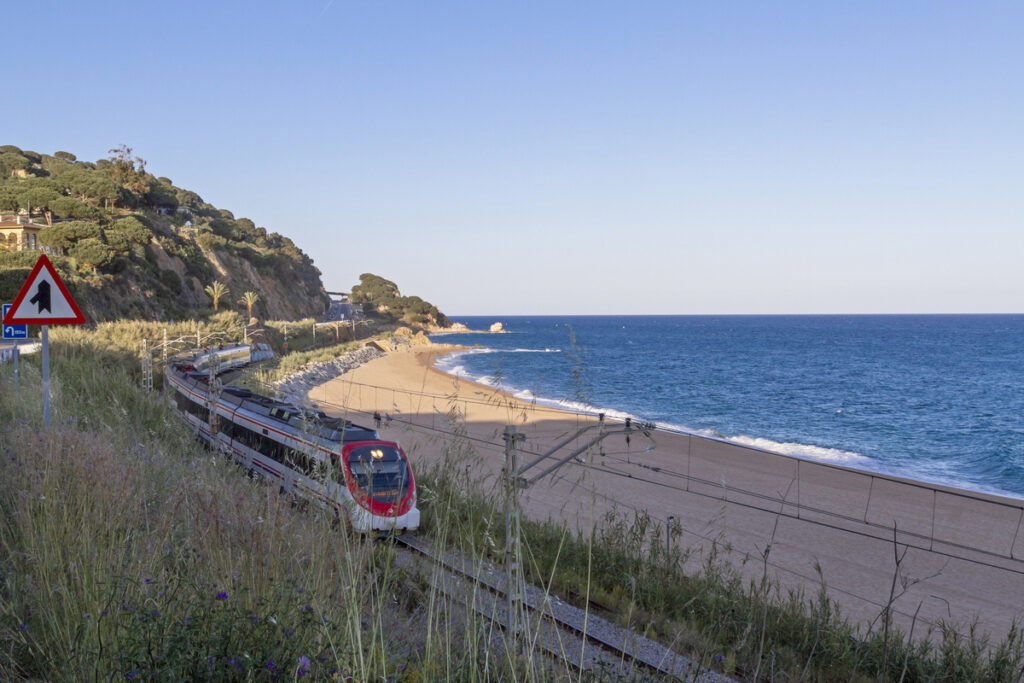
Dream of a coastal railway one step closer. Credit: Salva G C - Shutterstock
The Andalucian regional government has confirmed that design and planning frameworks for the ambitious Tren Litoral (Coastal Train) will now incorporate the Granada coastal towns of Almuñecar, Salobreña and Motril. This is a massive step in the broader vision to create a continuous rail corridor linking the entire Andalucian coastline from Cadiz through Malaga’s Costa del Sol and onwards into Granada’s Costa Tropical.
The announcement, made in early June 2026 by the regional Ministry of Development (Consejería de Fomento), came after years of relentless campaigning by local councils, business associations, chambers of commerce, and community groups in the Granada coastal area. It forms part of the ongoing revision of the Plan de Ordenación del Territorio de Andalucía (POTA) — the key territorial planning document guiding development across the region until 2050. The inclusion now designates the Nerja–Almuñecar–Motril section as a “strategic line”, officially recognising the need to close a longstanding gap in Andalusia’s coastal transport network.
The Costa Tropical, Granada’s subtropical coastline, has long suffered from relative isolation compared with the more developed Costa del Sol. While Málaga province benefits from existing Cercanías services and high-speed connections, the stretch between Nerja and Motril has remained without passenger rail for decades. Residents and businesses have repeatedly highlighted how this hampers daily mobility, limits economic opportunities, and increases reliance on private cars along the often-congested A-7 coastal highway.
Studies for Malaga – Nerja line due September
Feasibility studies for the main Costa del Sol route (covering sections from Nerja westward toward Algeciras) are still underway, with key phases and results expected after the summer this year, including initial alternatives and environmental consultations. The national Ministry of Transport contracted out a €1.2 million viability study in late 2024, examining options to extend and reinforce rail services along the coast.
Mayor calls ‘light at end of tunnel’ for Motril
Local leaders welcomed the POTA inclusion as a “light at the end of the tunnel”. Motril’s mayor, Luisa García Chamorro, described it as a decisive first step that now places responsibility on the central government to draft detailed projects and get funding, competencies that fall under national authority. She said the historical pattern of delays: “Here the timelines double or triple, or simply don’t exist, when it comes to such necessary infrastructure.”
The port of Motril stands to gain particularly from improved rail access, facilitating freight transport for the region’s important horticultural sector (subtropical fruits, early vegetables and other produce). Tourism is also expected to receive a major boost. The Costa Tropical’s unique microclimate, dramatic cliffs, and charming towns, such as whitewashed Salobreña, with its hilltop Moorish castle overlooking the sea, and historic Almuñecar, could become far more accessible to visitors arriving via Malaga’s airport or high-speed rail network.
Other than tourism and agriculture, better rail links would improve access to employment, education, healthcare and other services for residents in smaller coastal and inland villages.
Major hurdles remain
There are still some major hurdles that remain. The rugged coastal terrain, with cliffs, river mouths, and ecologically sensitive areas, will demand significant engineering works (tunnels, viaducts and bridges) and major investment. Detailed technical studies, full environmental impact assessments, and funding arrangements must still be completed. The project will require close coordination between the regional Junta and Spain’s central government, as well as potential European Union support for sustainable mobility corridors.
Nevertheless, the formal inclusion in the POTA revision represents meaningful progress for an area that has sought rail connectivity for many years. It allows the Costa Tropical to begin overcoming its historical transport deficit and move toward greater integration with Andalucia’s and Spain’s wider rail network. While construction remains years away, the latest development has rekindled optimism that a long-awaited coastal train may one day become reality. Local stakeholders say they will continue pressing both levels of government to turn planning commitments into concrete action.
Follow Euro Weekly News on Google News
Get breaking news from Spain, travel updates, and expat stories directly on your Google News feed.
Follow on Google NewsSign up for personalised news
Subscribe to our Euro Weekly News alerts to get the latest stories into your inbox!
By signing up, you will create a Euro Weekly News account if you don't already have one. Review our Privacy Policy for more information about our privacy practices.





Adam Woodward
Adam is a writer who has lived in Spain for over 25 years. With a background in English teaching and a passion for music, food, and the arts, he brings a rich personal perspective to his work at Euro Weekly News. As a father of three with deep roots in Spanish life, Adam writes engaging stories that explore culture, lifestyle, and the everyday experiences that shape communities across Spain.
Comments