A rare June moon is about to light up the sky: Here’s when to look up
By Farah Mokrani • Updated: 10 Jun 2026 • 17:13 • 3 minutes read
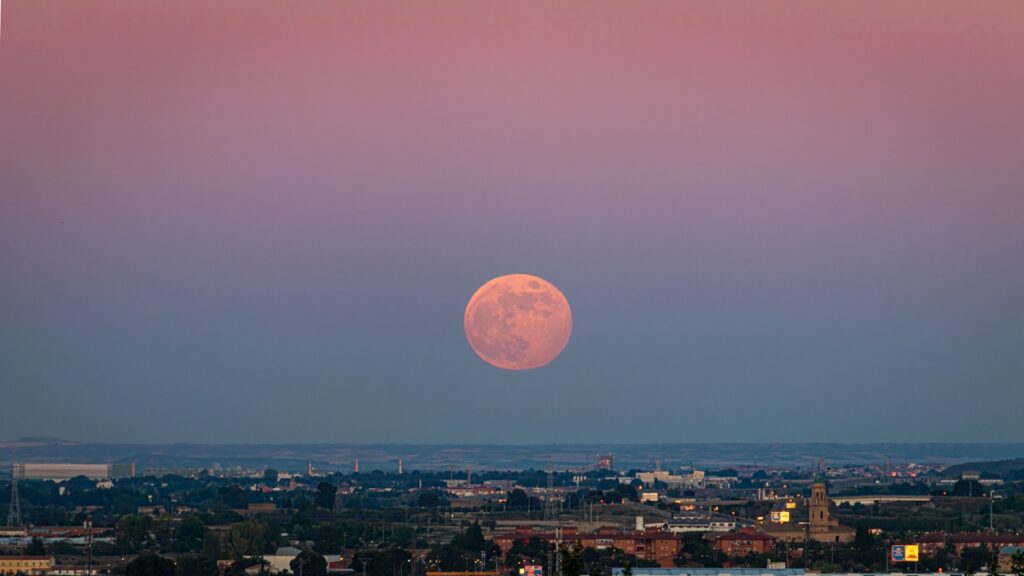
The Strawberry Moon rises over the horizon during a summer evening skywatching event. Credit : Ivan Morato photography, Shutterstock
If you’ve ever looked up on a warm summer evening and wondered why everyone suddenly seems to be talking about the moon, the answer is almost here. The Strawberry Moon, one of the most famous full moons of the year, will light up the night sky at the end of June, offering skywatchers across Spain and Europe a chance to enjoy a striking lunar display without needing a telescope or any special equipment.
The June full moon has built a reputation that goes far beyond astronomy circles. Every year, photos of the Strawberry Moon flood social media, while people head outdoors hoping to catch a glimpse of its golden glow rising above the horizon.
In 2026, the moon will officially reach its fullest point during the early hours of June 30. But according to astronomers, the best views may actually come the evening before, when the moon first begins to rise.
For many people, that’s when the magic happens.
Why the Strawberry Moon always attracts attention
There is something about a summer full moon that feels different.
The evenings are longer, the weather is usually warmer and more people are outside enjoying parks, terraces and beaches. A bright full moon appearing just above the horizon naturally attracts attention.
The Strawberry Moon has become particularly popular because of its timing. It arrives shortly after the summer solstice, which marks the beginning of astronomical summer in the Northern Hemisphere.
This year, summer officially begins on 21 June, according to Spain’s National Astronomical Observatory. Just over a week later, the Strawberry Moon will make its appearance.
Many people assume the name means the moon will turn pink or red. It won’t.
In reality, the name has nothing to do with colour.
The term dates back to Native American communities, which named full moons according to seasonal events. June’s full moon coincided with the harvesting season for wild strawberries, and the name has survived for centuries.
That said, the moon can sometimes appear orange, golden or even slightly reddish when it first rises. That’s caused by Earth’s atmosphere rather than any change in the moon itself.
When and where to see the Strawberry Moon in 2026
The full moon will reach peak illumination at approximately 1:57am on 30 June. However, most people won’t need to stay awake that late to enjoy it.
Astronomy enthusiasts often recommend watching a full moon shortly after sunset as it rises above the horizon. At that point it tends to look larger and more dramatic than when it climbs higher into the sky.
The effect is partly an optical illusion and partly a result of atmospheric conditions.
For the best chance of seeing it clearly, try to find an open space with a good view towards the eastern horizon. Beaches, countryside locations and elevated viewpoints often provide the most impressive views.
Even if conditions are not perfect on 30 June itself, there is good news.
The moon will appear almost completely full for several nights. Anyone stepping outside between 28 and 30 June should still be able to enjoy the spectacle.
Unlike meteor showers or eclipses, there is no narrow viewing window to worry about.
You simply need clear skies and a little patience.
A simple reminder to slow down for a moment
Part of the appeal of the Strawberry Moon is that it asks very little of us. There are no tickets to buy, no equipment to set up and no complicated instructions to follow.
In a world where most events come with schedules, queues and notifications, a full moon remains one of the few things that can still make people pause for a few minutes and look up.
For photographers, it offers an opportunity to capture dramatic summer landscapes. For families, it can be a reason to spend an evening outdoors together.
And for everyone else, it is simply a chance to enjoy a natural event that has fascinated people for generations.
The Strawberry Moon may not actually be pink, and it may not be the biggest full moon of the year, but it remains one of the most anticipated.
By the end of June, millions of people across Europe will be looking skyward once again.
June 2026 moon phases
8 June: Last Quarter (12:00pm)
15 June: New Moon (4:54am)
21 June: First Quarter (11:55pm)
30 June: Full Moon, also known as the Strawberry Moon (1:57am)
Follow Euro Weekly News on Google News
Get breaking news from Spain, travel updates, and expat stories directly on your Google News feed.
Follow on Google NewsSign up for personalised news
Subscribe to our Euro Weekly News alerts to get the latest stories into your inbox!
By signing up, you will create a Euro Weekly News account if you don't already have one. Review our Privacy Policy for more information about our privacy practices.





Farah Mokrani
Farah is a journalist and content writer with over a decade of experience in both digital and print media. Originally from Tunisia and now based in Spain, she has covered current affairs, investigative reports, and long-form features for a range of international publications. At Euro Weekly News, Farah brings a global perspective to her reporting, contributing news and analysis informed by her editorial background and passion for clear, accurate storytelling.
Comments