A mystery fever after one possible tick bite shows why Spain’s summer warning matters
By Harry Dennis • Updated: 19 Jun 2026 • 20:08 • 4 minutes read
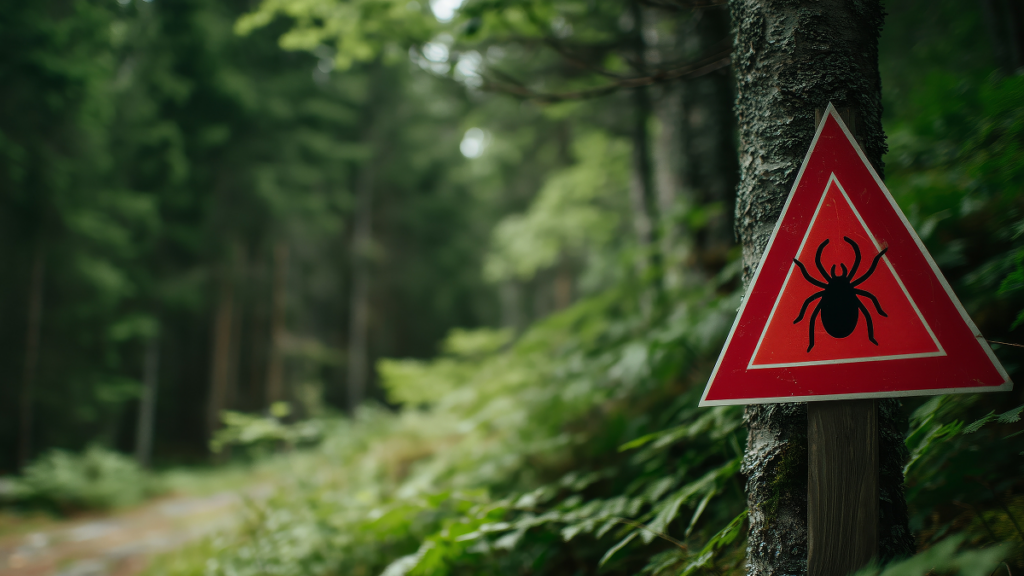
Summer tick-bite risks rise in Spain after a Crimean-Congo haemorrhagic fever case. Credit: Vetrana / AdobeStock
A confirmed Crimean-Congo haemorrhagic fever case in Salamanca has renewed concern over tick-borne infections in Spain. One recent patient, treated after weeks of fever and possible tick exposure in Almería, says doctors needed days of tests before a suspected cause emerged, showing why summer bites should not be ignored.
How one possible tick bite left a patient waiting for answers
For many people in Spain, the most worrying part of a tick-borne infection may not be the bite itself, but the uncertainty that follows.
Rosalía Luque, who was recently admitted to hospital in Almería after a prolonged fever, told Euro Weekly News she had first spent around a week with fever while visiting the doctor several times.
“When I was finally admitted to hospital, they started doing analyses and cultures,” she said. “After a week, the infectious disease specialist told me it could be the bite of a tick, but that confirmation would take around 10 days.”
Rosalía’s case has not been confirmed as Crimean-Congo haemorrhagic fever. She said her discharge report listed fever of unknown origin and possible Q fever, an infection that can be investigated in the context of animal or environmental exposure and, in some cases, suspected tick-related illness.
But her experience shows the practical problem facing patients and doctors: a tick bite is not always noticed, symptoms can look like other illnesses, and test results may take time.
Why doctors monitored her in critical care before knowing the cause
Rosalía said she spent the first two days of her hospital stay monitored in critical care because doctors still did not know what was causing the fever.
“They still didn’t know what it was,” she said. “A bacteria appeared in one culture, but they later ruled it out. It seems the culture was contaminated.”
She said she had fever and headaches when her temperature rose for around two weeks. During her hospital stay, her gallbladder and liver became inflamed and she also suffered fluid retention.
“I was given several antibiotics and the third one started to work,” she said. “The fever gradually went down, and the liver inflammation and fluid retention also started to reduce.”
She is now recovering at home and taking two antibiotics for another month while waiting for a follow-up appointment. “I suppose they will be able to clarify more at the next appointment,” she said. “But I feel well now.”
Her account adds a human layer to Spain’s wider summer tick warning: not every suspected tick-related illness is dramatic at first, and not every patient knows when or where exposure may have happened.
Why the Salamanca Crimean-Congo case has raised concern
The warning comes after a 68-year-old man in Salamanca was confirmed as having Crimean-Congo haemorrhagic fever, known in Spanish as fiebre hemorrágica de Crimea-Congo (FHCC), after a tick bite.
The patient was initially treated at the Complejo Asistencial Universitario de Salamanca before being transferred to Hospital Gómez Ulla in Madrid, a national reference centre for high-risk infectious diseases. He was reported to be stable but under isolation and protection measures because of the seriousness of the disease.
Crimean-Congo haemorrhagic fever is rare in Spain, but suspected cases trigger a serious public health response because the virus can cause severe illness and may also spread through contact with infected blood or bodily fluids.
Spain’s Ministry of Health says suspected FHCC is treated as a health alert. The European Centre for Disease Prevention and Control says many infections are asymptomatic or mild, but severe hospitalised cases can be dangerous.
How people can miss the bite that made them ill
One of the most useful details in Rosalía’s account is that she does not know where the possible bite happened.
“I don’t know where it could have bitten me,” she said. “I didn’t notice any bite. I haven’t been with animals, but it could have been near the greenhouse in an area with more vegetation, or maybe on the beach. The truth is I have no idea where it could have bitten me, if it was a tick.”
That uncertainty matters for residents, tourists, hikers, dog owners and anyone spending time around vegetation, farmland, scrubland, gardens or rural tracks.
Ticks do not always cause an obvious painful bite. Some attach unnoticed, and symptoms may appear later, making it difficult for patients to connect a fever with outdoor exposure.
How to remove a tick safely after countryside exposure
Spain’s Ministry of Health recommends removing an attached tick as soon as possible, preferably within the first 24 hours.
The advice is to use fine tweezers, grip the tick close to the skin and pull gently and steadily without twisting or crushing it. The bite area should then be washed with soap and water and disinfected.
People should avoid using oil, alcohol, petroleum jelly, heat or attempts to suffocate the tick. These methods can make removal less safe.
After walks in the countryside, rural gardens, farmland, grassland or scrub areas, it is sensible to check clothing, legs, skin folds, hairline and pets. Dog owners should also check animals after walks, especially during warmer months.
Symptoms after a tick bite that need medical advice
Most tick bites in Spain will not lead to serious illness. But fever after a possible tick bite should not be brushed off, especially if it lasts, returns or comes with severe headache, muscle pain, vomiting, unusual bruising, bleeding, weakness, abdominal pain or signs of liver inflammation.
For readers, the practical advice is to note when and where the possible exposure happened, mention any outdoor activity or tick contact to doctors, and seek medical advice if symptoms develop.
Rosalía’s experience shows why that detail can matter. She did not see the bite, did not know where it may have happened, and only after days of fever and hospital tests did a possible tick-related cause enter the picture.
Follow Euro Weekly News on Google News
Get breaking news from Spain, travel updates, and expat stories directly on your Google News feed.
Follow on Google NewsSign up for personalised news
Subscribe to our Euro Weekly News alerts to get the latest stories into your inbox!
By signing up, you will create a Euro Weekly News account if you don't already have one. Review our Privacy Policy for more information about our privacy practices.




Harry Dennis
Born in the UK and raised on the Cádiz coast, Harry brings his background in design, music, and photography to his writing for Euro Weekly News, sharing stories that celebrate culture and lifestyle across Spain and beyond.
Comments