Millions in Spain breathing polluted air as cities fail emission targets
By Natascha Rivera • Published: 24 Jun 2026 • 21:12 • 4 minutes read
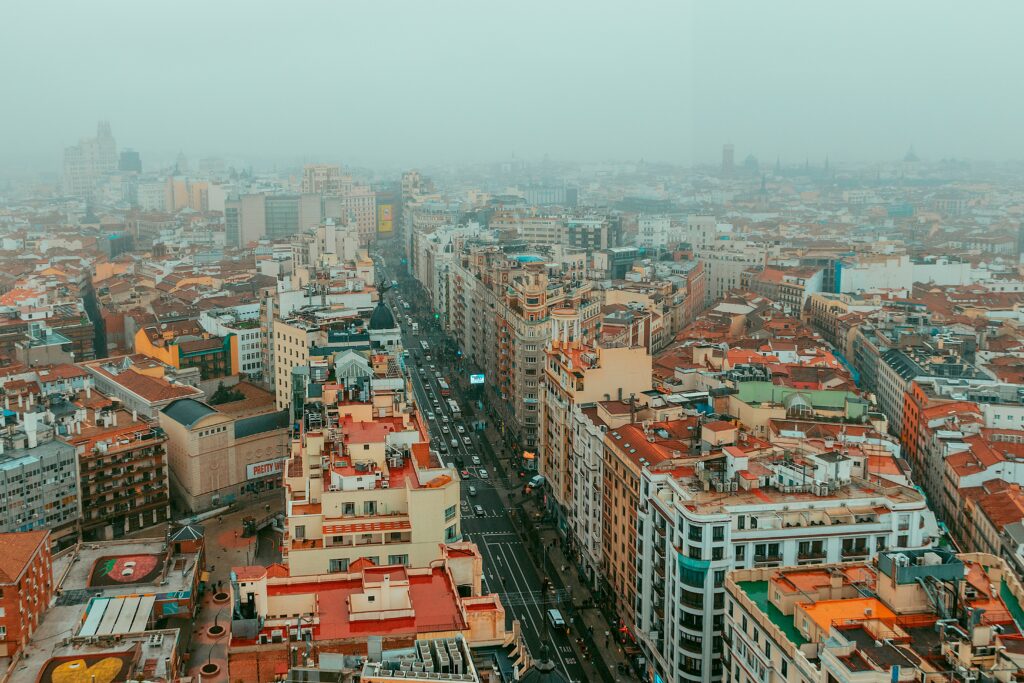
Millions in Spain breathe illegal air pollution fueled by extreme heat. Photo Credit: ionut dobre / Unsplash
Residents in Spain, in addition to the extreme heat recorded already this summer, may need to begin worrying about the quality of the air itself: according to new findings by Ecologistas en Acción, an organisation of more than 300 ecologists, millions of people in the country were exposed to levels of air pollution that exceed the new limits approved for 2030 by the European Union. In the country, major urban areas were found to exceed the new legal annual limit for nitrogen dioxide, which is commonly linked to traffic. This problem directly impacts the population, especially those with chronic illnesses or conditions.
By the numbers: Two-thirds of the Spanish population breathing polluted air
The report by Ecologistas en Acción analysed the data from nearly 800 official monitoring stations located across the country, including those at major airports. These stations show comprehensive air quality data, including specific pollutants, divided by autonomous communities.
According to this report, the polluted air affected two-thirds of the entire Spanish population in 2025.
Additionally, considering current air pollution regulations, the population breathing air polluted above the legal limits was still 9 million people, one-fifth of the total population, fifteen years after the regulations came into effect. Areas found to be exceeding the legal air pollution levels included Madrid, Castilla-La Mancha, Extremadura, and the interior of Catalonia, Jaén, and Murcia. Additionally, the area exposed to pollution levels that damage vegetation reached 84,000 square kilometres, which is one-sixth of the territory of the country.
Taking into account the air pollution recommendations set by the World Health Organisation, which are stricter than that of the EU, air pollution affected the entire Spanish population in 2025, and 430,000 square kilometres, or 85 per cent of the territory.
This showcases the formidable challenge ecologists, organisations, and the Spanish government face in complying with the new EU regulations by 2030.
A problem linked to the extreme heatwaves in Spain
The concerningly high levels of air pollution can be directly linked to the extreme heat experienced in Spain; the year 2025 was the third warmest in Spain since at least 1961. Forest fires, sparked and exacerbated by extreme heat, contribute to particulate matter pollution in the air, and the heat itself can be attributed to increased ozone concentrations.
Additionally, as a result of increased consumption of aviation and vehicle fuels, oil burning reached its highest levels since the year 2011 in 2025.
Notably, the air quality improved slightly in Spain with regard to particulate matter (which is a mixture of microscopic solid particles and liquid droplets suspended in the air, often referred to as soot, dust, or smoke), and nitrogen dioxide. However, the air quality actually worsened with regard to ozone, and reached the highest levels in a decade, returning to the concentrations not seen since before the COVID-19 global pandemic.
Why it matters: The invisible problem affecting everyone in Spain
Expatriates frequently choose Spain for the active, outdoor lifestyle. However, as aforementioned, some of the sunniest coastal regions of Spain including Murcia and Catalonia can often suffer the most from air pollution, as ozone spikes are directly tied to heat and radiation.
The air pollution problem directly affects a large portion of the population, and could spell out potentially fatal results for many people living in the country. As it stands, air pollution is the leading environmental cause of death; according to the European Environment Agency, up to 24,000 people in Spain died prematurely in 2023 from illnesses that were worsened by poor air quality. Air pollution was also responsible for 62,000 hospital admissions annually, according to the Carlos III Health Institute.
This means that those with chronic conditions, especially respiratory illnesses, could potentially see their health problems exacerbated as the air quality worsens.
Ecologistas en Acción slams officials across Spain for inaction
According to the group, even though the problem can most directly be addressed by reducing pollutants from vehicles like cars, most cities still haven’t implemented effective low-emission zones, as required. To be exact, three and a half years have passed since the deadline for all cities with more than 50,000 inhabitants to establish low-emission zones to improve air quality and mitigate climate change. However, some 50 per cent of them have not complied with this obligation, despite having the public funds to do so.
“The only way to improve air quality in cities is to reduce motorised traffic, promoting active mobility such as walking and cycling, and electric public transport,” stated Ecologistas en Acción in an article about their study. “It is also necessary to promote energy conservation, regulate the current chaotic deployment of renewable energy, adopt the best available industrial techniques, reduce air travel, agree on ambitious Emission Control Areas for the Mediterranean Sea and the Northeast Atlantic, and implement a moratorium on new factory farms.”
The organisation also claims the information provided to the public by government agencies is not adequate for the seriousness of the problem. The group has formally urged government agencies to transpose the European Air Quality Directive and approve the National Ozone Plan, two proposals that seek to alleviate the problem.
How can expats protect themselves?
While the air pollution issue is widespread across Spain and will require a major turnaround for large-scale emissions in order to address, there are still things individuals can do to mitigate the problem and take part in the solution.
First, it is important that residents monitor the air quality on a regular basis, especially if they have chronic and respiratory illnesses.
Second and most importantly, expatriates can contribute by making sure their vehicles comply with low emissions regulations, or by taking electric public transport or using other sustainable means of travelling.
Finally, during summer, expats can protect their home during heatwaves by keeping their homes as dark and cool as they can and ventilating frequently to mitigate the risk of fires and to their own health.
Follow Euro Weekly News on Google News
Get breaking news from Spain, travel updates, and expat stories directly on your Google News feed.
Follow on Google NewsSign up for personalised news
Subscribe to our Euro Weekly News alerts to get the latest stories into your inbox!
By signing up, you will create a Euro Weekly News account if you don't already have one. Review our Privacy Policy for more information about our privacy practices.



Natascha Rivera
Natascha is a Dominican writer based in Spain with a background in audiovisual and marketing communication. A lifelong reader and passionate storyteller, she brings a creative edge to her work at Euro Weekly News. Her multicultural perspective informs her coverage of lifestyle and community stories, offering fresh angles and relatable storytelling that connects with a diverse audience.
Comments