Spain is turning into a haven for luxury property buyers seeking refuge from war and unrest
By Harry Dennis • Published: 24 Jun 2026 • 22:20 • 3 minutes read
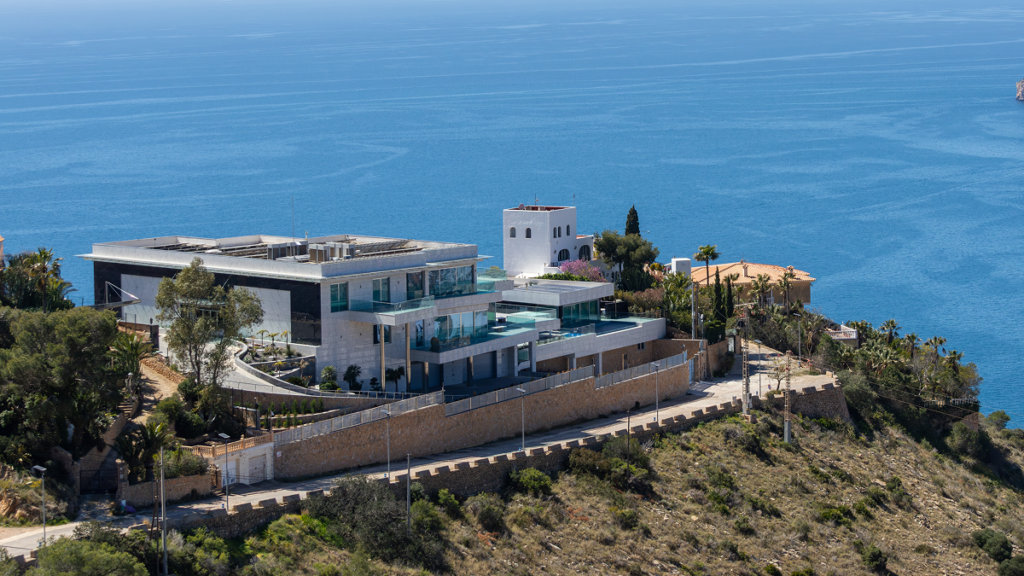
Spain’s safe-haven boom is landing in already tight markets. Credit: Sirko82 / Shutterstock
War, political uncertainty and global instability are pushing wealthy Polish, American and Gulf-based buyers towards Madrid and the Costa del Sol. For residents, foreign homeowners and anyone hoping to buy in Spain’s most crowded property markets, the luxury refuge trend adds pressure where homes are already scarce and prices are rising.
Why Spain is becoming a Plan B for wealthy buyers
Spain has long sold the Mediterranean dream to British, German and other European buyers. But the spectrum is widening.
Estate agents and market analysts now see wealthy buyers from Poland, the United States and Gulf countries treating Spain as a safer base, not only a holiday destination.
Wars in Ukraine and the Middle East, along with political tension in the US, have become part of the buying decision for some high-net-worth purchasers.
This means that for some buyers, the draw is still sun, schools, lifestyle and investment value. But for others, Spain is becoming a second base if life at home, or in another expat hub, starts to feel less predictable.
How coastal hotspots may feel the pressure first
The impact doesn’t look like it will be spread evenly across Spain.
Property-register data shows foreign buyers were involved in more than 39 per cent of home sales in major tourist provinces including Málaga, Alicante and the Balearic Islands last year.
Figures cited from Spain’s Property Registrars also show foreigners acquired nearly 97,500 homes across Spain in 2025, representing 13.8 per cent of total sales. In Alicante, foreign buyers accounted for 43.3 per cent of transactions, followed by Málaga at 32.8 per cent and the Balearic Islands at 29.8 per cent.
That does not mean every foreign purchase is a luxury sale. But it does show that the pressure is highly localised.
In certain towns and coastal areas these buyers can influence the same market where local workers, retirees and long-term residents are already struggling to move, rent or buy.
How the Golden Visa ended but luxury demand did not disappear
Spain has already moved against one of the most symbolic routes into property-led residency.
The Spanish government said new Golden Visa residence permits ended on April 3, 2025, including permits linked to real estate investments of more than €500,000.
Yet Reuters’ latest reporting suggests high-net-worth demand has not disappeared. Instead, some of it is now being driven by security, asset diversification and family planning rather than by a Spanish residency shortcut.
Meanwhile, the government’s proposed tax of up to 100 per cent on purchases by non-European Union, non-resident buyers had stalled in Congress by March.
That means British buyers and other non-EU purchasers should not treat the proposal as current law. But the debate itself shows how politically sensitive property buying has become in Spain.
How Spain’s ‘ordinary’ housing squeeze changes the luxury story
Luxury demand alone did not create Spain’s housing crisis.
The Bank of Spain has pointed to a much bigger supply problem, calling for coordinated public action to reduce an estimated shortage of 750,000 homes. Spain is also dealing with population growth, limited new building, tourism demand, regional shortages and affordability problems that have built up over years.
That is why this story matters beyond Marbella show homes.
When the upper end of a market rises, nearby sellers, landlords and developers can adjust their expectations. In some towns, buyers looking for a normal flat are not competing directly with million-euro villa clients, but they are still living inside the same land, labour, planning and price system.
For people trying to buy in Alicante, Málaga, the Balearic Islands, Madrid or other high-demand areas, the question is not whether every luxury buyer pushes up every price. It is whether another layer of cash-rich demand makes already tight markets even harder to cool.
How Spain’s safe-haven property boom could be felt next
The next stage of this issue is likely to be measured locally, in the higher targeted markets.
Foreign luxury demand will not change every Spanish town in the same way. But in areas such as Málaga, Alicante, the Balearic Islands and parts of Madrid, another layer of cash-rich demand can make it harder for prices to settle, especially where new supply is limited and long-term residents already face strong competition.
The concern is not only that wealthy buyers purchase expensive homes. It is that their presence can shift expectations around land values, development priorities, asking prices and the type of housing being built.
However, this shift can also be felt as a positive economic boost for local areas where more money will be spent not just on property, but on local services, consumer outlets and experiences within the communities.
For foreign residents already living in Spain, the debate matters because policy changes aimed at overseas investors can sometimes create confusion around who is being targeted.
Spain’s appeal as a safe, stable and desirable place to live remains. The question is whether the country can attract international wealth without allowing its most sought-after areas to drift further out of reach for the people who need homes, not hideaways.
Follow Euro Weekly News on Google News
Get breaking news from Spain, travel updates, and expat stories directly on your Google News feed.
Follow on Google NewsSign up for personalised news
Subscribe to our Euro Weekly News alerts to get the latest stories into your inbox!
By signing up, you will create a Euro Weekly News account if you don't already have one. Review our Privacy Policy for more information about our privacy practices.





Harry Dennis
Born in the UK and raised on the Cádiz coast, Harry brings his background in design, music, and photography to his writing for Euro Weekly News, sharing stories that celebrate culture and lifestyle across Spain and beyond.
Comments