Have this €2 coin at home? It could be worth up to €1,000
By Farah Mokrani • Published: 30 Jun 2026 • 7:32 • 3 minutes read
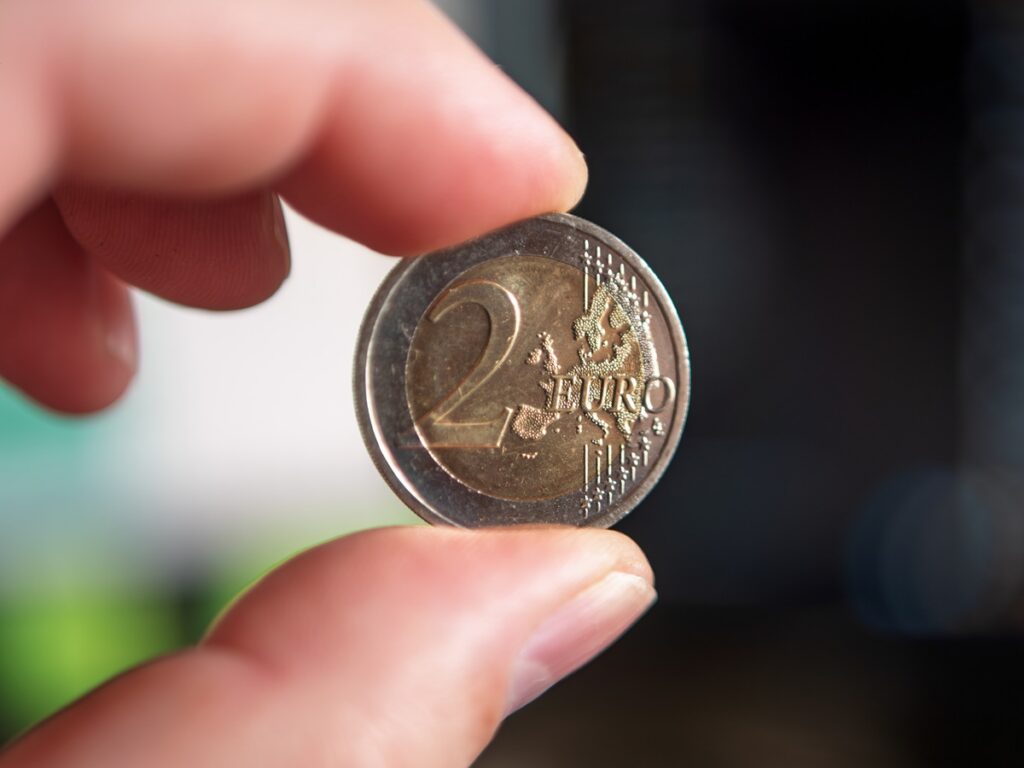
Some rare Monaco €2 coins are now selling for up to €1,000 among collectors. Credit : VGV MEDIA, Shutterstock
Most people would barely think twice before spending a €2 coin. It buys a coffee, pays for parking or disappears into a supermarket self checkout without a second thought. But one particular €2 coin has become one of the most sought after modern euro coins in Europe, with some examples now being offered for as much as €1,000.
The coin in question was issued by Monaco in 2018 and, although its face value is just €2, its rarity has turned it into a favourite among collectors. Originally sold for €120 when it was released, it has steadily climbed in value over the years, with specialist dealers and online sellers now asking several times its original price.
It is another reminder that not every coin in your collection is worth only what is stamped on it.
Why this Monaco €2 coin is worth so much
In June 2018, Monaco released a commemorative €2 coin celebrating the 250th anniversary of the birth of François Joseph Bosio, one of the principality’s best known sculptors. Rather than producing millions of coins for everyday use, only 16,000 proof quality examples were minted.
For coin collectors, that figure immediately caught attention.
Proof coins are not designed for circulation. They are struck using a special minting process that produces a mirror like finish, while the design itself appears with a frosted effect. They are intended to be preserved rather than spent, and are usually sold in presentation packaging.
Each Bosio coin came in a numbered collector’s case when it was released on 25 June 2018. Buyers paid €120, and anyone ordering from Spain also had to cover shipping costs, which added around another €35.
At the time, many people questioned whether paying so much for a €2 coin made sense.Looking back now, those buyers have seen the value of their purchase increase considerably.
How much is the coin worth today?
There is no fixed market price because collectible coins are worth whatever a buyer is prepared to pay. Condition, presentation case and demand all play a role.
Specialist numismatic dealers currently advertise the Bosio coin for around €595 to €750, while some online listings have climbed much higher.
On marketplaces such as eBay, asking prices have ranged from around €399 to as much as €1,000. That does not necessarily mean every coin sells for the highest figure, but it shows how desirable this edition has become among collectors looking to complete their Monaco series.
Modern commemorative euro coins have developed a strong following over the last two decades. Collectors often try to own every €2 commemorative issue released across the eurozone, and Monaco has earned a reputation for producing some of the hardest coins to obtain.
Its limited mintages mean demand frequently exceeds supply, particularly for proof editions produced exclusively for collectors.
Who was François Joseph Bosio?
The man featured on the coin may not be a household name outside the art world, but he played an important role in European sculpture during the late eighteenth and early nineteenth centuries.
François Joseph Bosio was born in Monaco in 1768 before moving to Paris to study art. His career later took him to Italy, where he worked on sculptures for churches in Florence, Rome and Naples.
When he returned to France in 1808, he became involved in several prestigious public projects. His work contributed to monuments including the Vendôme Column and the Arc de Triomphe du Carrousel in Paris.
His talent earned official recognition in 1821, when King Louis XVIII appointed him First Sculptor to the King.
Bosio continued producing sculptures throughout his life. His final major work, a statue of Napoleon placed on the Grande Armée Column in Wimille, was completed in 1840. He died in Paris five years later.
For the commemorative coin, Monaco chose to feature both Bosio and one of his best known sculptures, The Nymph Salmacis, which is now displayed in the Louvre Museum in Paris.
The national side of the coin also carries the inscription ‘MONACO’, Bosio’s name and dates, together with the official mint marks and the familiar twelve European stars that appear on euro coins.
Like every €2 coin, the reverse uses the common euro design showing the denomination and the map of Europe.
Although the technical specifications are identical to any other €2 coin, weighing 8.5 grams and measuring 25.75 millimetres across, it is the rarity rather than the metal that gives it its value.
Collectors often say that scarcity is everything, and the Bosio issue is a perfect example.
Most people will never come across one in everyday change because these coins were created specifically for collectors and sold directly by the Monégasque Mint. Even so, collections are sometimes inherited, sold or broken up, meaning valuable coins occasionally reappear on the market years after they were first issued.
If you have a collection of commemorative euro coins tucked away at home, or a relative who collected them, it may be worth taking a closer look before assuming they are worth only their face value.
The Monaco Bosio coin is proof that, in the world of numismatics, a €2 coin can end up being worth hundreds of times more than the number printed on it.
Follow Euro Weekly News on Google News
Get breaking news from Spain, travel updates, and expat stories directly on your Google News feed.
Follow on Google NewsSign up for personalised news
Subscribe to our Euro Weekly News alerts to get the latest stories into your inbox!
By signing up, you will create a Euro Weekly News account if you don't already have one. Review our Privacy Policy for more information about our privacy practices.

Farah Mokrani
Farah is a journalist and content writer with over a decade of experience in both digital and print media. Originally from Tunisia and now based in Spain, she has covered current affairs, investigative reports, and long-form features for a range of international publications. At Euro Weekly News, Farah brings a global perspective to her reporting, contributing news and analysis informed by her editorial background and passion for clear, accurate storytelling.
Comments