I’m terrified of getting seasick. Am I being silly, or is it a real risk I should plan around?
By Vega Mare • Published: 08 Jul 2026 • 9:00 • 3 minutes read
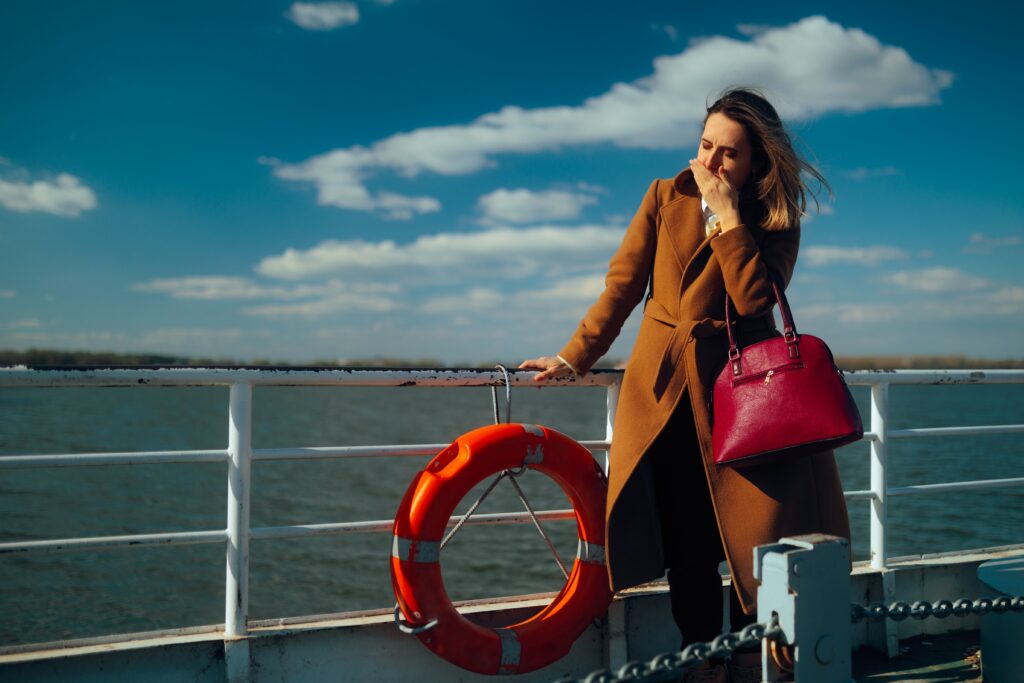
The water your ship crosses will shape your experience. CREDIT: Nicoleta Ionescu / Shutterstock
Ask the Officer: Your cruise questions answered by a former senior ship’s officer
“I really want to try cruising but I’m terrified of getting seasick. Am I being silly, or is it a real risk I should plan around?”
You’re not being silly. It’s one of the most common concerns I heard in fifteen years at sea, and one of the least honestly answered.
I remember Rachel. She was a theater kid grown up, full of warmth and ambition, who came to seafaring the way some people do: as a second chance, a calling, a life that felt more alive than the one she’d left behind. Her first contract took her to New Zealand and Australia. It was, as luck would have it, one of the worst regions in the world to discover that your body and the ocean have different ideas about motion. She spent much of that assignment in and out of the ship’s doctor’s surgery, trying every remedy available, until she eventually found her way to my office. I helped arrange a transfer to a calmer itinerary, one where the only waves she had to face were the ones from guests at the end of a show. She went on to thrive. But it took time, and it cost her more than it should have.
Rachel’s story wasn’t unusual. What was unusual was that someone had been honest with her about the risk before she signed her contract. No one had been.
Sales copy rarely admits this. Brochures don’t come with sea state warnings. And yet the water your ship crosses will shape your experience more fundamentally than the cabin category, the dining options, or the itinerary highlights. Some routes are genuinely testing, for passengers and crew alike. I have sailed crossings where even I, someone who loves rough weather and considers herself a seasoned sailor, could not look at a screen without feeling the room tilt.
The good news is that the ship’s team works hard to soften the blow. Captains route around bad weather wherever the schedule, fuel, and maritime rules allow. Stabilizers, gigantic plane-like wings that extend from the sides of the hull, reduce the roll significantly. Speed adjustments help find a friendlier rhythm between waves. The bridge is not indifferent to your comfort. But some itineraries cross waters that cannot be routed around, and on those days the sea has the final word.
So here is the honest answer: seasickness is a real risk, it varies enormously by route and ship size, and your tolerance is not a character flaw or a badge of honor. It is simply a setting. The smartest thing you can do is pick your first cruise with that setting in mind.
Ship size matters more than most people realize. On a modern mega-ship, you would be surprised how often you have to remind yourself you are even at sea. In calm waters especially, these vessels barely move. If anxiety is your main concern, a large ship on a sheltered route is about as gentle an introduction to ocean travel as you will find.
If you want to remove the variable entirely, river cruising is worth considering. No open water, no swell, and some of Europe’s most beautiful scenery passing at eye level. It is a different experience from ocean cruising, but for someone who wants to test their appetite for life on the water without the motion question hanging over the trip, it is a genuinely good starting point.
For ocean cruising, start with sheltered waters. The Mediterranean, the Norwegian fjords, the Caribbean in calm season, Southeast Asia: these are forgiving places to find your sea legs. Build confidence there. The wilder crossings will still be waiting when you’re ready, and New Zealand, I promise you, is worth the planning it takes to get there well.
Come prepared too. Whatever remedies work for you, buy them before you board. The ship will have options, but the choice is wider ashore and you’ll know what your body responds to.
The sea doesn’t need to test you in order to welcome you. Choose the right water first, and you may find it cradles you instead.
Have a cruise question? Write to contact@theofficersdesk.com. Selected questions will be featured in upcoming columns.
Vega Mare is the author of Inside the Floating City and The Discerning Voyager.
Follow Euro Weekly News on Google News
Get breaking news from Spain, travel updates, and expat stories directly on your Google News feed.
Follow on Google NewsSign up for personalised news
Subscribe to our Euro Weekly News alerts to get the latest stories into your inbox!
By signing up, you will create a Euro Weekly News account if you don't already have one. Review our Privacy Policy for more information about our privacy practices.



Vega Mare
ASK THE OFFICER: Vega Mare grew up on the Costa del Sol and spent fifteen years as a senior officer aboard cruise ships, leading teams across some of the world's most demanding waters. She writes and consults on cruise travel from Antequera. theofficersdesk.com
Comments