Spain launches beach massage crackdown as police warn tourists of hidden risks
By Molly Grace • Updated: 07 Jul 2026 • 23:20 • 3 minutes read
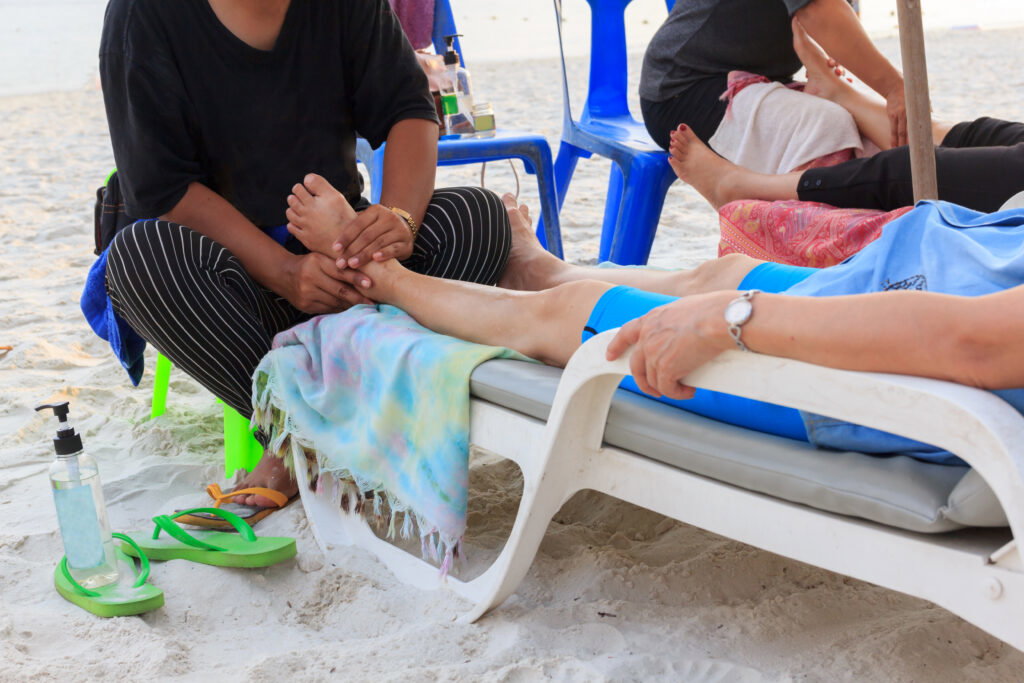
Individuals quietly move from towel to towel asking if anyone would like a massage. Photo credit: mikumistock/Shutterstock
It happens on beaches all over Spain, you’re lying on your towel when someone approaches offering a massage for a fraction of spa prices. It can seem like an easy holiday treat, but in Palma, police say many of the people offering these services are operating without licences, health controls or recognised professional training.
For most holidaymakers, it’s simply part of the beach experience. Alongside sellers offering sunglasses, drinks and jewellery, massage therapists wander across the sand looking for customers willing to spend a few euros without leaving their sunbed. Few people stop to ask whether those treatments are regulated.
Police launch summer crackdown
That is why Palma’s policía local have launched a summer crackdown, warning that what appears to be a bargain could come with risks many visitors never consider.
During a week-long operation on some of Mallorca’s busiest beaches, officers issued 30 fines to people offering massages illegally. Police say the campaign is not simply about unauthorised trading. It is also about protecting the public from treatments carried out without any recognised standards.
Thirty illegal massage therapists reported in one week
The operation took place between June 29 and July 5, covering Playa de Palma, Can Pere Antoni and Cala Major, three of the capital’s busiest beaches during the summer season. By the end of the week, Local Police had reported 30 people for offering massage services without authorisation. Officers also confiscated equipment including oils, creams and towels used while carrying out the treatments.
Under Palma’s Civic Coexistence Ordinance, providing beach massages without permission is considered a serious offence, with those carrying out the activity facing fines of between €750 and €1,500. Police have confirmed inspections will continue throughout the summer.
Why police are worried
The concern goes far beyond people working without permission. According to Palma’s policía local, many of those offering massages on the beach operate entirely outside any official system. There are no verified hygiene standards, no health inspections and no requirement to demonstrate recognised professional qualifications.
For customers, that means there is often no way of knowing who is carrying out the treatment, what products are being applied to the skin or whether the person has any training at all.
Police warn that the lack of controls increases the possibility of skin reactions, infections and physical injuries caused by incorrect massage techniques. A treatment that lasts twenty minutes can leave someone dealing with problems long after the holiday has finished.
A familiar sight that most people barely notice
Anyone who has spent time on Spain’s beaches has probably seen it happen. As people relax in the sunshine, individuals quietly move from towel to towel asking if anyone would like a massage. Some holidaymakers decline without a second thought. Others accept because it feels convenient, informal and considerably cheaper than booking a treatment at a spa or hotel.
The practice has become so common that many visitors simply assume it is another authorised beach service. Police say that assumption is often wrong. Unlike licensed massage therapists working from authorised premises, beach operators are not necessarily subject to the same professional or health requirements.
What happens if something goes wrong?
For holidaymakers, the biggest issue is not receiving a fine, it is knowing where to turn if something goes wrong. When a massage is booked through a registered business, there is normally a fixed location, insurance cover and an identifiable operator. If a customer suffers an injury or experiences an allergic reaction, there is a clear business responsible for providing the service.
An informal beach massage offers none of those assurances. There is often no receipt, no obvious business behind the treatment and no simple way to identify the person afterwards if medical problems develop. That lack of accountability is one of the main reasons authorities continue carrying out enforcement operations every summer.
A problem for licensed businesses
The campaign is also intended to protect businesses operating legally. Licensed massage therapists and wellness centres must comply with professional regulations, hygiene standards and business requirements that come with running an authorised service.
Those operating illegally avoid those costs while competing for the same customers. For legitimate businesses, the difference is more than financial. It also affects public confidence in professional massage services when visitors cannot easily distinguish between licensed practitioners and those working without authorisation.
Inspections will continue through the summer
Palma’s policía local have made it clear that last week’s operation was only the beginning. Officers expect to continue carrying out inspections while beaches remain busy throughout the holiday season, targeting unlicensed massage therapists as part of wider enforcement against illegal beach trading.
For visitors, the advice is straightforward. A cheap massage offered while you’re relaxing on the sand might seem like a pleasant addition to your holiday, but it is worth asking yourself one simple question before agreeing.
Do you know who is treating you? For many people enjoying Spain’s beaches this summer, the answer will probably be no. And according to Palma’s Policía local, that is exactly why they want holidaymakers to think twice before saying yes.
Follow Euro Weekly News on Google News
Get breaking news from Spain, travel updates, and expat stories directly on your Google News feed.
Follow on Google NewsSign up for personalised news
Subscribe to our Euro Weekly News alerts to get the latest stories into your inbox!
By signing up, you will create a Euro Weekly News account if you don't already have one. Review our Privacy Policy for more information about our privacy practices.



Molly Grace
Molly is a British journalist and author who has lived in Spain for over 25 years. With a background in animal welfare, equestrian science, and veterinary nursing, she brings curiosity, humour, and a sharp investigative eye to her work. At Euro Weekly News, Molly explores the intersections of nature, culture, and community - drawing on her deep local knowledge and passion for stories that reflect life in Spain from the ground up.
Comments