Gibraltar travellers face airport checks and police chase rules as July 15 border switch begins
By Harry Dennis • Published: 09 Jul 2026 • 12:51 • 3 minutes read
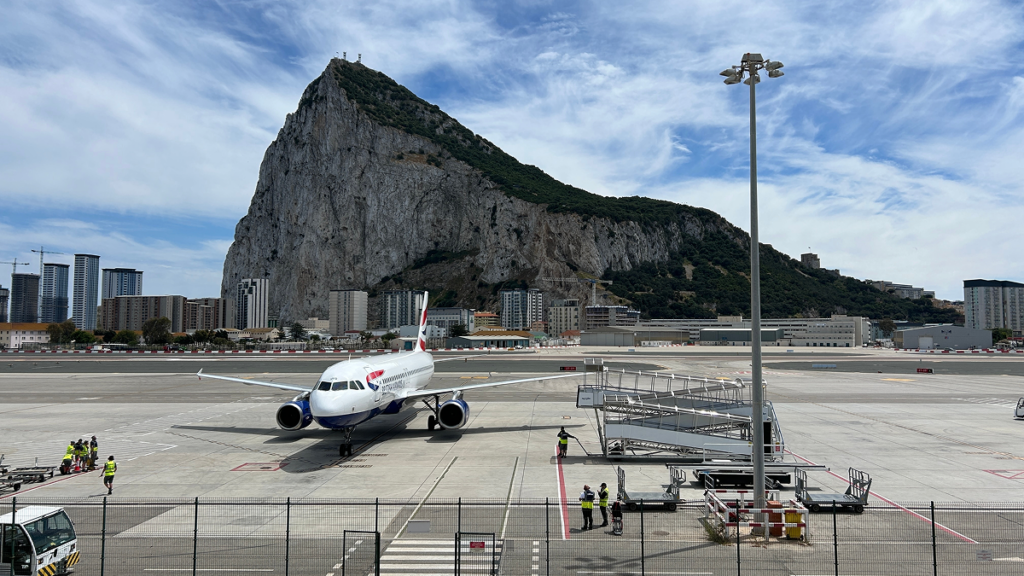
Gibraltar’s July 15 border switch moves from treaty text to daily travel consequences. Credit: Colinmthompson / Shutterstock
Gibraltar’s new border era is no longer just a promise. Newly published rules due to take effect on July 15 set out where extra airport checks can happen and how police pursuit may continue across the Spain-Gibraltar frontier, affecting travellers, commuters and residents on both sides.
July 15 brings the treaty from paperwork into daily travel
The long-awaited Gibraltar treaty switch is moving from negotiation rooms into the daily lives of the people who will actually experience the change. Residents and travellers will very soon see changes at the airport, the border area, in police operations and on the daily journey between Spain and the Rock.
Provisions of the Treaty on Gibraltar and the European Union Act 2026 are due to come into effect on July 15 after a legal notice was published in the Gibraltar Gazette, according to GBC News. The same date has already been identified by the European Council as the expected start of provisional application for the wider EU-UK agreement on Gibraltar.
Airport passengers could face extra checks in a defined Schengen area
The latest rules begin to define how the new system will work on the ground. One of the newly published measures defines the “Second Line Checks Area”, described locally as the “Schengen Shack”, to support temporary arrangements at Gibraltar Airport.
The treaty model shifts checks away from the land frontier and places Schengen controls at Gibraltar’s airport and port. Schengen is the European passport-free travel area used by Spain and most EU countries, but Gibraltar is not currently an ordinary part of that system. Spain has said the treaty removes passport controls between Gibraltar and Spain, while Spanish authorities take responsibility for Schengen controls at Gibraltar’s airport and port.
That means the land crossing may become smoother for many daily users, but passengers arriving and leaving by air should expect some changes at the airport. The extra defined check area is part of the machinery needed to separate normal movement from cases needing further examination.
For British visitors, non-EU nationals and people with residency status, it is advised to travel with valid documents, allow extra time while the new system beds in, and keep residence cards or work-related paperwork accessible when crossing frequently.
How chases could cross the frontier with new police pursuit rules
The second notable change is important for understanding security concerns around an open border. Regulations on “uninterrupted pursuit” are also due to become law on July 15. GBC reports that the rules allow for an encrypted radio frequency to support operational cooperation between authorities during continued surveillance or pursuit.
Simply put, this means police or other officers may be able to continue pursuing a suspect across the Gibraltar-Spain frontier in specific circumstances, instead of automatically having to stop at the border line.
The rules, however, do not give officers a free hand to go willy-nilly engines blazing between the regions. Prior warning must be given to the competent authorities in Spain or Gibraltar, depending on the direction of pursuit. Information must be provided on the reason for the pursuit and the route being taken, with continuous updates as the authorities in the receiving territory take over.
Officers must be identifiable, able to prove who they are, comply with the laws of the jurisdiction they enter and file a report there. They cannot enter private homes or private places, and although they may carry weapons, those weapons can only be used in self-defence.
This is unlikely to affect normal daily life, but its importance is reassurance and clarity: a more open frontier needs rules for what happens when crime, surveillance or an emergency does not suddenly stop at a line on the map.
How the border changes still don’t mean that everything changes overnight
Gibraltar’s Government has already said enhanced security measures are being put in place at the frontier, including a new high-security fence line, additional policing, CCTV, live facial recognition cameras checking against wanted lists, Automatic Number Plate Recognition cameras and improved lighting.
It has also said that, initially, there will be little change to traffic flow, with vehicles crossing in both directions much as they do now while the surrounding area changes. This means that the July 15 date is a legal and political switch, but commuters, shoppers and airport passengers will most likely see a staggered transition rather than a single quick overnight transformation.
The European Parliament’s research service says the agreement removes physical border controls with Spain, introduces dual checks at Gibraltar’s port and airport, creates a customs union and allows direct flight connections between Gibraltar and the EU. The agreement is still expected to go to the European Parliament for consent later, with an indicative plenary date of December 14, 2026.
For now, the new border era will likely be judged by queues, airport checks, police coordination and how calmly the first days are handled on both sides of the frontier.
Follow Euro Weekly News on Google News
Get breaking news from Spain, travel updates, and expat stories directly on your Google News feed.
Follow on Google NewsSign up for personalised news
Subscribe to our Euro Weekly News alerts to get the latest stories into your inbox!
By signing up, you will create a Euro Weekly News account if you don't already have one. Review our Privacy Policy for more information about our privacy practices.



Harry Dennis
Born in the UK and raised on the Cádiz coast, Harry brings his background in design, music, and photography to his writing for Euro Weekly News, sharing stories that celebrate culture and lifestyle across Spain and beyond.
Comments