Police uncover shocking scheme inside Spanish bar that left customers at risk
By Harry Dennis • Published: 13 Jul 2026 • 23:00 • 3 minutes read
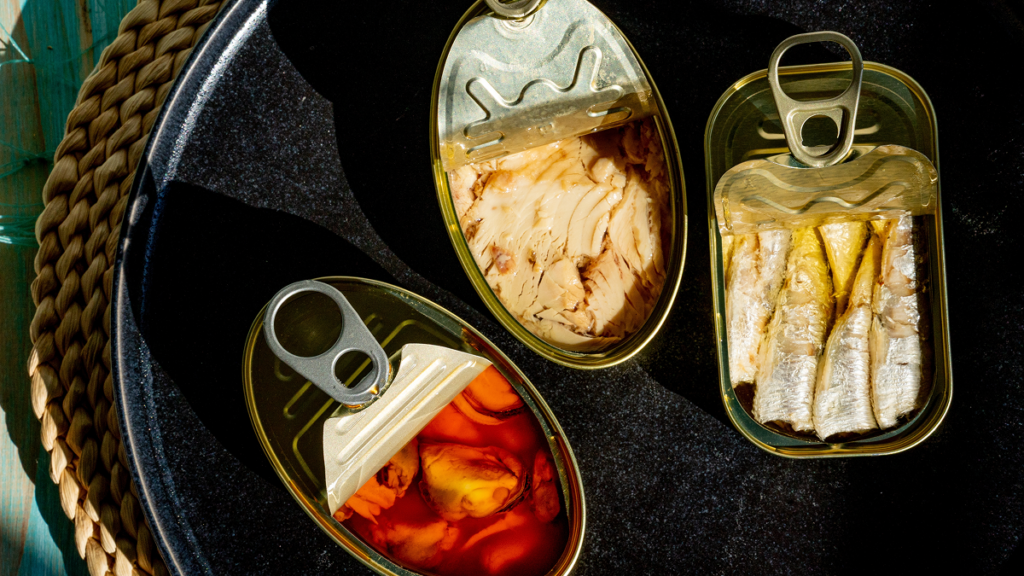
Gourmet tins allegedly reached the Elche bar through a €5 theft scheme. Credit: A.marrupe / Shutterstock
Anyone ordering anchovies, mussels or octopus at a neighbourhood bar in Elche had little reason to question how the food reached the kitchen. Police allege the owner paid vulnerable people €5 for every three gourmet cans stolen from supermarkets, leaving customers with no reliable record of their origin.
How a bar in Elche received food goods in backpacks and bags to serve its customers
A plate of anchovies at a neighbourhood bar rarely arrives with a police investigation attached. But in El Toscar, a district of Elche in Alicante province, officers say premium preserves may have reached customers through an unusual supermarket theft arrangement. The 65-year-old owner allegedly offered people facing addiction, unemployment or financial hardship €5 for every three high-value cans they delivered. The reported list included cockles, fish roe, octopus, anchovies, tuna, tuna belly and mussels.
The investigation reportedly began after two people were detained for stealing cans from a supermarket. During questioning, both allegedly told officers that the food had been taken at the request of a bar owner. Police then placed the establishment under surveillance. Officers reportedly saw people arriving with full bags or backpacks and leaving shortly afterwards without them.
A later search allegedly uncovered numerous cans and food containers for which the owner could provide no invoices or supplier documents.
The €5 offer allegedly targeted people already in difficulty
The bizarre detail of ordering stolen gourmet cans in batches of three sits beside a more troubling allegation. Police say the owner deliberately approached people experiencing addiction, unemployment or social exclusion. Some reports based on information supplied to Spain’s EFE news agency claimed that those involved referred to him as “mi amo”, meaning “my master”.
Investigators allege the owner was creating demand for specific products and using people in precarious circumstances to obtain them. The suspect has not been convicted, and the claims remain under investigation.
Why missing invoices can become a serious food-safety problem
A bar being unable to show where its food came from also creates more than an accounting issue. The Spanish Agency for Food Safety and Nutrition, known as AESAN, defines traceability as the ability to follow food through production, processing and distribution. Restaurants must be able to identify suppliers so affected products can be located if a batch is recalled, contaminated or stored incorrectly. Without invoices, batch details or delivery records, inspectors may struggle to establish where food originated or whether more affected products remain in circulation.
Police-linked reports say the food found at the Elche bar lacked documentation proving its origin and that proper transport, storage and hygiene conditions could not be guaranteed. Those concerns reportedly led to an investigation into a suspected public-health offence.
Not every seafood can normally needs refrigeration
References to a broken “cold chain” need some care. Many unopened, fully sterilised tins are designed to remain safe at room temperature when their packaging is undamaged and storage instructions are followed. Other products are different. AESAN classifies anchovies as a semi-preserve, a category commonly sold refrigerated because it has not undergone the same sterilisation process as a fully shelf-stable can.
The concern is not that every tin carried into the bar was dangerous. It’s that officers allegedly found a mixed supply of undocumented food whose transport, storage history and package condition could not be checked. Luckily, no customer illness has yet been reported.
Police are still tracing how far the supply chain reached
Spain’s Criminal Code treats someone who directly induces another person to commit an offence as an author of that offence. Reports agree that the bar owner is being investigated over alleged inducement to theft and a suspected public-health offence. Some EFE-based accounts also refer to receiving stolen goods, although other police-linked reports list only two suspected offences.
The bar has not been publicly identified. It remains unclear how long the alleged arrangement operated, how many supermarkets were affected or how many people supplied the establishment.
The investigation remains open to establish the full scale of the activity and whether anyone else was involved. Judicial authorities will decide whether to formalise the suspected offences, while the bar could also face food-safety or licensing action.
Follow Euro Weekly News on Google News
Get breaking news from Spain, travel updates, and expat stories directly on your Google News feed.
Follow on Google NewsSign up for personalised news
Subscribe to our Euro Weekly News alerts to get the latest stories into your inbox!
By signing up, you will create a Euro Weekly News account if you don't already have one. Review our Privacy Policy for more information about our privacy practices.




Harry Dennis
Born in the UK and raised on the Cádiz coast, Harry brings his background in design, music, and photography to his writing for Euro Weekly News, sharing stories that celebrate culture and lifestyle across Spain and beyond.
Comments