Scientists have just found the world’s fastest spider and it’s faster than you’d think
By Molly Grace • Published: 14 Jul 2026 • 0:15 • 2 minutes read
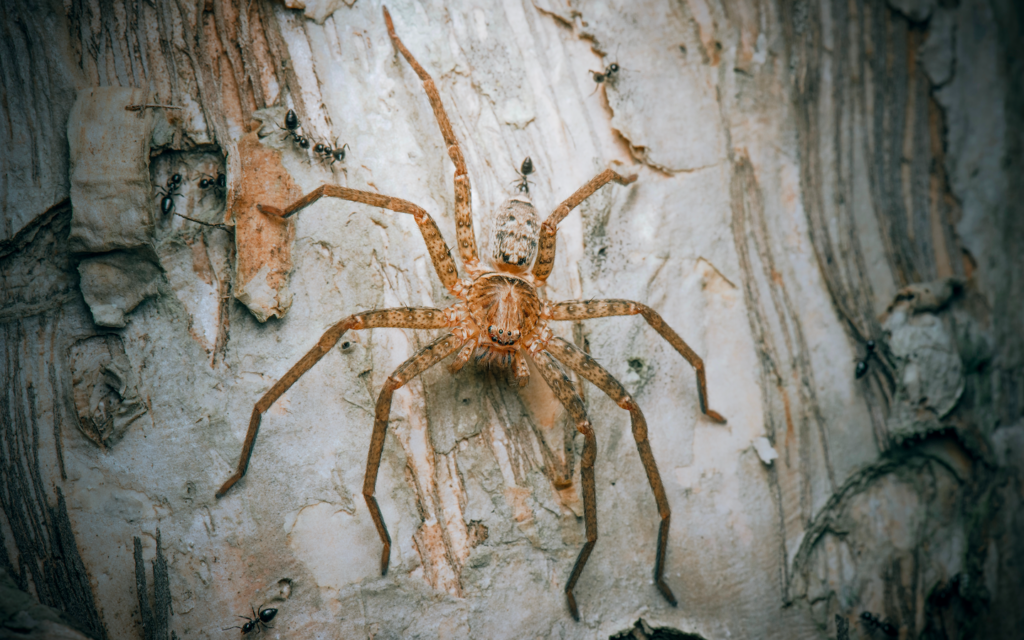
The new speed champion is the Australian brown huntsman spider. Photo credit: Rob D Wildlife/Shutterstock
Most of us don’t hang around long enough to find out how fast a spider can run, we spot it, panic, scream, jump on to something or quickly leave the room and hope it leaves on its own accord. Unfortunately for arachnophobes, scientists have done the measuring for us, and the results might make you think twice before taking your eyes off that spider disappearing across the floor.
Researchers have identified the fastest spider ever recorded, clocking speeds of almost 13km/h, fast enough to outpace the previous record holder from Morocco and earn a new place at the top of the arachnid speed charts, and for a spider, thats pretty fast
Faster than you might expect
The new crowned champion is the Australian brown huntsman spider (Heteropoda jugulans) a large species already well known for its impressive size and lightning-fast movements. Using high-speed cameras, researchers analysed the movement of more than 250 spider species before concluding that the huntsman reached a top speed of 3.59 metres per second, or just under 13km/h.
For comparison, that’s roughly the pace of a leisurely jog and considerably faster than most people would expect something with eight legs to manage. The findings come from a scientific preprint that is still awaiting peer review, but if confirmed, the Australian spider will overtake the Moroccan flic-flac spider as the fastest ever recorded.
Sorry, Morocco…
For years, Morocco’s famous flic-flac spider (Cebrennus rechenbergi) held the title thanks to an unusual way of escaping danger. Rather than simply running away, it performs a series of rapid forward flips across the desert, almost like an Olympic gymnast attempting endless somersaults.
That remarkable escape technique helped it become famous around the world and secured its place in the record books. Now, however, it appears Australia may have stolen the crown. Fortunately, neither species is known for chasing people unless you offend said spider, most of the time they’re much more interested in escaping from us than the other way around.
Should you be worried?
The short answer is no, unless you are terrified of spiders and happen to live in parts of Australia where brown huntsman spiders are commonly found, the chances of meeting one are slim. Even then, the species isn’t considered dangerous to humans despite its size and generally avoids confrontation whenever possible. That probably comes as welcome news, because I know quite a lot of you don’t want to discover first-hand whether you can outrun a spider travelling at 13km/h.
Why scientists care
While the discovery has prompted plenty of jokes online, researchers say understanding how spiders move could have practical benefits beyond settling an unusual world record. Studying the way different species run across rough terrain may help improve the design of agile robots capable of navigating difficult environments, from disaster zones to remote landscapes, sometimes, nature still provides the best engineering lessons.
For everyone else, however, the biggest takeaway is much simpler, if you thought spiders were quick before, science has just confirmed they may be even quicker than you imagined. So the next time one vanishes behind the sofa before you’ve even decided what to do, don’t take it personally, you were probably never going to catch it anyway, but IT catch you, now thats a different story…
Follow Euro Weekly News on Google News
Get breaking news from Spain, travel updates, and expat stories directly on your Google News feed.
Follow on Google NewsSign up for personalised news
Subscribe to our Euro Weekly News alerts to get the latest stories into your inbox!
By signing up, you will create a Euro Weekly News account if you don't already have one. Review our Privacy Policy for more information about our privacy practices.





Molly Grace
Molly is a British journalist and author who has lived in Spain for over 25 years. With a background in animal welfare, equestrian science, and veterinary nursing, she brings curiosity, humour, and a sharp investigative eye to her work. At Euro Weekly News, Molly explores the intersections of nature, culture, and community - drawing on her deep local knowledge and passion for stories that reflect life in Spain from the ground up.
Comments